

In 2026, the world of work is changing faster than ever, with new technologies and evolving roles creating both challenges and opportunities. For professionals and organisations alike, investing in training adult learners has become essential to stay competitive and resilient.
This guide offers practical, evidence-based strategies for effective training adult programmes. Discover the latest trends, step-by-step approaches, and how technology, personalisation, and inclusivity are shaping the future of adult learning.
Whether you are an individual seeking to upskill or an organisation developing talent, actionable insights here will help you thrive in tomorrow’s workplace.
Understanding Adult Learners in 2026
In 2026, understanding who adult learners are and what drives them is essential for creating impactful training adult programmes. Today’s learners bring a wealth of experience, diverse backgrounds, and clear goals, making their needs distinct from those of younger students.

Key Characteristics of Adult Learners
Adult learners in 2026 typically demonstrate:
- Self-direction: They take the initiative in their learning, seeking out training adult options that align with their ambitions.
- Rich life experience: Prior knowledge shapes how they approach new subjects and apply skills to real-world scenarios.
- Goal orientation: Learning is often driven by specific objectives, whether professional or personal.
A quick overview is shown below:
| Characteristic | Description |
|---|---|
| Self-direction | Proactive, independent, and motivated |
| Experience-based | Leverages prior knowledge and skills |
| Goal-focused | Seeks clear, relevant outcomes |
Demographic Shifts and Motivations
The landscape of training adult participation is evolving. More people from a range of age groups, backgrounds, and career stages are seeking further education. Mid-career professionals, recent graduates, and retirees alike are enrolling to stay current or pivot careers.
Motivations include:
- Career advancement and promotion
- Reskilling for emerging job markets
- Personal development and confidence building
- Adapting to technological changes
Recent data shows a strong increase in digital skills training enrolment and a broader uptake of government-funded programmes, making high-quality training adult opportunities more accessible. According to the Adult Education and Training overview, sector growth is also being fuelled by targeted funding and flexible course delivery.
Barriers to Learning and Preferences
Despite growing interest, adult learners face notable barriers:
| Barrier | Example Impact |
|---|---|
| Time constraints | Balancing work, family, study |
| Financial challenges | Course fees, lost income |
| Digital literacy gaps | Difficulty using online platforms |
| Life commitments | Caring responsibilities, employment |
To overcome these, providers are introducing flexible formats and support systems. Many learners now prefer:
- Blended learning: Combining online and in-person sessions
- Microlearning: Bite-sized content for busy schedules
- Practical application: Real-world tasks and scenarios
- Flexible timing: Evening, weekend, or self-paced options
Government initiatives and free essential skills courses are helping to reduce financial and accessibility barriers. The Adult Education Budget has expanded, enabling more adults to enrol in digital and sector-specific qualifications.
Trends and Insights
Competitor analysis highlights a shift towards part-time, modular, and sector-focused training adult courses, especially in business, digital, and health sectors. This approach supports learners who need to balance multiple commitments or seek quick, targeted upskilling.
Recent years have also seen a rise in demand for workplace-based learning and stackable micro-credentials. These trends reflect the desire for practical, career-relevant training adult experiences that fit seamlessly into busy lives.
In summary, successful programmes in 2026 will be those that recognise adult learners’ unique characteristics, motivations, and challenges, offering flexible, practical, and inclusive solutions that empower everyone to upskill and thrive.
Core Principles of Effective Adult Training
In 2026, effective training adult programmes are guided by a blend of proven theory and practical innovation. Understanding what drives adult learners is the foundation for meaningful, impactful education. By focusing on core principles, organisations and individuals can deliver training adult experiences that empower, engage, and transform.
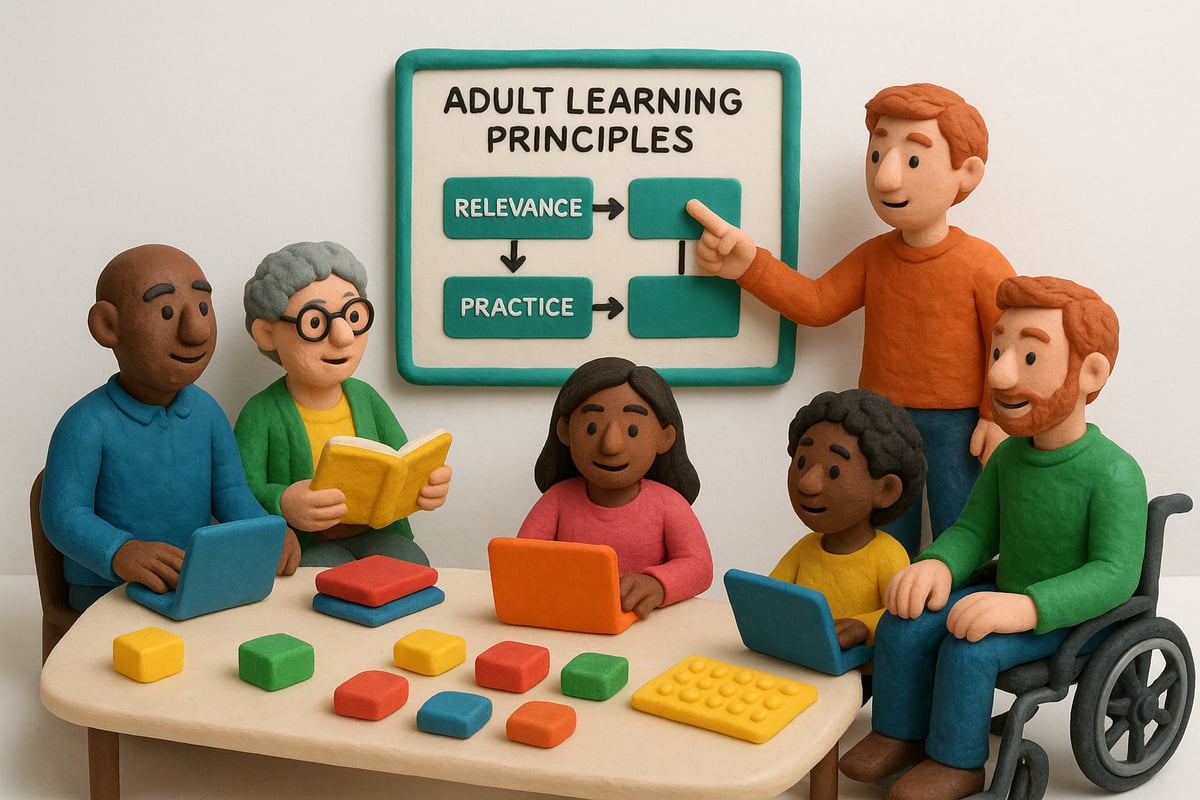
Understanding Andragogy and Core Principles
The foundation of training adult programmes lies in andragogy, a framework shaped by Malcolm Knowles. His principles highlight the importance of relevance, experience-based learning, and a problem-centred approach. Adults bring a wealth of life experience, making them self-directed, goal-oriented, and keen to apply new knowledge directly to real-world settings.
Professional development for trainers is key, as highlighted in the Certificate in Adult and Tertiary Teaching Level 4, which equips facilitators with essential skills to implement these principles. This ensures that training adult strategies remain current and effective.
Active Learning and Real-World Application
Active learning is at the heart of successful training adult experiences. Rather than relying solely on lectures, effective programmes use hands-on activities, real-case scenarios, and collaborative problem-solving to drive engagement. Learners benefit from:
- Simulations and role-play exercises
- Group discussions and peer learning
- Work-based projects and case studies
These methods anchor new knowledge in practical situations, helping adults transfer skills directly into their careers and daily lives. Training adult methods that prioritise active participation consistently yield higher satisfaction and better outcomes.
The Power of Personalisation
Personalisation transforms training adult by recognising each learner's unique goals, backgrounds, and styles. Tailored content, flexible pacing, and adaptive resources ensure that everyone stays motivated and on track.
Approaches to personalisation include:
- Diagnostic assessments to identify skills gaps
- Customised learning pathways
- Blended formats that mix online and in-person elements
By aligning learning with individual aspirations, training adult programmes become more meaningful and effective, driving both personal and organisational growth.
Feedback, Recognition, and Inclusivity
Continuous feedback and recognition of prior learning are essential for successful training adult initiatives. Formative assessments, peer reviews, and digital feedback tools help learners stay informed of their progress and adjust their approach as needed.
Inclusivity is equally crucial. Programmes must be designed for diverse participants, including those with disabilities or language barriers. Examples include:
- Functional skills and ESOL courses for foundational needs
- Multilingual resources
- Adjustments for neurodiversity
Inclusive training adult environments foster greater engagement, increased retention, and equitable success for all.
Trends: Micro-credentials and Modular Pathways
The landscape of training adult is shifting towards micro-credentials and modular learning. These flexible pathways allow learners to build qualifications in smaller, stackable units, responding quickly to changing job market demands.
Recent data shows a rise in demand for sector-specific micro-credentials in areas like digital, health, and business. Modular approaches make it easier for adults to upskill on their own terms, removing barriers and supporting lifelong learning.
Training adult programmes that embrace these trends are well-positioned to meet the needs of tomorrow’s workforce.
Step-by-Step Strategies for Designing Effective Adult Training Programmes
In 2026, organisations and individuals face a rapidly evolving landscape, making structured training adult programmes essential for ongoing success. Implementing a step-by-step approach ensures that learning is relevant, practical, and adaptable to the needs of today's adult learners. The following strategies break down each critical stage for designing impactful training adult initiatives.

Step 1: Needs Analysis and Goal Setting
The foundation of any successful training adult programme is a thorough needs analysis. Begin by gathering data through surveys, interviews, and skills audits. This helps identify the skills gaps and learning priorities of both organisations and participants.
Set clear, measurable learning objectives that align with broader business goals or personal development plans. For example, a digital technology skills audit can reveal specific areas for reskilling, allowing targeted training adult content to be developed. Aligning objectives with industry standards ensures relevance and value for all stakeholders.
Step 2: Curriculum and Content Development
Designing an effective curriculum for training adult requires selecting topics that match current and future workforce demands. Focus on skills that are not only trending but also likely to remain relevant, such as digital literacy, business management, and health sector competencies.
Incorporate real-life scenarios, case studies, and interactive exercises. This approach encourages practical application, which is highly valued by adult learners. Modular content allows flexibility, so learners can progress at their own pace and stack credentials over time.
A good example is the rise of micro-credential pathways in areas like AI, business, and health and safety. Data shows that sector-specific qualifications are increasingly popular, supporting the need for focused and adaptive training adult content.
Table: Curriculum Development Elements
| Element | Description | Example |
|---|---|---|
| Real-life scenarios | Practical, job-related situations | Case study on digital transformation |
| Modular content | Stackable, flexible learning units | Micro-credentials in AI |
| Sector-specific focus | Tailored to industry needs | Health and safety certifications |
Step 3: Choosing Delivery Methods
Selecting the right delivery methods is crucial for training adult success. Compare options such as face-to-face, online, blended, and workplace-based learning. Each format offers unique benefits, depending on learner preferences and logistical needs.
Blended learning has become the preferred model, combining the flexibility of online modules with the engagement of in-person sessions. Digital platforms, e-portfolios, and interactive tools make it easier to track progress and provide feedback.
For instance, AI-assisted marking and digital feedback streamline assessment in online environments. The expansion of online and blended learning since 2020 highlights the importance of accessible and adaptable training adult programmes for diverse populations.
List: Delivery Method Considerations
- Flexibility (part-time, evening, or remote options)
- Accessibility for all learners
- Integration of interactive digital tools
Step 4: Facilitator Training and Support
A well-prepared facilitator is key to effective training adult delivery. Invest in professional development for trainers, focusing on adult learning theory and digital teaching tools. Encourage peer collaboration and share best practices to foster a supportive learning community.
Provide resources for inclusive and culturally responsive teaching, ensuring every participant feels valued. For quality assurance, consider structured assessor training programmes such as those outlined in Assessor training and quality assurance. This helps maintain high standards across all training adult courses and ensures consistent assessment outcomes.
Facilitator adaptability is also essential, allowing trainers to respond to changing learner needs and diverse contexts.
Step 5: Assessment, Feedback, and Continuous Improvement
Assessment is a cornerstone of effective training adult. Use both formative and summative assessments that align with your learning objectives. Digital tools make it easier to track progress and provide timely, actionable feedback.
Collect learner feedback regularly to refine programme content and delivery. Monitor outcomes using analytics, adapting strategies based on performance data. For example, digital learner toolkits and assessment support resources can enhance the overall experience.
Continuous improvement ensures that training adult programmes remain relevant and effective, supporting long-term success for both individuals and organisations.
Leveraging Technology for Adult Training Success
Technology is reshaping the landscape of training adult in 2026. As digital tools evolve, both individuals and organisations are leveraging new platforms to create engaging, flexible, and effective learning experiences.

Digital transformation is central to training adult success. E-learning platforms now offer a wide range of courses, from foundational to advanced levels. Learners can access content anytime, anywhere, using mobile devices or desktop computers. Virtual classrooms connect participants globally, enabling real-time interaction and collaboration.
Key digital tools in training adult include:
- E-learning platforms with interactive modules
- Mobile learning apps for on-the-go study
- Virtual classrooms for live instruction and group work
Artificial intelligence is redefining personalisation in training adult. AI-driven systems analyse learner data to create tailored pathways, adapting content and pace to individual needs. Automated feedback tools provide instant responses, helping learners track progress and address gaps quickly. Adaptive content ensures that each learner receives the right level of challenge and support.
Micro-credentials and digital badges are gaining traction in training adult. These bite-sized qualifications allow learners to build their skills incrementally, demonstrating achievements to employers and peers. Digital badges can be added to online profiles or CVs, showcasing expertise in specific areas.
Remote and hybrid learning models have expanded access to training adult opportunities. Learners can blend face-to-face sessions with online study, maximising flexibility. E-portfolios are increasingly used to track progress, gather evidence, and reflect on achievements, making it easier to demonstrate competency.
The surge in online course enrolment and digital skills training is supported by recent data. Participation in virtual learning environments has grown significantly since 2020. Many organisations now prioritise digital literacy, recognising it as a core component of training adult for future roles.
However, not all learners have equal access to technology. The digital divide remains a challenge in training adult, with disparities in internet connectivity and device availability. To address this, providers are investing in accessible platforms, offering offline resources, and supporting digital skills development from the outset.
A forward-thinking approach to training adult means continuously integrating emerging technologies. According to the Forbes article on education trends for 2026, AI, experiential learning, and microlearning will continue to shape adult education. By embracing these trends, organisations and individuals can future-proof their skillsets and thrive in a rapidly changing world.
Personalisation and Inclusivity in Adult Training
In 2026, personalisation and inclusivity are transforming training adult programmes into adaptable and accessible experiences for every learner. As workforces become more diverse and digital, it is vital to design opportunities that respect individual pathways and break down barriers to participation.
Customising Learning Pathways
Personalised training adult initiatives leverage adaptive technologies to tailor content and pace for each learner. By recognising prior learning, organisations can accelerate skill development and reduce redundancy. Modular courses, which allow learners to stack credentials over time, are especially effective for busy adults balancing multiple commitments.
For example, digital platforms now use AI to assess existing knowledge and recommend targeted modules. This approach ensures that training adult participants only invest time where growth is needed. According to the OECD report on adult learning trends, there is a clear increase in uptake of personalised, stackable credentials across different sectors and demographics.
This flexibility supports career changers, returners, and those seeking advancement. It also addresses the varying motivations for joining a training adult programme, whether for reskilling or personal development.
Ensuring Accessible and Inclusive Training
Designing accessible training adult provision starts with Universal Design for Learning (UDL) principles. UDL ensures content is available in multiple formats, benefiting learners with disabilities and those who prefer alternative approaches. Multilingual support and ESOL integration further expand access, helping individuals from diverse backgrounds participate fully.
Practical accommodations, such as screen readers, captioned videos, and flexible assessment methods, are increasingly common in training adult environments. Free essential skills courses for English and maths remove financial barriers and create entry points for those who may have been excluded previously.
Inclusive training adult programmes consistently show higher engagement and completion rates. When every learner feels supported and represented, organisations benefit from a broader, more skilled talent pool.
Sector-Specific Strategies and Future Trends
The landscape of training adult programmes in 2026 is shaped by sector demand and the evolving needs of the workforce. Digital, health, and business sectors continue to lead in popularity, but trades and education are also seeing significant growth. This shift is driven by rapid technological change, population ageing, and the need for new skills across industries.
To illustrate the current sector focus, consider the following data:
| Sector | Percentage of Adult Learners Enrolled (2026) |
|---|---|
| Digital | 32% |
| Health | 28% |
| Business | 24% |
| Trades | 10% |
| Education | 6% |
Training adult programmes must align with sector requirements to remain effective. The business sector, for example, offers a wide range of pathways designed to meet employer and learner needs. For those seeking advancement or reskilling, exploring business sector adult training pathways provides access to sector-specific qualifications, flexible formats, and recognised certifications.
Emerging skills are increasingly integrated into training adult curriculums. Key areas include:
- Artificial intelligence and automation
- Digital marketing and data analytics
- Sustainability and green technologies
- Healthcare informatics and telemedicine
- Cross-sector digital literacy
The demand for digital functional skills and AI programming has surged, with many providers now offering modular courses and micro-credentials. These options allow adult learners to build their expertise over time, stacking qualifications to suit their career goals.
Sector specialism statistics highlight that business, digital, and health remain the most popular choices within training adult provision. This trend is reinforced by increased government investment and industry partnerships, which help to expand course offerings and remove barriers to participation.
A recent case study demonstrates the impact of targeted funding: a consortium of digital training providers partnered with local employers to deliver free AI and cybersecurity courses. As a result, course uptake doubled within a year, and participants reported higher rates of job placement and progression.
Looking ahead, future trends in training adult provision emphasise lifelong learning, micro-credentials, and cross-sector skills. The adoption of emerging technologies, such as mixed reality and adaptive learning platforms, is set to transform how adults upskill and retrain. For a deeper look at these innovations, see eLearning Industry’s top eLearning trends for 2026.
Ultimately, successful training adult strategies will be those that remain responsive to sector needs, embrace innovation, and empower individuals to thrive in a rapidly changing world.
Quality Assurance and Measuring Training Impact
Ensuring robust quality assurance is essential for any effective training adult programme. High standards not only enhance learner satisfaction but also safeguard the credibility of qualifications. In 2026, organisations must actively prioritise quality assurance to remain competitive and meet regulatory expectations.
Why Quality Assurance Matters in Training Adult Programmes
Quality assurance provides the foundation for trust in training adult initiatives. It ensures that course content, delivery methods, and assessment processes align with industry standards and learner needs. Without robust quality assurance, learners may struggle to demonstrate their achievements or progress in their chosen fields.
Both internal and external review processes play a critical role. Internal moderation involves regular checks by course teams, while external quality assurance (EQA) includes independent reviews by awarding bodies or regulatory agencies. These processes help maintain consistency and fairness across all training adult programmes.
Internal and External Review Processes
Organisations conduct annual monitoring reports to track progress and identify areas for improvement. These reports examine learner achievement rates, assessment practices, and feedback from stakeholders. External reviews, often led by accredited bodies, provide an impartial perspective and help benchmark performance against national or sector-wide standards.
A summary of quality assurance approaches is provided below:
| Process | Purpose | Who Is Involved |
|---|---|---|
| Internal Moderation | Ensures consistency in assessment | Course teams, managers |
| External Quality Review | Independent verification of standards | Awarding bodies, regulators |
| Annual Monitoring | Tracks progress, identifies improvements | Organisation leadership |
By adopting these processes, training adult providers can demonstrate their commitment to high standards and learner success.
Measuring Learner Outcomes and Impact
Tracking learner outcomes is a cornerstone of quality assurance. Effective training adult programmes measure not only certification rates but also the real-world application of skills in the workplace. Providers use digital assessment tools, learner surveys, and workplace feedback to monitor progress.
Accredited providers and recognised qualifications are increasingly important in 2026. They assure employers and learners that the training adult programme meets rigorous standards. For example, annual external reviews often highlight the impact of government funding and industry partnerships on learner success.
For those seeking best-practice strategies, UC San Diego’s course on teaching adults offers research-based insights on curriculum design and assessment.
Continuous Improvement and Data-Driven Enhancement
Continuous improvement keeps training adult initiatives relevant and effective. Organisations collect learner feedback and use data analytics to refine course content and delivery. This approach ensures that training adult programmes adapt to changing industry needs and learner expectations.
Providers increasingly use analytics dashboards to identify trends and address gaps in achievement. Regular updates to courses, informed by real-time data, support ongoing excellence. This commitment to improvement benefits both learners and employers, ensuring sustained value from every training adult programme.
As we’ve explored, staying adaptable and future-focused is essential for adult learners and organisations alike. With technology transforming the way we work and learn, now is the perfect time to put these strategies into action and start building the skills that matter most for 2026. Whether you’re looking to upskill, change careers, or support your team’s development, Summit Institute’s accredited and flexible programmes can help you achieve your goals. Take the next step towards your future—Get ahead now!