

Business management education provides the foundation for successful careers across virtually every industry sector. Whether you're considering entering the field for the first time or looking to formalise existing workplace experience, understanding the subjects in business management course curricula helps you make informed decisions about your educational pathway. Modern business qualifications blend theoretical frameworks with practical application, ensuring graduates develop both strategic thinking capabilities and hands-on management skills that employers actively seek.
Core Foundation Subjects
The subjects in business management course programmes typically begin with fundamental disciplines that form the bedrock of business knowledge. These foundational areas create a common language and conceptual framework that students build upon throughout their studies.
Accounting and Financial Management
Financial literacy stands as a non-negotiable skill for any business professional. Accounting subjects introduce learners to financial statements, balance sheets, profit and loss accounts, and cash flow analysis. Students learn to interpret financial data, understand budgeting processes, and make evidence-based decisions that affect organisational performance.
Key topics within this discipline include:
- Preparation and analysis of financial statements
- Cost accounting and management accounting principles
- Budget preparation and variance analysis
- Financial planning and forecasting techniques
- Understanding taxation frameworks and compliance requirements
Financial management extends beyond basic accounting to encompass investment decisions, capital structure, working capital management, and risk assessment. These skills prove invaluable whether you're managing a small team budget or contributing to strategic financial planning at organisational level.

Economics and Business Environment
Understanding broader economic forces enables managers to contextualise their decisions within market realities. Economics subjects cover both microeconomic principles (individual firm behaviour, pricing strategies, competition) and macroeconomic factors (inflation, employment, economic cycles, monetary policy).
The business environment component examines how organisations interact with external forces including regulatory frameworks, technological disruption, social trends, and political influences. This holistic perspective helps future managers anticipate changes and adapt strategies accordingly.
Management and Leadership Studies
Principles of management form the central pillar of subjects in business management course structures. These subjects develop the interpersonal and strategic capabilities needed to guide teams and organisations toward their objectives.
Organisational Behaviour
This fascinating discipline explores how individuals and groups function within organisational settings. Students examine motivation theories, leadership styles, team dynamics, conflict resolution, and organisational culture. Understanding human behaviour in workplace contexts enables managers to create productive environments and navigate complex interpersonal situations.
| Organisational Behaviour Topics | Practical Application |
|---|---|
| Motivation theories | Designing incentive systems |
| Team dynamics | Building high-performing teams |
| Leadership styles | Adapting approach to situations |
| Organisational culture | Shaping workplace values |
| Change management | Leading transformation initiatives |
Strategic Management
Strategic management subjects teach students to think at organisational level, analysing competitive positions, identifying opportunities, and formulating long-term plans. This involves understanding industry analysis frameworks, competitive advantage concepts, strategic planning processes, and implementation approaches.
Students learn to conduct environmental scans, perform SWOT analyses, develop strategic objectives, and align resources with organisational goals. These capabilities become increasingly important as professionals progress into senior management roles.
Marketing and Customer Relations
Marketing subjects within business management programmes focus on understanding customer needs, creating value propositions, and communicating effectively with target audiences. The discipline has evolved dramatically in recent years, incorporating digital channels, data analytics, and social media strategies alongside traditional marketing principles.
Core marketing competencies include:
- Market research and consumer behaviour analysis
- Brand development and positioning
- Integrated marketing communications
- Digital marketing and social media strategies
- Pricing strategies and distribution channel management
- Customer relationship management systems
Marketing knowledge benefits professionals across all business functions, as customer focus increasingly drives organisational decision-making in competitive markets.
Human Resource Management
People represent any organisation's most valuable asset. Human resource management subjects equip students with the knowledge to attract, develop, and retain talented individuals whilst maintaining positive workplace cultures.
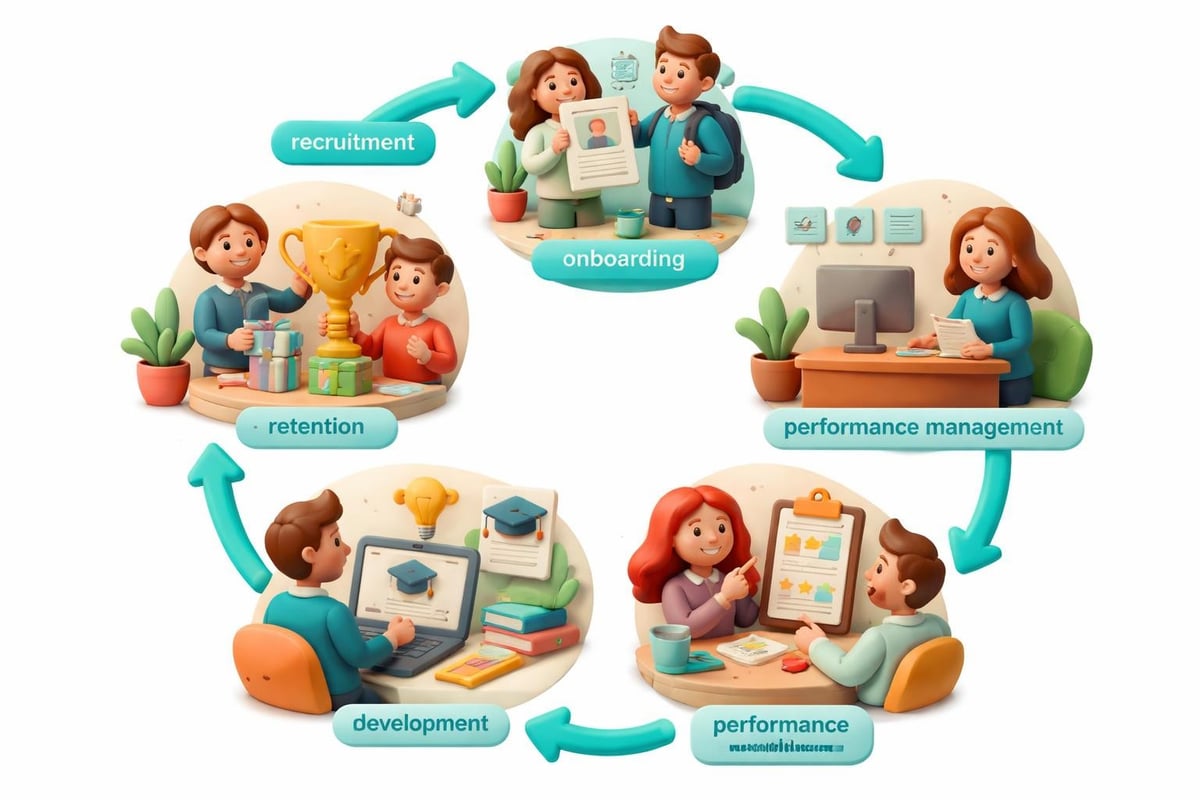
The curriculum covers recruitment and selection processes, performance management systems, training and development programmes, compensation structures, industrial relations, and employment law compliance. In New Zealand contexts, understanding employment legislation, workplace health and safety requirements, and cultural competency proves particularly important.
Employee Relations and Development
Beyond administrative HR functions, modern human resource management emphasises employee engagement, talent development, and succession planning. Students explore how to create inclusive workplaces, manage diverse teams, and foster cultures of continuous improvement.
Leadership development, coaching techniques, and change management capabilities also feature prominently, reflecting the strategic role HR professionals now play in organisational success.
Operations and Project Management
Operations management subjects examine how organisations deliver products and services efficiently and effectively. This encompasses supply chain management, quality control, process improvement methodologies, inventory management, and production planning.
Project Management Fundamentals
Project management has emerged as a critical competency across industries. Students learn structured approaches to initiating, planning, executing, monitoring, and closing projects. This includes scope definition, resource allocation, timeline development, risk management, and stakeholder communication.
Modern project management subjects also introduce agile methodologies, particularly relevant in technology and innovation contexts where flexibility and rapid iteration prove advantageous.
| Operations Management Area | Key Focus |
|---|---|
| Supply chain management | Procurement, logistics, vendor relations |
| Quality management | Standards, continuous improvement, Six Sigma |
| Process optimisation | Efficiency, waste reduction, lean principles |
| Inventory control | Stock management, just-in-time systems |
| Production planning | Scheduling, capacity planning, forecasting |
Information Systems and Technology
Digital transformation has made technology literacy essential for business managers. Information systems subjects introduce students to how organisations use technology to achieve objectives, manage data, and create competitive advantages.
Topics include database management, business intelligence, enterprise resource planning systems, cybersecurity basics, and digital innovation. Understanding these concepts enables managers to collaborate effectively with IT specialists and make informed decisions about technology investments.
Business Law and Ethics
Legal and ethical frameworks shape how organisations operate. Business law subjects cover contract law, company law, employment law, consumer protection, intellectual property, and regulatory compliance. In the New Zealand context, understanding Treaty of Waitangi principles, privacy legislation, and health and safety regulations forms part of comprehensive business education.
Ethics subjects encourage students to:
- Recognise ethical dilemmas in business contexts
- Apply ethical frameworks to decision-making processes
- Understand corporate social responsibility concepts
- Consider stakeholder interests beyond shareholder value
- Develop personal ethical standards for professional practice
The integration of business administration and technology reflects how modern curricula address the intersection of traditional management principles with digital capabilities.
Specialised Elective Areas
Beyond core subjects in business management course programmes, many qualifications offer specialisation opportunities allowing students to develop expertise in particular areas aligned with career aspirations.
International Business
Globalisation has created opportunities and challenges for organisations of all sizes. International business subjects explore cross-cultural management, international trade regulations, global supply chains, foreign market entry strategies, and managing multinational operations.
Entrepreneurship and Innovation
For those interested in starting ventures or driving innovation within existing organisations, entrepreneurship subjects cover opportunity recognition, business planning, venture financing, growth strategies, and managing entrepreneurial ventures.
Business Analytics
Data-driven decision-making continues to grow in importance. Business analytics subjects teach students statistical methods, data visualisation, predictive modelling, and how to extract actionable insights from complex datasets.

Applied Learning Components
The subjects covered in business qualifications increasingly incorporate practical application through case studies, simulations, internships, and real-world projects. This experiential learning bridges the gap between theoretical knowledge and workplace application.
Case Study Analysis
Students examine real organisational situations, analyse problems, and recommend solutions. This develops critical thinking, problem-solving abilities, and the capacity to apply theoretical frameworks to messy real-world scenarios.
Workplace Integration
Many programmes include workplace components where students apply learning in actual business environments. This might involve internships, work-based projects, or structured workplace assessments that contribute toward qualification completion.
For professionals already in employment, first-line management qualifications allow workplace experience to be formally recognised whilst developing new capabilities applicable to current roles.
Progression Pathways and Qualification Levels
The subjects in business management course structures vary depending on qualification level. Entry-level certificates introduce fundamental concepts, whilst diplomas and advanced qualifications explore subjects in greater depth and breadth.
Certificate Level Studies
Certificate programmes typically cover essential business principles, basic accounting, communication skills, and introductory management concepts. These qualifications suit those entering business fields or seeking to formalise existing practical experience.
Diploma and Advanced Qualifications
Higher-level qualifications like the New Zealand Diploma in Business incorporate strategic management, advanced financial analysis, research methodologies, and specialised subjects. Students develop greater analytical capabilities and leadership competencies appropriate for middle and senior management roles.
Complementary Skills Development
Alongside technical business knowledge, effective programmes develop transferable skills that enhance professional effectiveness across contexts.
Essential complementary capabilities include:
- Written and oral communication proficiency
- Critical thinking and analytical reasoning
- Problem-solving and decision-making under uncertainty
- Collaboration and teamwork abilities
- Time management and organisational skills
- Digital literacy and technology adaptation
- Cultural awareness and inclusive practice
These skills, developed throughout subjects in business management course curricula, often prove as valuable as technical knowledge in navigating complex organisational environments.
Choosing the Right Programme
When evaluating business study options, consider several factors beyond the subjects offered. Accreditation ensures qualifications meet recognised standards, whilst flexible delivery modes (on-campus, online, workplace-based) accommodate different learning preferences and life circumstances.
Understanding business management as an academic discipline helps contextualise how different programmes approach similar content and what distinguishes various qualification types.
The reputation of training providers, industry connections, and graduate outcomes also warrant investigation. Quality programmes maintain strong relationships with employers, ensuring curriculum relevance and creating pathways to employment opportunities.
Industry-Specific Applications
Whilst business management principles apply broadly, understanding industry-specific contexts adds significant value. For instance, financial services qualifications combine core business subjects with specialised knowledge about financial products, regulatory requirements, and industry practices.
Similarly, those interested in education technology might explore how AI applications in educational settings intersect with business management principles, particularly regarding change management, stakeholder engagement, and strategic implementation.
Contemporary Developments
The subjects in business management course offerings continue evolving to address emerging business realities. Sustainability, corporate social responsibility, diversity and inclusion, and digital transformation increasingly feature throughout curricula rather than existing as separate electives.
The global events of recent years have accelerated focus on crisis management, business continuity planning, remote team management, and organisational resilience. Progressive programmes incorporate these contemporary challenges, ensuring graduates develop relevant capabilities for modern business environments.
Assessment and Learning Verification
Assessment methods vary across subjects and programmes. Traditional examinations test knowledge retention and analytical abilities, whilst assignments, presentations, and projects evaluate applied capabilities. Portfolio-based assessments, particularly relevant in workplace-based learning contexts, allow students to demonstrate competence through actual work outputs.
Understanding assessment expectations helps students prepare effectively and ensures learning aligns with qualification requirements and industry standards.
Return on Educational Investment
Investing time and resources in business management education yields both immediate and long-term returns. Immediate benefits include enhanced workplace performance, increased confidence in business situations, and expanded professional networks through study cohorts.
Longer-term advantages encompass improved career prospects, higher earning potential, and the foundation for continued professional development. The broad subject coverage within business programmes creates versatility, enabling graduates to navigate diverse industries and functional areas throughout their careers.
Understanding the comprehensive range of subjects in business management course structures enables informed decisions about educational pathways aligned with career aspirations and industry demands. The blend of foundational knowledge, specialised expertise, and practical application creates well-rounded professionals capable of navigating complex business environments. Whether you're beginning your business education journey or seeking to advance existing capabilities through formal qualifications, Summit Institute offers NZQA-accredited programmes with flexible delivery options tailored to diverse learner needs. Explore nationally recognised business qualifications that combine academic rigour with practical relevance, supporting your professional development in 2026 and beyond.