
In 2026, the world of qualifications and education is evolving at an unprecedented pace. Are you ready to adapt and thrive? Staying updated with qualifications and education is now crucial for anyone aiming to advance academically or professionally. With a wider range of pathways on offer than ever before, from academic to vocational and technical options, making informed choices can open doors in a highly competitive job market. This guide will help you explore the latest qualification routes, understand emerging education trends, and develop strategies for lifelong learning. Use it to make confident decisions about your future success.
Understanding the 2026 Qualifications Landscape
Navigating the world of qualifications and education in 2026 requires an up-to-date understanding of how frameworks, pathways, and credentials are evolving. As the global workforce shifts, both learners and employers are focusing on routes that offer flexibility, recognition, and clear progression.
Understanding Global and UK Qualification Frameworks
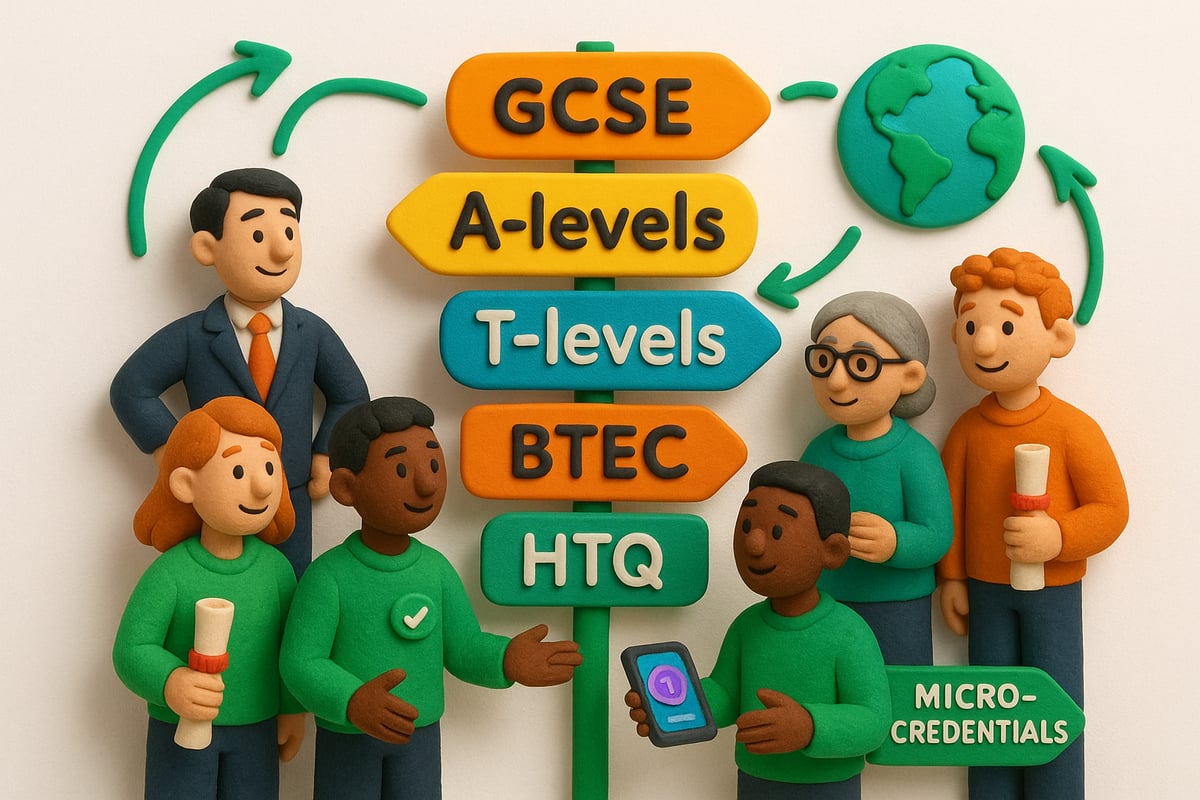
The backbone of qualifications and education is the structure provided by national and international frameworks. In the UK, the Regulated Qualifications Framework (RQF) maps out levels from 1 to 8, starting with GCSEs and progressing to doctoral degrees. Globally, frameworks like NZQA in New Zealand and the European Qualifications Framework ensure skills are recognised across borders.
Here’s a quick comparison of qualification levels:
| Level | UK Example | NZQA Equivalent | Typical Age/Stage |
|---|---|---|---|
| 1 | GCSE (grade 3-1) | Level 1 Certificate | Age 14-16 |
| 2 | GCSE (grade 9-4) | Level 2 Certificate | Age 16 |
| 3 | A-level/BTEC | Level 3 Certificate | Age 18/Post-16 |
| 4-5 | HNC/HND, Foundation | Diploma/Cert. | Post-18/College |
| 6 | Bachelor's Degree | Bachelor's Degree | Undergraduate |
| 7 | Master's Degree | Postgraduate Dip. | Postgraduate |
| 8 | PhD/Doctorate | Doctorate | Research/Academic |
These frameworks help learners match their qualifications and education to future goals, whether aiming for skilled employment or advanced study.
Key Changes and Updates in 2026
The qualifications and education landscape in 2026 is shaped by significant reforms. New T-levels continue to expand, offering technical alternatives to A-levels for post-16 learners. BTEC and Higher Technical Qualifications (HTQs) are being updated to align with employer needs and digital skills.
According to official guidance on post-16 qualifications for 2025 to 2026, funding is increasingly focused on courses that provide clear routes into skilled work or further study. This shift makes it crucial for students to stay informed about which qualifications are approved and valued by employers.
GCSEs and A-levels remain foundational, but the introduction of T-levels has notably changed post-16 choices. More students are now opting for technical and vocational pathways, reflecting a broader recognition of their value.
Vocational vs. Academic Routes and Current Trends
Qualifications and education in 2026 offer two main routes: academic and vocational. Academic pathways, such as A-levels and university degrees, focus on theoretical knowledge and research. Vocational routes, including BTECs, T-levels, and apprenticeships, emphasise practical skills and direct workplace experience.
Current trends indicate a growing preference for vocational qualifications, especially as industries seek work-ready graduates. Enrolments in T-levels and HTQs have risen significantly since 2020, with many students choosing these routes for their clear links to employment.
The Impact of International Qualifications and Micro-Credentials
Global mobility is influencing how qualifications and education are valued. International frameworks like the International Baccalaureate (IB) and NZQA are widely recognised, enabling students to study or work abroad with ease. Digital badges and micro-credentials are also gaining traction, offering bite-sized proof of skills in areas such as digital technology and project management.
Employers increasingly accept micro-credentials alongside traditional qualifications, making them a powerful tool for upskilling in a rapidly changing job market.
Data and Real-World Example
Since 2020, enrolment in T-levels and HTQs has more than doubled, signalling a shift in post-16 education choices. For example, a student who might have previously chosen A-levels now has the option to pursue a T-level in Digital Production, leading directly to a skilled role or further study.
In summary, the qualifications and education landscape in 2026 is more diverse and flexible than ever. By understanding frameworks, embracing new pathways, and recognising the importance of both local and international credentials, learners can confidently chart a course toward their goals.
Choosing the Right Qualification Pathway
Selecting the best route through qualifications and education is a pivotal decision that shapes your future. With so many evolving pathways in 2026, it is crucial to make informed choices based on personal aspirations and the changing demands of the job market.
Step-by-Step Guide to Choosing Your Path
Begin by reflecting on your interests, values, and long-term goals. Ask yourself: What careers excite me? Which industries are growing? Am I drawn to hands-on work or academic study? By answering these questions, you create a foundation for navigating qualifications and education.
Next, research the entry requirements for potential careers. Some roles, like medicine or engineering, demand specific academic qualifications and subjects. Others, such as IT or business administration, offer entry through vocational or technical routes.
Explore available subjects and pathways using resources like the Subjects and study options page. This helps you match your interests to relevant qualifications and education opportunities in 2026.
Key Factors to Consider
When comparing routes, keep these factors in mind:
- Career Aspirations: Certain professions require degrees, while others value practical skills.
- Industry Requirements: Research which qualifications employers in your field prefer.
- Personal Strengths: Are you analytical, creative, or hands-on?
- Learning Preferences: Do you thrive in classroom settings, or prefer practical, real-world experience?
Evaluating these aspects ensures your chosen qualifications and education pathway aligns with your strengths and ambitions.
Academic vs. Vocational Pathways: A Comparison
Understanding the differences between academic and vocational routes is vital. The table below summarises key features:
| Feature | Academic Route (A-levels, Degrees) | Vocational Route (BTEC, T-levels, HTQ) |
|---|---|---|
| Focus | Theory, research, subject depth | Practical skills, industry relevance |
| Learning Style | Exams, essays, lectures | Projects, placements, hands-on tasks |
| Progression | University, research, professions | Direct to work, further training, HTQ |
| Flexibility | Broad subject choice | Specialised, job-focused |
| Typical Careers | Medicine, law, academia | IT, engineering, business, healthcare |
Both pathways are respected in the 2026 landscape of qualifications and education, and many students combine elements of each for a tailored experience.
The Role of UCAS Points
UCAS points are a standardised way to measure academic achievements for university applications. A-levels, BTECs, and some vocational qualifications all earn UCAS points, influencing your eligibility for higher education.
Universities increasingly accept a mix of qualifications and education backgrounds. In 2025, over 30% of university entrants held non-traditional qualifications, reflecting the system's growing flexibility.
Real-World Examples: Two Students, Two Routes
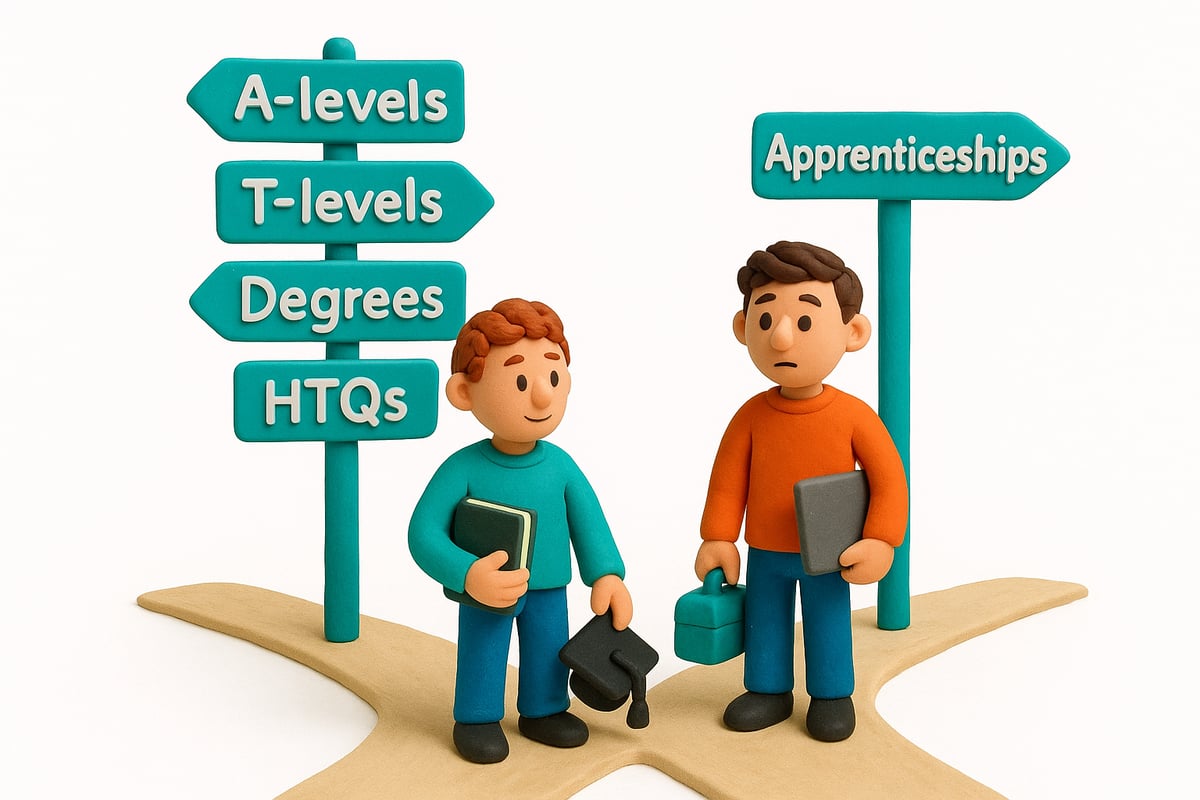
Consider Emma, who chooses A-levels in Biology, Chemistry, and Maths, then progresses to a biomedical sciences degree at university. She values research and aims for a career in healthcare innovation.
Meanwhile, Alex opts for a T-level in Digital Production, combining classroom study with industry placement. Upon completion, Alex secures a role as a junior web developer, gaining immediate entry into a dynamic tech sector.
Both students succeed by aligning their qualifications and education with their strengths and goals.
Flexibility in Modern Qualification Frameworks
The qualifications and education system in 2026 is more adaptable than ever. Pathways can be blended, with opportunities to switch between academic and vocational tracks. Micro-credentials and short courses offer additional flexibility, allowing students to upskill or pivot as industries evolve.
No single route guarantees success. Instead, the best results come from informed decisions, ongoing self-assessment, and a willingness to embrace new opportunities in qualifications and education.
Emerging Trends in Education and Skills for 2026
The landscape of qualifications and education is shifting rapidly in response to technological innovation, changing workforce demands, and global connectivity. For learners and professionals alike, adapting to these trends is essential for future success. As we look to 2026, staying informed about the latest education trends shaping learning in 2026 will help you make strategic decisions about your pathway. Let us explore the most significant changes reshaping qualifications and education in the coming years.

Spotlight on Digital, Technical, and STEM Skills
Employers across the UK and globally are seeking individuals with advanced digital, technical, and STEM expertise. The demand for these skills is driving significant changes in qualifications and education, influencing both curriculum content and qualification design.
Emerging fields such as artificial intelligence, data science, cybersecurity, and green technologies are now central to many industries. Qualifications and education providers are responding by integrating these topics into both academic and vocational routes.
Key in-demand skills for 2026 include:
- Data analysis and interpretation
- Coding and software development
- Robotics and automation
- Environmental sustainability
By focusing on qualifications and education that offer strong digital and STEM foundations, learners can future-proof their careers in a rapidly evolving job market.
Blended, Online, and Flexible Learning
The shift towards blended and online learning is transforming how qualifications and education are delivered. Learners can now access high-quality courses from anywhere, combining face-to-face tuition with digital resources.
Flexible learning options are especially valuable for those balancing work, family, or other commitments. Many institutions now offer modular courses and part-time study, making it easier to upskill or retrain at any stage of life.
Blended learning environments also foster independent study skills and digital literacy. As the qualifications and education sector adapts, expect to see further innovation in virtual classrooms, interactive content, and remote assessment tools.
Micro-credentials and Stackable Qualifications
Micro-credentials and stackable qualifications are rapidly gaining traction in the qualifications and education sector. These short, focused courses allow learners to acquire specific skills and demonstrate expertise in targeted areas.
Institutions and employers alike are recognising the value of micro-credentials. According to recent data, enrolments in micro-credential programmes have risen significantly since 2020:
| Year | Micro-credential Enrolments |
|---|---|
| 2020 | 25,000 |
| 2023 | 60,000 |
| 2025 | 100,000 |
For example, a marketing professional might complete a micro-credential in digital analytics to enhance their skill set. By stacking multiple micro-credentials, individuals can build a personalised qualifications and education portfolio that aligns with their career goals.
Industry Collaboration and Employer Input
Industry collaboration is reshaping qualifications and education, ensuring that what is taught aligns with real-world needs. New qualification types, such as Higher Technical Qualifications (HTQs) and T-levels, are developed in partnership with employers.
This approach helps bridge the gap between education and employment. Employers are increasingly involved in curriculum design, assessment, and work placement opportunities, making qualifications and education more relevant and practical.
As a result, graduates of these programmes are better prepared for immediate entry into the workforce and possess skills that are directly valued by employers.
Lifelong Learning and Globalisation
Lifelong learning is now a necessity rather than an option. Qualifications and education systems are evolving to support ongoing upskilling and reskilling, helping individuals stay competitive in a global job market.
Globalisation and the rise of remote work mean that qualifications and education must be adaptable and internationally recognised. Many learners are pursuing courses that offer global mobility, such as international diplomas and online programmes.
By embracing lifelong learning and seeking out qualifications and education that support international opportunities, today's learners can thrive in an interconnected, ever-changing world.
Maximising Success: Strategies for Learners in 2026
Achieving success in 2026 means more than simply enrolling in a course. The qualifications and education landscape is dynamic, so learners need a holistic approach to stand out and thrive. This section explores practical strategies to help you reach your goals, make informed decisions, and future-proof your career.

Setting Goals and Mapping Qualification Pathways
Success starts with clear purpose. Begin by defining your short-term and long-term objectives. Consider where you want your qualifications and education to take you, whether that is higher study, direct employment, or a mix of both.
Break your journey into manageable milestones. For example, if your goal is a career in healthcare, outline the steps from GCSEs to required degrees or vocational credentials. Use a table to visualise your pathway:
| Stage | Example Qualification | Next Step |
|---|---|---|
| GCSEs | Science, Maths, English | A-levels or BTEC Health |
| Post-16 | A-level Biology or T-level | University or HTQ |
| Higher | Nursing Degree or HTQ | Professional Registration |
Regularly re-evaluate your goals as the qualifications and education environment evolves. Stay flexible and open to new routes that may better align with emerging opportunities.
Making Informed Choices for the Future
When selecting subjects or courses, research industry trends and skills in demand. The qualifications and education system now offers a wider range of traditional and alternative routes, so match your strengths and preferences to what employers seek.
Ask yourself:
- What are my interests and aptitudes?
- Which industries are growing or changing?
- Which qualifications open the right doors for me?
Incorporate emerging topics such as digital skills or artificial intelligence, which are increasingly valued. Explore how emerging EdTech trends in 2026 are shaping learning, making it easier to access personalised and flexible options.
Consult advisors, attend open days, and use official resources to compare courses. Remember, the right decisions now can unlock future opportunities in the competitive world of qualifications and education.
Work Experience and Building a Learning Portfolio
Academic achievement alone is no longer enough. Employers value practical skills gained through internships, part-time work, or volunteering. Combining a T-level with a part-time industry placement, for example, demonstrates both knowledge and workplace readiness.
Create a personal learning portfolio to showcase your achievements. Include:
- Micro-credentials or digital badges
- Project work and extracurricular activities
- Certificates from short courses
Consider vocational pathways such as the business administration and technology pathway to gain industry-specific skills. Recent studies show students with work experience during their studies enjoy higher employment rates after graduation.
Leveraging Support Services and Building Resilience
Maximise your success by tapping into university and college support services. These include academic advice, financial guidance, and wellbeing resources. Proactively seek help when needed, especially during transitions or challenging periods.
Building resilience and adaptability is essential in the current qualifications and education landscape. Develop self-directed learning habits and stay motivated by celebrating progress, however small.
Remember, your journey will have ups and downs. By cultivating a growth mindset and using all available support, you will be well equipped to meet the demands of 2026 and beyond.
Lifelong Learning and Future-Proofing Your Career
Staying competitive in 2026 means embracing lifelong learning as an integral part of your career journey. The world of qualifications and education is evolving rapidly, with new technologies and industries shaping the future of work. To thrive, individuals must be proactive in acquiring fresh knowledge and adapting their skill sets.
Discover more research & credentials: AI in education expert for NZ schools
Continuous upskilling and reskilling are now essential, not just desirable. Whether you are a recent graduate or a mid-career professional, engaging with qualifications and education opportunities will open doors to emerging fields like artificial intelligence, digital transformation, and green technology. According to recent data, the percentage of adults returning to formal study has risen sharply, with over 20% enrolling in further education during 2025-2026.
Employers increasingly value skills over traditional degrees, seeking candidates who demonstrate adaptability and a commitment to ongoing development. This shift means that your personal brand and professional network are built not only through experience, but also through a visible dedication to learning. For those considering a career pivot, return-to-learn programmes and adult education provide flexible, targeted pathways to gain new qualifications and education aligned with market needs.
For deeper insights into the forces driving these changes, explore the higher education trends to watch in 2026, including the rise of micro-credentials, AI integration, and the growing importance of short-term, skills-focused learning.
Making the Most of Online and Flexible Learning
Online and blended learning options have revolutionised access to qualifications and education. These flexible formats allow learners to study at their own pace, balance work and family commitments, and tailor their education to fit individual goals. The surge in remote micro-credentials means professionals can upskill in targeted areas without leaving their current roles.
However, online learning presents unique challenges. Staying motivated, managing time effectively, and maintaining engagement require self-discipline. Setting clear goals, creating a structured study schedule, and participating in online forums or study groups can make a significant difference.
Consider the story of a mid-career professional who retrained in data analytics through a series of online micro-credentials. By building a portfolio of new skills, they successfully transitioned into a high-demand sector, demonstrating the power of qualifications and education delivered through flexible platforms.
Employers now recognise the value of online achievements, particularly when paired with practical experience. A proactive approach to digital learning ensures you remain relevant and prepared for the next stage of your career.
Leveraging Support from Accredited Providers
Choosing the right training provider is crucial when pursuing qualifications and education for lifelong learning. Accredited institutions ensure that your achievements are recognised nationally and internationally, safeguarding your investment of time and resources.
Look for providers with established reputations, transparent assessment methods, and robust student support systems. Accreditation bodies such as NZQA and Ofqual set high standards, helping you avoid the pitfalls of unrecognised or substandard courses.
Many adults find success by enrolling in structured programmes designed for mature learners. For instance, the Adult and tertiary teaching certificate offers a practical pathway for those seeking to move into education or training roles, combining industry relevance with formal recognition.
Building relationships with peers and mentors within accredited programmes can also enhance your personal and professional growth. With the right support and a focus on recognised qualifications and education, you can confidently future-proof your career.
As you look ahead to 2026, it’s clear that staying informed about the latest qualifications and flexible learning options can make all the difference in your career journey. Whether you’re aiming for a nationally recognised diploma, upskilling with micro-credentials, or exploring new industry pathways, having the right guidance and support is key. If you’re ready to take the next step and secure your success in a changing world, why not explore your options today? Get ahead now!