
Navigating your career in 2026 requires more than just enthusiasm and hard work. The modern employment landscape demands structured approaches to skill development, qualification achievement, and strategic career planning. Professional pathways provide this framework, offering clear routes from initial training through to advanced expertise across industries. Whether you're entering the workforce for the first time, switching careers, or seeking advancement in your current field, understanding how professional pathways operate can transform your career trajectory and open doors to opportunities you might not have considered.
Understanding the Framework of Professional Pathways
Professional pathways represent structured routes that guide individuals through progressive stages of education, training, and career development. Unlike traditional career progression, which often relies on informal advancement, these pathways provide explicit steps, recognised qualifications, and measurable outcomes at each level.
The National Career Development Association offers extensive resources that help individuals understand various career planning tools and occupational information. These resources demonstrate how professional pathways integrate self-assessment, skill development, and credential acquisition into coherent career strategies.
Key Components of Effective Pathways
Several elements distinguish well-designed professional pathways from general career advice:
- Nationally recognised qualifications that employers understand and value
- Progressive skill development building from foundational to advanced competencies
- Multiple entry and exit points accommodating diverse learner circumstances
- Industry alignment ensuring training matches current workforce needs
- Flexible delivery options including on-campus, workplace, online, and blended learning
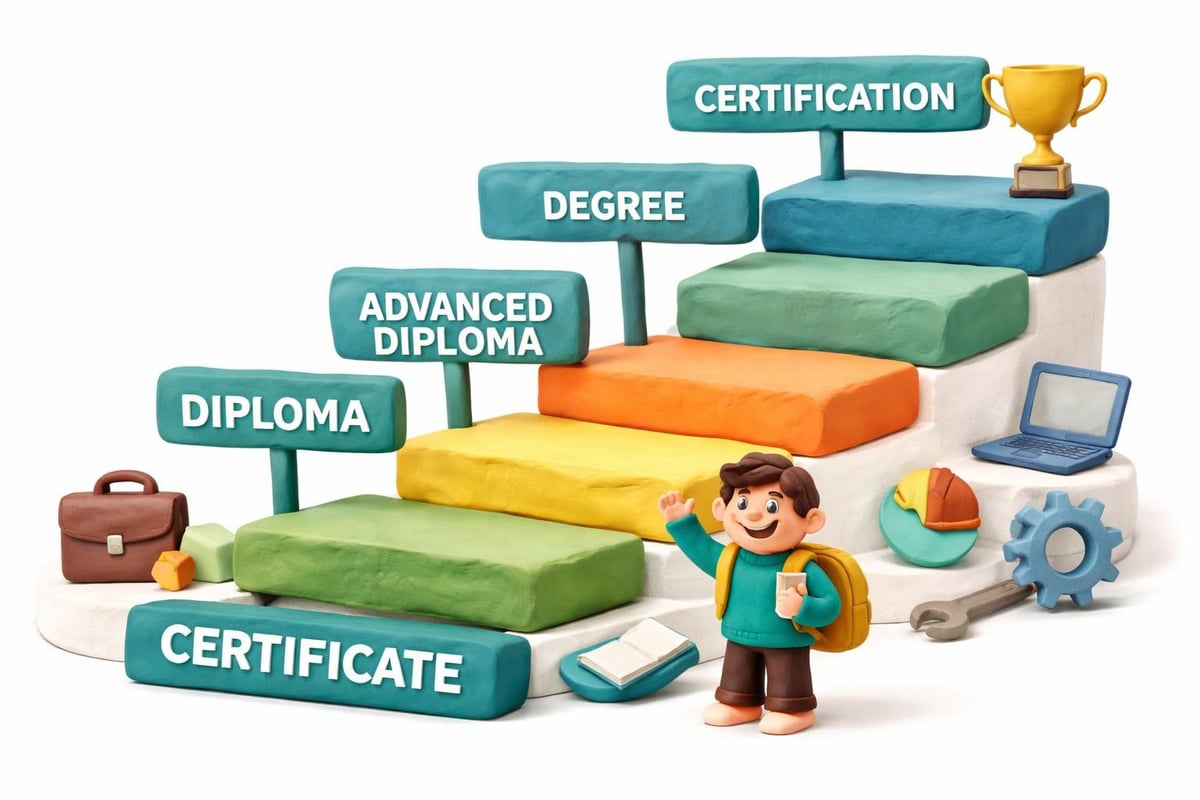
Qualifications frameworks provide the backbone for many professional pathways. In New Zealand, the NZQA framework establishes 10 levels of qualifications, from basic certificates through to doctoral degrees. This structure allows learners to see exactly where they stand and what steps lead to their next goal.
Building Career Foundations Through Entry-Level Qualifications
Beginning a professional pathway often starts with foundational qualifications that establish core competencies. These entry-level credentials serve dual purposes: they provide immediate employability skills whilst laying groundwork for further advancement.
Level 3 and Level 4 qualifications typically focus on practical skills and fundamental knowledge. For instance, business administration qualifications at Level 3 introduce essential office systems, communication protocols, and technology applications that employers expect from administrative professionals.
The Value of Micro-Credentials
Micro-credentials have emerged as powerful tools within professional pathways, particularly for emerging fields where traditional qualifications haven't yet caught up with industry demands.
| Credential Type | Duration | Best For | Career Impact |
|---|---|---|---|
| Micro-credential | 4-12 weeks | Specific skills, emerging technologies | Quick upskilling, niche expertise |
| Certificate (Level 3-4) | 6-12 months | Foundation knowledge, entry roles | First qualification, career change |
| Diploma (Level 5-6) | 1-2 years | Technical competency, mid-level roles | Career advancement, specialisation |
These shorter qualifications allow professionals to rapidly acquire capabilities in fields like AI in education without committing to lengthy programmes. They fit naturally into professional pathways by providing targeted expertise that complements broader qualifications.
Working adults particularly benefit from this approach. Someone employed in education can pursue AI micro-credentials whilst maintaining their teaching position, immediately applying new knowledge and building toward more comprehensive qualifications later.
Advancing Through Mid-Level Professional Development
Once foundational skills are established, professional pathways guide learners toward intermediate qualifications that deepen expertise and expand responsibilities. Level 4 and Level 5 qualifications typically prepare individuals for supervisory roles, specialised functions, or technical positions requiring independent judgement.
The Career Pathways Toolkit from the U.S. Department of Education identifies six essential elements for successful career pathways programmes, emphasising the importance of structured progression and support systems. These principles apply across international contexts, including New Zealand's qualification framework.
Transitioning to Management and Leadership
Many professionals reach a point where technical skills alone won't advance their careers further. Professional pathways address this through management-focused qualifications.
First-line management qualifications bridge the gap between team member and leader. These programmes cover:
- Team coordination and motivation
- Resource allocation and budgeting
- Performance management systems
- Communication with senior leadership
- Problem-solving in operational contexts
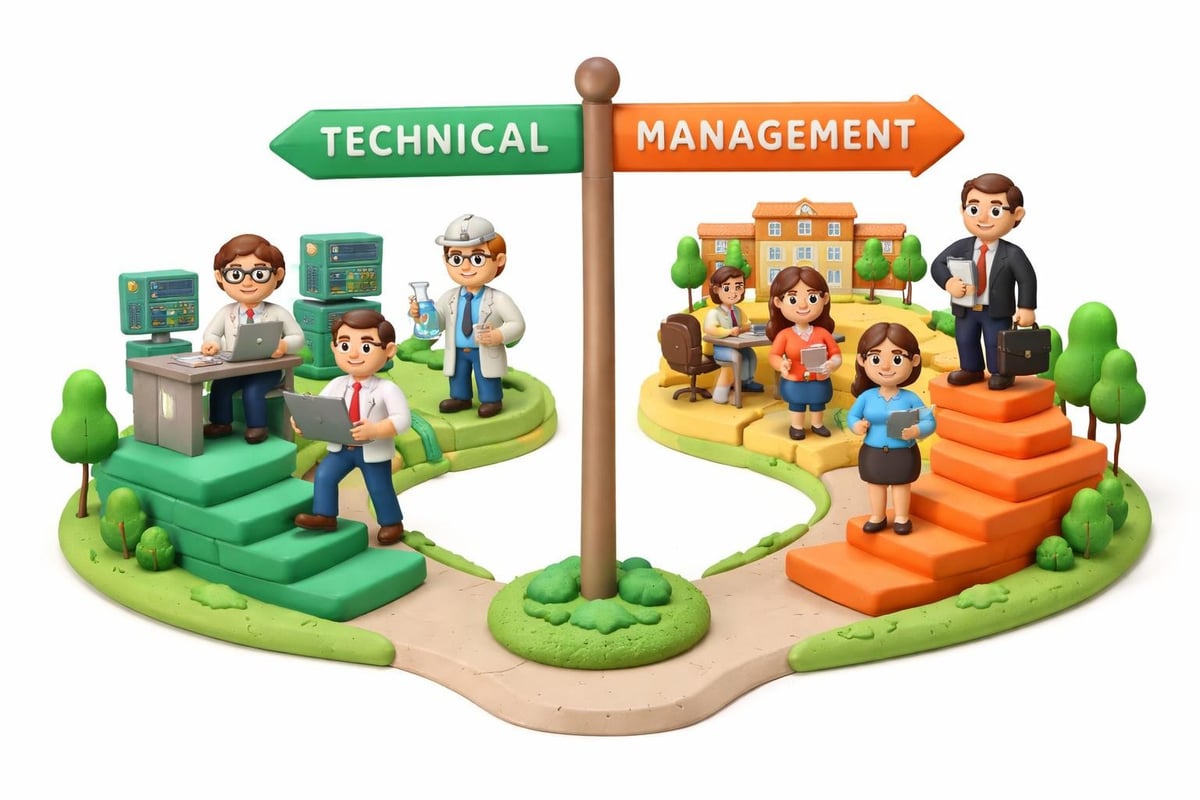
This transition represents a critical juncture in professional pathways. Individuals must decide whether to pursue deeper technical specialisation or develop broader management capabilities. Both routes offer valid career progression, and some pathways allow professionals to develop both skill sets concurrently.
Industry-Specific Pathway Considerations
Different sectors structure professional pathways according to their unique requirements, regulatory frameworks, and skill demands. Understanding these variations helps learners choose appropriate qualifications and plan realistic timelines.
Financial Services Pathways
The financial sector maintains particularly rigorous professional pathways due to regulatory requirements and the complexity of products and markets. Financial services qualifications at Level 5 prepare professionals for advice-giving roles, covering legislation, ethical frameworks, and product knowledge.
Financial professional pathways often require:
- Initial industry knowledge certification
- Product-specific qualifications
- Ongoing professional development
- Advanced specialist credentials
- Regular competency assessments
Regulatory compliance shapes these pathways significantly. Professionals cannot simply skip levels; they must demonstrate competency at each stage before progressing to more complex advisory roles.
Industrial and Technical Pathways
Industrial sectors like rope access follow distinctly different pathway structures, emphasising practical competency, safety protocols, and progressive skill acquisition under supervision.
These pathways typically involve:
- Supervised practical training with experienced technicians
- Logbook documentation of completed tasks
- Safety certification and regular reassessment
- Equipment-specific qualifications
- Progressive responsibility based on demonstrated competence
The hands-on nature of these professional pathways means that theoretical knowledge and practical ability must develop simultaneously. Learners cannot advance based solely on classroom performance; they must prove capability in real-world situations.
Supporting Career Transitions and Changes
Professional pathways serve not only those advancing in current careers but also individuals making significant transitions. Career changers face unique challenges that well-designed pathways help address.
Recognition of Prior Learning
Effective professional pathways acknowledge that learning occurs in many contexts beyond formal education. Recognition of Prior Learning (RPL) processes evaluate existing skills and knowledge, potentially granting credit toward qualifications.
This mechanism particularly benefits:
- Experienced workers without formal credentials
- International professionals with overseas qualifications
- Self-taught individuals who've developed industry skills independently
- Mature learners returning to education after extended career breaks
The Adult Training and Development Network highlights how Career Navigators support adult learners in identifying and achieving career goals, emphasising personalised guidance through complex pathway decisions.
Bridging Programmes and Preparation
Not all learners possess the prerequisites for their desired professional pathways. Bridging programmes fill gaps in foundational knowledge, ensuring learners can succeed in their chosen qualifications.
| Gap Type | Solution | Typical Duration | Outcome |
|---|---|---|---|
| Academic prerequisites | Foundation courses | 12-16 weeks | Entry to certificate programmes |
| Digital literacy | Technology skills programmes | 4-8 weeks | Competency for online learning |
| Language proficiency | ESOL with pathway focus | 12-24 weeks | Academic language capability |
| Industry awareness | Taster courses | 2-4 weeks | Informed pathway selection |
These preparatory steps represent crucial first stages in professional pathways for many learners, particularly those from non-traditional educational backgrounds.

Leveraging Flexible Learning in Modern Pathways
The evolution of professional pathways reflects changing learner needs and technological capabilities. Modern pathways incorporate flexibility that would have been impossible a decade ago.
Blended and Online Delivery Models
Today's professional pathways rarely demand continuous on-campus attendance. Flexible delivery options allow learners to balance education with employment, family responsibilities, and other commitments.
Workplace-based learning integrates seamlessly into many professional pathways, allowing employees to develop skills whilst contributing to their organisations. Employers often support these arrangements because they immediately benefit from enhanced staff capabilities.
Online components enable asynchronous learning, where students access materials, complete assessments, and interact with instructors according to their own schedules. This flexibility proves particularly valuable for:
- Shift workers in healthcare, hospitality, and emergency services
- Rural and remote learners without local training providers
- Parents managing childcare responsibilities
- Professionals travelling frequently for work
Micro-Credentialing and Stackable Qualifications
Professional pathways increasingly incorporate stackable credentials where multiple micro-credentials or certificates combine toward larger qualifications. This approach allows learners to accumulate recognised achievements progressively rather than committing to lengthy programmes upfront.
For example, someone might complete advanced AI in education micro-credentials that later contribute toward a diploma in educational technology. Each credential holds independent value whilst building toward comprehensive qualifications.
Aligning Education with Workforce Needs
The most effective professional pathways maintain strong connections between education providers, industry bodies, and employers. This alignment ensures qualifications produce graduates with capabilities that workplaces actually need.
Industry Consultation and Curriculum Development
Quality training providers regularly consult with industry stakeholders to understand emerging skill requirements, technological changes, and evolving work practices. The Pathways Resource Library compiles research and tools related to education-to-career transitions, offering resources that encourage innovation in pathway development.
Industry input shapes professional pathways through:
- Advisory committees with employer representatives
- Work placement requirements in qualification structures
- Equipment and software matching current industry standards
- Assessment tasks based on real workplace scenarios
- Guest speakers and industry mentors
This ongoing dialogue ensures that available subjects remain relevant to actual employment opportunities rather than becoming outdated theoretical exercises.
Employment Outcomes and Pathway Success
Ultimately, professional pathways succeed when learners achieve their career goals. Measuring employment outcomes helps training providers refine pathways and guide prospective students toward effective choices.
Quality indicators include:
- Employment rates for graduates within six months of completion
- Relevance of employment to the qualification field
- Salary progression compared to pre-qualification earnings
- Further study participation for those pursuing advanced pathways
- Employer satisfaction with graduate capabilities
Programmes of study that demonstrate strong outcomes provide confidence to prospective learners that their time and investment will yield tangible career benefits.
Specialised Pathways in Emerging Fields
As industries evolve, new professional pathways emerge to support workforce development in novel areas. These cutting-edge pathways often begin with micro-credentials before expanding into comprehensive qualification structures.
Technology and Digital Transformation
Digital skills pervade virtually every occupation in 2026, but some professional pathways focus specifically on technology roles. From cybersecurity to data analysis, these pathways must continuously update to match rapidly changing technological landscapes.
Education sector workers increasingly need technology integration skills. Professional pathways in this area might begin with fundamental digital literacy, progress through AI in education applications, and advance to designing technology-enhanced curricula.
Assessment and Quality Assurance
Behind every professional pathway sits assessment infrastructure ensuring learners actually acquire stated competencies. Assessor qualifications represent their own professional pathway, developing expertise in evaluation, moderation, and quality assurance.
These pathways attract:
- Experienced practitioners wanting to contribute to training
- Teachers seeking industry assessment skills
- Quality managers in organisations with training functions
- Consultants supporting multiple training providers
Assessment pathways demonstrate how professional pathways extend beyond direct service delivery into supporting functions that ensure education quality.
Policy Frameworks Supporting Pathway Development
Government policies significantly influence how professional pathways operate, particularly through funding mechanisms, qualification frameworks, and quality assurance systems.
NZQA Accreditation and Quality Standards
NZQA accreditation represents a high quality tier in New Zealand's private training sector. Providers with this status demonstrate consistent excellence in educational delivery, learner support, and outcome achievement.
This accreditation matters for professional pathways because it assures learners that:
- Qualifications are nationally recognised
- Teaching meets established standards
- Support services are comprehensive
- Outcomes are regularly monitored
- Continuous improvement processes operate
The implementation of career pathways under workforce development legislation illustrates how policy frameworks support systematic career development at national levels.
Funding and Accessibility
Professional pathways become truly accessible when financial barriers don't prevent capable learners from participating. Various funding mechanisms support pathway participation:
- Government-subsidised training in priority sectors
- Employer-sponsored professional development
- Student loans and allowances for eligible learners
- Industry scholarship programmes
- Payment plans and deferred fee arrangements
These financial supports ensure that professional pathways serve diverse populations rather than only those with existing resources.
Navigating Pathway Choices and Decision-Making
With numerous professional pathways available across sectors and levels, learners face complex decisions about which route best suits their circumstances, interests, and goals.
Self-Assessment and Career Exploration
Effective pathway selection begins with honest self-assessment. Understanding your strengths, interests, values, and circumstances helps narrow options to pathways with genuine fit and completion likelihood.
Career exploration tools help individuals:
- Identify transferable skills from previous experience
- Discover occupations matching their interests
- Understand qualification requirements for target roles
- Estimate realistic timeframes for pathway completion
- Assess financial implications of different choices
St. Mary’s College’s Professional Pathways courses provide models for integrating career readiness competencies into pathway programmes, helping learners develop not just technical skills but also self-awareness and planning capabilities.
Getting Professional Guidance
While self-directed research provides valuable insights, professional guidance often proves invaluable when navigating complex pathway decisions. Career advisors, industry mentors, and training provider staff offer perspectives that complement individual research.
Quality guidance includes:
- Discussion of career goals and personal circumstances
- Explanation of pathway options and requirements
- Realistic assessment of timeframes and commitments
- Information about support services available
- Connection to relevant industry contacts
Those considering enrolment options benefit from discussing their specific situations with education advisors who understand both qualification structures and individual learning needs.
The Future Evolution of Professional Pathways
Professional pathways will continue evolving as work itself transforms. Several trends suggest how these pathways might develop in coming years.
Lifelong Learning and Continuous Upskilling
The concept of completing education early in life and then working for decades with static skills no longer reflects reality. Professional pathways increasingly accommodate continuous learning throughout careers.
This shift means pathways become less linear and more cyclical, with professionals periodically returning to education for:
- New technology skills as industries digitise
- Updated regulatory knowledge as frameworks change
- Leadership development at career transition points
- Emerging field credentials as industries evolve
Modular pathway design supports this lifelong learning approach, allowing professionals to pursue specific skills without committing to full re-qualification.
Integration of Work and Learning
Boundaries between work and learning continue blurring. Professional pathways increasingly embed learning directly into employment through apprenticeships, cadetships, and work-integrated programmes.
These models benefit learners who gain income whilst studying and employers who develop talent specifically suited to their operations. The comprehensive guide to career pathways programmes emphasises this integration as essential for successful workforce development.
Professional pathways provide structured routes to career success, combining nationally recognised qualifications with practical skill development and industry alignment. Whether you're beginning your career journey, transitioning to a new field, or advancing to higher levels of expertise, these pathways offer clear progression steps tailored to diverse learning needs and employment goals. Summit Institute delivers NZQA-approved qualifications across business, financial services, education technology, and specialised industrial fields through flexible learning options designed to support your professional pathway ambitions. Explore the range of certificates, diplomas, and micro-credentials available and take the next step toward achieving your career potential.