Are you ready to unlock new career opportunities in New Zealand with a nationally recognised qualification? The nz certificate is your key to standing out in a competitive job market, opening doors across a wide range of industries.
This article is your comprehensive guide to navigating the New Zealand Certificate landscape in 2026. You will discover what these certificates are, the benefits they offer, and how to choose the right path for your future.
We will walk you through the application process, explore funding options, and share expert tips to help you succeed. With growing demand for qualified professionals, flexible learning options, and industry recognition, now is the perfect time to explore your options and take the next step towards your goals.
Understanding NZ Certificates: What They Are and Why They Matter
Are you considering a nz certificate as your next step in education or professional development? In New Zealand, these qualifications are a cornerstone of the tertiary sector, providing clear, practical pathways for learners at all stages.

What Is an NZ Certificate?
An nz certificate is a nationally recognised qualification awarded at Levels 1 to 6 on the New Zealand Qualifications Framework (NZQF). These certificates are designed to validate practical knowledge and technical skills in a wide array of fields. Whether you are just beginning your career or looking to formalise experience, an nz certificate offers a credible credential that is respected throughout New Zealand.
The NZQA Framework: Quality and Trust
The New Zealand Qualifications Authority (NZQA) ensures that every nz certificate meets strict quality standards. The NZQA oversees the design, delivery, and assessment of qualifications, giving learners and employers confidence in the value of each award. For a deeper look at how the framework is structured, visit the NZQA’s New Zealand Qualifications and Credentials Framework.
NZ certificates are offered at different levels, from foundational knowledge (Level 1) to advanced technical skills (Level 6). This tiered approach enables progression and lifelong learning, while maintaining consistent national standards.
Fields and Examples: Wide-Ranging Opportunities
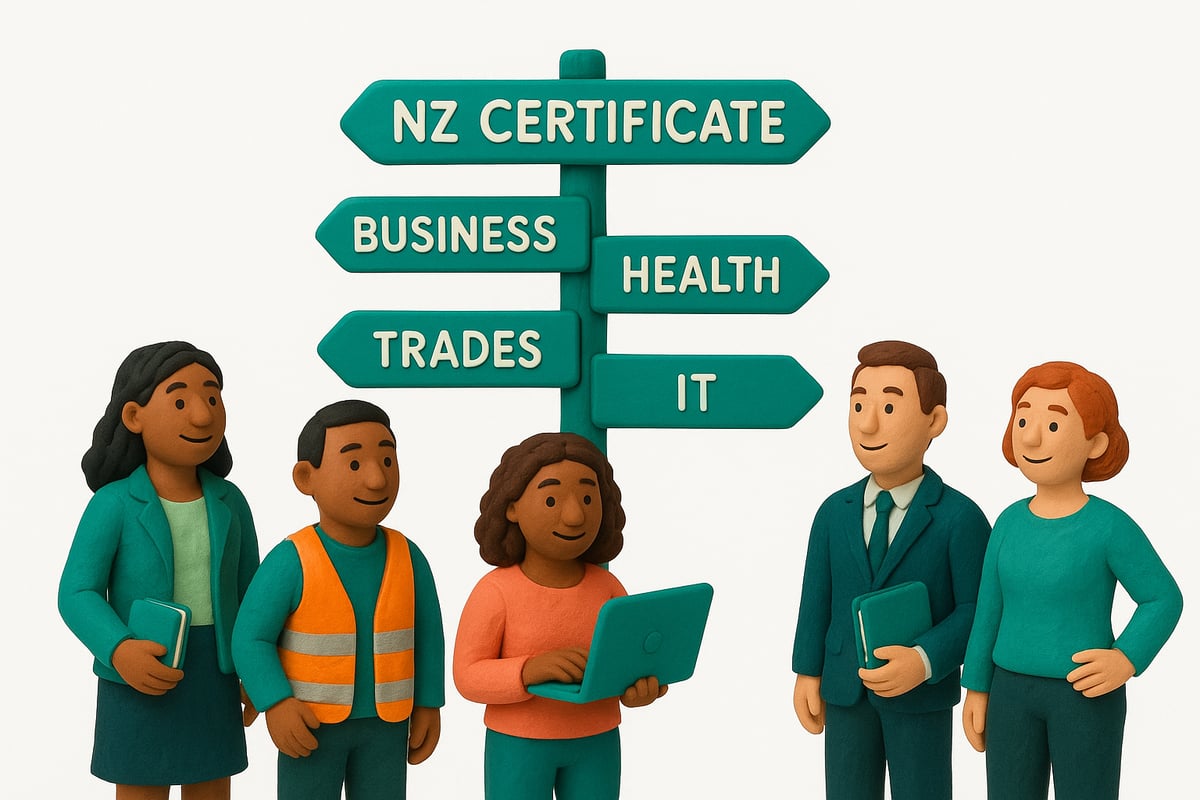
The nz certificate is available in nearly every major sector. You can find programmes in:
- Business administration
- Information technology and digital skills
- Trades and construction
- Health and community care
- Financial services
- Floristry, education, and more
For example, the NZ Certificate in Business Administration is a popular option for those entering the corporate world, while the NZ Certificate in Financial Services suits those pursuing roles in banking and insurance.
Who Benefits from an NZ Certificate?
An nz certificate is valuable for:
- School leavers seeking a direct route into employment
- Professionals wanting to upskill or switch careers
- Workers aiming for formal recognition of existing abilities
- Employers looking for staff with proven, up-to-date expertise
Flexible study options, including full-time, part-time, and distance learning, ensure that anyone can pursue a qualification regardless of their life situation.
Industry Alignment and Demand
NZ certificates are developed in close partnership with industry, ensuring graduates learn relevant, job-ready skills. Employers trust these qualifications because they reflect current workplace standards and regulatory requirements.
Each year, more than 50,000 students enrol in nz certificate programmes, according to NZQA. This high uptake demonstrates the ongoing demand for practical, certified skills in New Zealand’s workforce.
Certificate, Diploma, or Degree: What’s the Difference?
Understanding how an nz certificate compares to other qualifications is vital when planning your education journey. Here is a quick comparison:
| Qualification Type | Levels | Focus | Typical Duration | Outcome |
|---|---|---|---|---|
| NZ Certificate | 1–6 | Practical/technical skills | 6 months–2 years | Entry/intermediate level roles |
| NZ Diploma | 5–7 | Broader/applied knowledge | 1–2 years | Advanced/leadership roles |
| Degree (Bachelor’s) | 7–8 | Academic/theoretical depth | 3+ years | Professional/graduate positions |
An nz certificate is ideal if you want to quickly gain new skills, upskill for your current job, or gain a stepping stone to further study.
Why NZ Certificates Matter
Choosing an nz certificate can set you apart in a competitive job market. With industry recognition, government quality assurance, and flexible learning modes, these qualifications are a smart investment in your future.
Choosing the Right NZ Certificate for Your Goals
Selecting the ideal nz certificate is a pivotal step on your educational journey. Begin by reflecting on your own aspirations. Are you aiming to launch a new career, upskill for advancement, or formalise your current expertise? Your motivations will help shape the direction you take.
Think about your personal interests and strengths. Choosing a qualification that aligns with what you enjoy increases your chances of success and satisfaction. If you are passionate about technology, healthcare, or business, there is an nz certificate pathway tailored for you.
Identifying Industry Demand and Trends
Researching the current and future landscape of your chosen field is essential. Look at labour market trends and skill shortages projected for 2026. Sectors such as digital technology, healthcare, and sustainability are experiencing strong growth, making certain nz certificate programmes particularly valuable.
Consult industry reports, career websites, and employer feedback to understand which qualifications are in demand. This research ensures your chosen nz certificate will be relevant and attractive to employers when you graduate.
Recognising Prior Learning and Flexible Study Modes
Take stock of your existing knowledge and experience. Many nz certificate programmes offer recognition of prior learning, allowing you to gain credit for skills acquired through work or previous study. This can shorten your study time and reduce costs.
Consider which study mode best fits your lifestyle. NZ providers offer full-time, part-time, online, and workplace-based options, making it possible to balance learning with work or family commitments. Flexibility is a hallmark of the nz certificate system, supporting learners at every stage.
Choosing Credible Providers and Using Resources
Selecting an NZQA-accredited provider is crucial for the credibility and national recognition of your nz certificate. Accreditation assures you that the programme meets quality standards and is valued by employers across New Zealand.
Make use of decision-making tools such as career quizzes, provider comparison charts, and Assessing NZ Certificate Subjects to explore available options. Reading learner testimonials and case studies can also provide valuable insight into what to expect from different programmes.
Comparing Popular NZ Certificates
To help you decide, compare some of the most sought-after nz certificate options. The table below highlights two popular choices:
| Certificate Title | Field | Level | Ideal For | Key Outcomes |
|---|---|---|---|---|
| NZ Certificate in Business Administration | Business | 3 | Entry-level, office roles | Office skills, communication, IT |
| NZ Certificate in Assessment Practice | Quality Assurance | 4 | Experienced professionals | Assessment design, best practices |
Weigh the entry requirements, career prospects, and learning outcomes to ensure your chosen nz certificate aligns with your goals.
Step-by-Step Guide: How to Apply for an NZ Certificate in 2026
Preparing to apply for an nz certificate in 2026 can feel overwhelming, but breaking the process into clear steps makes it manageable. This guide walks you through each phase, ensuring you meet all requirements and deadlines for your chosen programme.

Step 1: Research and Shortlist Programmes
Start by clarifying your career goals and the skills you wish to develop. Explore the wide range of nz certificate options available across business, technology, health, and trades.
Visit NZQA and provider websites to compare programme content, study modes, and outcomes. Look for certificates that align with your interests and industry demand for 2026.
Check for flexible delivery options, such as online or blended learning, that suit your lifestyle. Create a shortlist of programmes that match your aspirations and eligibility.
Review entry requirements and note any special prerequisites for your selected nz certificate programmes.
Step 2: Check Entry Requirements and Recognition of Prior Learning
Before applying for an nz certificate, review the academic and language prerequisites. Most programmes require NCEA Level 2, equivalent qualifications, or relevant work experience.
For international students, check English language requirements, such as IELTS or TOEFL scores. Some providers may assess your skills through interviews or practical tasks.
If you have prior study or professional experience, ask about recognition of prior learning (RPL). This can shorten your study time and acknowledge your existing capabilities.
Gather information early to ensure you meet every requirement for your chosen nz certificate pathway.
Step 3: Prepare Your Application Materials
Organise all necessary documents before you begin your nz certificate application. This preparation will streamline the process and reduce last-minute stress.
Typical materials include:
| Document Type | Description |
|---|---|
| Academic transcripts | Official records of previous study |
| Proof of identity | Passport or birth certificate |
| Personal statement or CV | Outlines goals and experience |
| English test results | Required for non-native speakers |
International and mature students may need to provide additional evidence, such as qualification assessments or work references. Ensure all documents are up to date and meet the provider’s specifications for your nz certificate application.
Step 4: Submit Your Application
Once your materials are ready, apply online through your chosen provider’s portal. Many institutions, such as the Open Polytechnic and Summit Institute, offer straightforward digital applications for an nz certificate.
Pay close attention to application deadlines and intake dates for 2026. Each provider sets its own schedule, so mark key dates in your calendar.
Be sure to review course start, end, and withdrawal policies before submitting. For a comprehensive overview of the process, refer to the Enrolment Process for NZ Certificates to ensure you follow each step accurately.
Step 5: Secure Funding and Plan Finances
Understanding the financial commitment of an nz certificate is essential. Tuition fees vary by provider and programme level, so review costs carefully.
Explore these funding options:
- Scholarships and awards (provider or industry-specific)
- Student loans and allowances (via StudyLink)
- Fees Free eligibility for first-time learners
- Employer sponsorship or workplace subsidies
Compare part-time and full-time study costs. Create a budget for additional expenses, such as course materials or travel. Planning ahead will help you focus on your studies and make the most of your nz certificate experience.
Step 6: Enrolment Confirmation and Next Steps
After submitting your nz certificate application, monitor your email for an offer of place. Once accepted, confirm your enrolment promptly to secure your spot.
Participate in orientation sessions, either online or on campus, to become familiar with learning platforms and support services. Make use of student support, libraries, and peer networks to settle in smoothly.
Stay proactive by setting up a study schedule and reaching out for help when needed. These final steps will set you up for a successful start in your nz certificate journey.
Navigating Funding, Fees, and Financial Support
Paying for your nz certificate is a crucial part of planning your study journey. Understanding the costs involved, as well as the funding and support options available, can help you make informed decisions and avoid financial stress.

Understanding NZ Certificate Fees
NZ Certificate fees can vary widely depending on the provider, subject area, and NZQA level. Public institutes often have different fee structures compared to private training establishments. For a quick overview, see the table below:
| NZQA Level | Typical Fees (Domestic) | Typical Fees (International) |
|---|---|---|
| Level 1–3 | $500–$2,500 | $5,000–$8,000 |
| Level 4 | $1,000–$3,500 | $6,000–$9,500 |
| Level 5–6 | $2,500–$7,000 | $8,000–$15,000 |
These figures are indicative and can change based on your chosen nz certificate, provider, and study mode. Always check with your provider for the most accurate information.
Government Funding and Student Loans
Many students are eligible for government support to ease the financial burden of an nz certificate. The Fees Free initiative allows first-time learners to study without paying tuition fees for their first year or up to 60 credits. This can be a significant saving, especially for those starting out.
If you are not eligible for Fees Free, student loans and allowances are available through StudyLink. The application process is straightforward, but you will need to provide proof of enrolment and personal identification. These options make accessing an nz certificate more achievable for people from all backgrounds.
Scholarships and Employer Support
Scholarships and awards are available to help cover the cost of your nz certificate. Providers, government agencies, iwi, and industry organisations all offer schemes, with some targeted specifically at Māori, Pasifika, or students entering high-demand fields.
Many employers are keen to support staff undertaking further study. This might include paying fees, offering study leave, or subsidising workplace-based learning. According to Tertiary Participation Statistics 2024, over 40% of nz certificate students receive some form of financial aid, highlighting the accessibility of these pathways.
Financial Planning for NZ Certificate Success
Effective financial planning is key for both part-time and full-time nz certificate students. Start by creating a budget that includes tuition, course materials, transport, and living costs. Explore all funding options early and keep track of deadlines for scholarships and loan applications.
Consider flexible work arrangements or part-time employment if needed. Many providers, such as Open Polytechnic, offer zero-fee options for selected programmes or have scholarship success stories to inspire you. Staying organised and proactive can set you up for success as you pursue your nz certificate.
Maximising Your Success: Study Tips, Support, and Career Outcomes
Unlocking the full potential of your nz certificate journey requires more than just enrolling in a programme. By tapping into available resources, building essential skills, and planning for career growth, you can set yourself up for long-term success. Let us explore the strategies and support systems that help students thrive in their studies and beyond.
Discover more research & credentials: AI in education expert for NZ schools
Study Support and Resources
Every nz certificate student has access to a robust network of support designed to enhance learning. Online libraries, digital learning platforms, and interactive study tools make it easier to access course materials from anywhere in New Zealand.
Dedicated tutor support is available for academic guidance, while peer forums and study groups foster collaboration. Many providers offer tailored assistance for Māori, Pasifika, and disabled learners, ensuring everyone can participate fully. Regular webinars and workshops help build confidence and address common challenges.
Time management is critical for balancing study, work, and personal commitments. Providers like Open Polytechnic offer online planners and progress trackers to help you stay on top of deadlines. Support services also include wellbeing resources and academic skills coaching.
By actively engaging with these resources, nz certificate students build resilience and maintain motivation throughout their studies.
Skills Development and Real-World Application
The nz certificate framework places a strong emphasis on practical, job-ready skills. Programmes are designed in close collaboration with industry, ensuring that learners develop competencies that employers value.
Workplace projects, hands-on assessments, and industry placements are common features. Micro-credentials allow students to quickly upskill in emerging areas such as digital literacy or artificial intelligence. For example, the NZ Certificate in Business Administration equips students with essential office technology, communication, and organisational skills.
Employers recognise the value of nz certificate qualifications, often viewing graduates as ready to contribute from day one. Case studies show that learners who complete Assessment Practice certificates transition smoothly into roles in quality assurance and training. This practical focus ensures you are not just learning theory, but applying knowledge in real-world contexts.
Career Pathways and Progression
Earning a nz certificate can open doors to further study and rewarding careers. Many graduates progress from certificate programmes to diplomas or degrees, building on their foundational skills.
Holding a nz certificate can enhance your employability and increase your salary prospects. According to NZQA, certificate holders consistently achieve high employment rates across a range of sectors. The demand for skilled professionals remains strong, with industries actively seeking graduates who can hit the ground running.
Lifelong learning is encouraged, with opportunities to upskill or reskill as your career evolves. Success stories abound, from learners who started in entry-level positions before advancing to management, to those who used their qualifications to pivot into new industries.
By planning your pathway and leveraging the support available, your nz certificate can become the first step in a dynamic and fulfilling professional journey.
Frequently Asked Questions About NZ Certificates in 2026
Are you curious about the ins and outs of the nz certificate in 2026? Explore the answers to these frequently asked questions to help you make informed decisions about your study journey.
What is the difference between an NZ Certificate, a diploma, and a degree?
An nz certificate is a nationally recognised qualification typically at Levels 1 to 6 on the NZQA framework. Diplomas are usually Level 5 or 6, focusing on more specialised knowledge, while degrees are Level 7 or higher, offering advanced theoretical and practical learning. For a detailed look at how these qualifications have evolved, see the NZQA’s History of the NZQCF.
Can I study part-time or via distance learning?
Yes, most nz certificate programmes offer flexible study options. You can choose from full-time, part-time, online, or blended learning, making it easier to fit study around your lifestyle and commitments.
How do micro-credentials fit into the NZ Certificate framework?
Micro-credentials are short, focused learning packages that address specific skills or knowledge gaps. Many providers now offer micro-credentials alongside traditional nz certificate programmes, helping you upskill quickly in areas like digital literacy or project management.
Are NZ Certificates recognised by employers in New Zealand and overseas?
Absolutely. Employers across New Zealand value the practical and job-ready skills gained through an nz certificate. Many international employers also recognise these qualifications, particularly as more global students enrol in New Zealand education each year. For recent trends, see the International Student Enrolment Growth 2025 report.
What support is available for Māori, Pasifika, and disabled learners?
Most providers offer dedicated support services for Māori, Pasifika, and disabled students enrolled in an nz certificate. These may include mentoring, cultural support groups, and accessible learning resources to ensure everyone can succeed.
How long does it take to complete an NZ Certificate?
A typical nz certificate can take from six months to two years to complete, depending on the level and whether you study full-time or part-time. Some micro-credentials can be completed in a matter of weeks.
What if I need to change or withdraw from my course?
If you need to change or withdraw from your nz certificate, contact your provider as soon as possible. They will guide you through the process and advise on refund policies or alternative pathways.
Where can I find up-to-date information on new certificate offerings for 2026?
Stay informed by checking the NZQA website, as well as major providers like Open Polytechnic and Summit Institute. These sources regularly update their nz certificate listings and admission information for each intake.
You’ve explored how NZ Certificates open doors to new opportunities, offer flexible learning options, and are recognised by employers across New Zealand. Whether you’re starting out, upskilling, or ready for a career change, taking that next step could transform your future. At Summit Institute, you’ll find nationally recognised qualifications, industry-focused programmes, and support every step of the way. If you’re ready to put your ambitions into action and take control of your success, there’s no better time to start your journey.
Get ahead now!