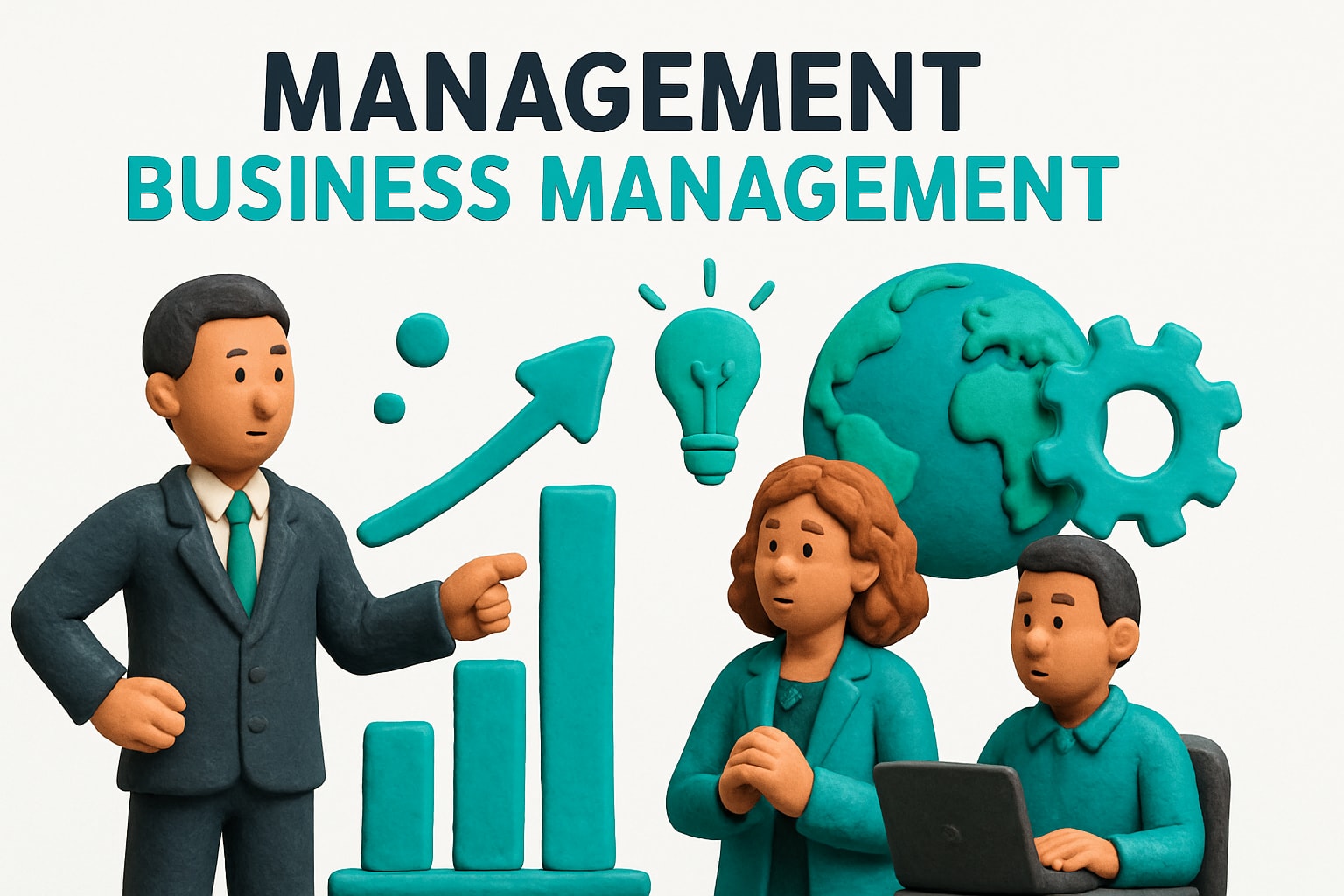
In 2026, management business management is facing unprecedented change. New technologies, shifting global markets, and evolving workforce expectations are transforming how leaders operate and succeed.
This guide is designed to help you stay ahead. Backed by research and real-world insights, it offers practical strategies for thriving in this dynamic environment.
You will explore essential management fundamentals, the latest trends, strategic planning frameworks, vital leadership skills, digital transformation, and actionable steps for building resilient, future-ready organisations.
Are you ready to lead with confidence and drive success in 2026? Let this roadmap guide your next move.
The Foundations of Modern Business Management
In 2026, the foundations of management business management are being redefined by rapid technological change, globalisation, and evolving workforce expectations. Leaders must master timeless principles while adapting to new trends. Understanding the basics is vital for anyone aiming to thrive in this fast-paced environment.

Understanding Core Management Principles
Management business management in 2026 is about seamless coordination of people, processes, and technology. The core functions—planning, organising, leading, and controlling—remain at the heart of effective management.
Adaptability and lifelong learning are now essential. Managers must embrace frameworks such as agile and lean, which foster responsiveness and efficiency. For example, agile methods enable rapid adaptation to market changes, while lean focuses on maximising value with minimal waste.
Recent data shows that over 40 percent of employers prioritise adaptability and leadership skills, highlighting the need for a strong foundation. Mastery of these fundamentals supports all advanced strategies in management business management, ensuring leaders stay resilient in a shifting landscape.
Essential Skills for Managers in 2026
To excel in management business management, today’s leaders must blend traditional and modern skills. Communication, emotional intelligence, and cross-cultural competence are crucial for building trust and leading diverse teams.
Equally important are data-driven decision-making and digital literacy. Managers with robust digital skills are 30 percent more likely to lead successful teams. Commercial awareness helps leaders spot opportunities and drive growth.
Both soft and technical skills matter. The most effective management business management professionals nurture relationships and use data to steer decisions, ensuring balanced, high-performing teams.
The Evolving Role of the Manager
The role of the manager in management business management has shifted from directive leadership to coaching and empowerment. Modern managers focus on enabling team members’ success, rather than simply directing tasks.
Hybrid and remote work environments require managers to master new tools and communication styles. Navigating diversity, equity, and inclusion (DEI) is now a strategic priority. Notably, companies with inclusive management outperform their peers by 35 percent, demonstrating the business value of these practices.
Managers who adapt to these changes in management business management create resilient, innovative teams equipped for future challenges.
The Value of Formal Management Education
Formal education remains a cornerstone of management business management success. Degrees, diplomas, and short courses from providers like the Open University and UCAS offer a range of qualifications for aspiring and current managers.
Flexible learning options—such as part-time study, online courses, and micro-credentials—make upskilling accessible. For example, micro-credentials in AI and leadership are increasingly popular. Over 60 percent of business leaders now pursue ongoing management education.
Continuous upskilling is non-negotiable. Explore Business Management Qualifications to discover recognised pathways that support professional growth in management business management.
Career Pathways in Business Management
A background in management business management opens doors to diverse careers in marketing, sales, consulting, entrepreneurship, and beyond. The skills gained are highly transferable across industries.
Strategic career planning is vital. Data shows that 80 percent of senior executives began in general management roles, highlighting the importance of building a strong foundation. Demand for management professionals is projected to grow by 7 percent by 2026.
By investing in management business management skills and planning ahead, professionals can secure long-term success and career resilience.
Emerging Trends Shaping Business Management in 2026
In 2026, the pace of change in management business management is relentless. New trends are reshaping how organisations operate, make decisions, and build resilient teams. To stay ahead, managers must understand and adapt to these key developments transforming the sector.

Digital Transformation and AI Integration
Digital transformation is at the heart of management business management strategies for 2026. Automation, artificial intelligence, and data analytics are rapidly changing how managers allocate resources, track performance, and make informed decisions.
For example, AI-powered tools now enable real-time analysis of project progress and financial health. Managers use dashboards to visualise trends and adjust strategy instantly. According to recent research, 65% of organisations plan to boost investment in digital tools, making digital fluency a must-have.
Staying updated on emerging technologies ensures managers can lead change, streamline operations, and create a culture of innovation.
Sustainability and Ethical Leadership
Sustainability is now a core component of management business management. Environmental, Social, and Governance (ESG) criteria are moving from optional to essential, as organisations respond to climate concerns and societal expectations.
Companies with strong ESG policies attract both top talent and investors. In fact, 70% of millennials prefer working for businesses that take sustainability seriously. Ethical leadership gives organisations a competitive edge, driving trust and long-term value.
Embedding ethics into daily operations strengthens reputation and supports sustainable growth.
Diversity, Equity, and Inclusion (DEI)
Diversity, equity, and inclusion have become strategic priorities in management business management. Building diverse teams is proven to enhance creativity and deliver better results. Companies in the top quartile for diversity outperform their peers by 36%, underlining the financial and cultural benefits.
Inclusive recruitment and management practices foster innovation and improve employee satisfaction. Case studies show that diverse leadership teams are more agile and responsive to market shifts.
Managers must champion DEI initiatives to maintain a high-performance culture and attract top talent.
Hybrid and Flexible Work Models
Flexible work is now the standard in management business management. The shift to hybrid and remote teams has reshaped workplace expectations. Managers are learning to lead distributed teams, maintaining engagement and productivity across locations.
Flexible work policies are linked to a 25% increase in employee satisfaction, and 60% of companies plan to continue hybrid models beyond the pandemic. Embracing flexibility helps organisations adapt quickly and respond to employee needs.
Managers who excel in this area set the pace for innovation and resilience.
Lifelong Learning and Micro-credentials
Continuous learning is essential for management business management professionals aiming to future-proof their careers. Modular, stackable credentials and short courses are on the rise, enabling managers to upskill in areas like AI, leadership, and digital transformation.
According to industry data, 55% of managers plan to enhance their skills each year. For insight into the most in-demand competencies, see 10 Critical Skills Every Leader Must Master In 2026.
Managers who prioritise learning are better equipped to navigate uncertainty and drive organisational success.
Strategic Planning for Business Success in 2026
Strategic planning is the backbone of management business management, providing leaders with a structured approach to achieving long-term goals. In 2026, organisations face rapid change and fierce competition, making robust planning more crucial than ever. Effective strategic planning aligns teams, sharpens focus, and supports adaptability in a shifting marketplace.

Setting Vision, Mission, and Values
Every successful management business management strategy begins with a clear vision, mission, and set of values. These elements guide decision-making, shape company culture, and inspire teams to strive for excellence. Vision-driven organisations consistently outperform their competitors, as employees and leaders work towards common objectives.
A well-defined vision clarifies what the organisation aspires to achieve. The mission explains the purpose and primary objectives, while core values establish the principles that guide behaviour. Aligning these elements with strategy helps boost engagement and commitment across all levels of management business management.
Regularly revisiting and refining these statements ensures they remain relevant as the business landscape evolves. When vision, mission, and values are woven into everyday operations, they become the foundation for sustainable growth and innovation.
Environmental Scanning and Market Analysis
Environmental scanning is a cornerstone of modern management business management. By systematically analysing industry trends, competitor moves, and market opportunities, organisations can anticipate challenges and seize new prospects. Tools like SWOT and PESTLE provide structured frameworks for gathering insights.
Access to real-time data analytics empowers managers to make informed decisions quickly. According to the 2026 Business Leaders Outlook: Expectations & Trends, high-performing businesses regularly conduct comprehensive market analysis to stay ahead. In fact, 70% of these organisations attribute their success to proactive scanning and analysis.
By embedding environmental scanning into management business management routines, companies can mitigate risks and capitalise on emerging trends, ensuring resilience in an unpredictable world.
Goal Setting and Performance Measurement
Clear goals are the signposts of effective management business management. Adopting SMART (Specific, Measurable, Achievable, Relevant, Time-bound) goals brings clarity and accountability to the strategic planning process. These goals help prioritise actions and allocate resources efficiently.
Performance measurement involves tracking progress using KPIs (Key Performance Indicators) and OKRs (Objectives and Key Results). Organisations with established metrics are 50% more likely to hit their targets. Regularly reviewing these metrics ensures that teams remain aligned with the company's strategic vision.
A simple table can help summarise key performance tools:
| Tool | Purpose |
|---|---|
| KPIs | Monitor critical outcomes |
| OKRs | Align objectives and results |
| Dashboards | Real-time performance data |
Embedding measurable goals within management business management frameworks drives sustained results and continuous improvement.
Building Agile and Resilient Strategies
Agility and resilience are vital in management business management, especially as disruptions become more frequent. Scenario planning allows organisations to anticipate potential futures and prepare flexible responses. Rapid response frameworks help teams adapt quickly to changing conditions.
Agile strategies enable businesses to pivot when markets shift or unexpected events occur. Data shows that agile organisations recover 30% faster from setbacks compared to their less flexible counterparts. This adaptability is a competitive advantage in 2026.
Managers should foster a culture where experimentation and learning from failure are encouraged. By prioritising agility, management business management teams are better positioned to thrive in uncertain environments.
Resource Allocation and Optimisation
Effective resource allocation is a hallmark of strong management business management. Data-driven budgeting and planning ensure that funds, talent, and technology are deployed where they create the most value. Leveraging AI and advanced analytics can dramatically improve resource efficiency.
For example, organisations using AI for resource allocation report up to 40% cost savings. Strategic allocation maximises return on investment and reduces waste. Regular reviews help identify underperforming areas and redirect resources as needed.
A focus on optimisation supports long-term growth and enables management business management teams to respond proactively to emerging opportunities and challenges.
Risk Management and Compliance
Risk management is essential in management business management, as organisations face new threats and evolving regulations. Identifying, assessing, and mitigating risks protects both assets and reputation. Compliance with data privacy, ESG standards, and industry regulations has become a core management responsibility.
Proactive risk management prevents costly disruptions. Sixty percent of businesses now increase their investment in risk management each year, recognising its role in safeguarding operations. Integrating risk assessment into strategic planning ensures that management business management teams build resilient, future-ready organisations.
Continuous monitoring, regular training, and a culture of transparency all contribute to effective risk management and ongoing compliance.
Leadership Excellence: Skills and Behaviours for 2026
Leadership in management business management is transforming rapidly as we approach 2026. The modern leader must master a blend of visionary thinking, emotional intelligence, agile decision-making, and a commitment to developing others. Success depends on embracing these critical skills while staying adaptable in an ever-evolving environment.
Discover more research & credentials: AI in education expert for NZ schools
Visionary and Transformational Leadership
Visionary leadership sits at the core of management business management excellence. Leaders who articulate a compelling vision and align teams with shared purpose inspire higher engagement and productivity. Research shows that teams led by visionary managers are 25% more productive compared to those without clear direction.
Transformational leaders not only set ambitious goals but also empower others to innovate and embrace change. By fostering an environment where creativity thrives, these leaders drive both individual and organisational growth. In 2026, aspirational leadership will be essential to guide teams through complex challenges and shifting market demands.
Emotional Intelligence and Relationship Management
Emotional intelligence is a cornerstone of effective management business management. Leaders with high EQ build trust, demonstrate empathy, and create psychologically safe workplaces where employees feel valued. This approach significantly reduces turnover, with companies reporting up to 20% lower attrition rates under emotionally intelligent managers.
Strong relationship management enables leaders to navigate diverse teams and complex interpersonal dynamics. Skills such as active listening, conflict resolution, and cultural sensitivity are now non-negotiable. As businesses become more global and interconnected, emotional intelligence is a key driver of high-performing teams.
Decision-Making in Uncertainty
The ability to make sound decisions in uncertain environments is vital for management business management professionals. Modern leaders must rely on scenario-based planning and data-driven analysis to act confidently amid ambiguity. In a fast-paced world, 60% of managers now rank decision agility as a top leadership skill.
Effective decision-makers balance intuition with evidence, quickly adapting their approach as new information arises. Whether responding to market disruptions or internal challenges, decisive leadership minimises risk and seizes opportunities. Building this capability ensures organisations remain resilient and competitive.
Coaching, Mentoring, and Talent Development
A focus on coaching and mentoring is redefining management business management roles. Leaders who invest in developing their teams accelerate talent progression and foster a culture of continuous improvement. Companies with structured mentoring programmes see talent advance 35% faster compared to those without.
For those seeking to build foundational coaching skills, the First Line Management Certificate offers practical training aligned with modern leadership demands. Investing in people not only boosts capability but also strengthens organisational resilience for the future.
Leading Through Change and Innovation
Change leadership is a defining skill in management business management for 2026. Effective leaders guide teams through transformation, encouraging innovation and adaptability. Statistics show that change-ready teams adapt 40% faster to new processes, while 70% of initiatives succeed with strong leadership support.
Leaders must communicate clearly, address resistance, and model flexibility to foster a culture where innovation flourishes. By championing change and supporting teams through transitions, managers ensure their organisations remain agile and future-ready.
Digital Skills and Technology for Future-Ready Managers
The digital revolution is reshaping management business management, setting new standards for leaders in every sector. Success in 2026 requires managers to be fluent in digital tools, data analysis, and emerging technologies. Mastering these competencies is no longer optional; it is essential for driving organisational performance and staying ahead of rapid change.
Digital Literacy and Data-Driven Management
Digital literacy is at the core of effective management business management. Today’s managers must confidently navigate digital platforms, interpret data, and use analytics to inform decisions.
Many organisations use digital dashboards to visualise performance, with 80% of managers relying on these tools for real-time insights. This shift enables leaders to spot trends quickly and respond with agility.
Data-driven management business management empowers teams to set measurable goals and optimise outcomes. When managers embrace digital fluency, they transform raw data into actionable strategies that propel the business forward.
Leveraging Automation and AI Tools
Automation and artificial intelligence are revolutionising management business management by streamlining repetitive tasks and uncovering new efficiencies. Smart managers leverage AI-driven systems for scheduling, resource allocation, and workflow automation, freeing up time for strategic priorities.
Productivity gains can be significant, with automation delivering up to 50% improvement in some sectors. To stay competitive, managers must assess which processes benefit most from AI and ensure seamless integration.
For leaders seeking deeper insight into the future of AI in management business management, the research on Agentic Business Process Management Systems provides valuable perspectives on integrating AI agents into organisational processes.
Cybersecurity and Data Privacy
With the rise of digital operations in management business management, cybersecurity has become a leadership priority. Managers must safeguard sensitive data and ensure compliance with evolving regulations.
Sixty percent of businesses face cyber threats each year, underscoring the need for robust defences. Effective strategies include regular staff training, strong password policies, and proactive threat monitoring.
A culture of cyber awareness within management business management teams reduces risk and builds trust with clients and stakeholders. Managers who champion data privacy set the standard for responsible digital leadership.
Adopting New Technologies and Continuous Learning
Staying ahead in management business management means embracing emerging technologies such as AI, cloud services, and advanced collaboration tools. Early adopters often gain a first-mover advantage, positioning their organisations for rapid growth.
Continuous learning is vital. Nearly half of all managers enrol in tech-focused courses annually to keep their skills sharp and relevant. Flexible learning options, including micro-credentials and online modules, support ongoing professional development.
Managers who prioritise continuous tech learning ensure their management business management capabilities remain future-ready, resilient, and competitive.
Practical Steps to Building a High-Performance Management Team
Building a high-performance team requires a thoughtful approach to management business management. Leaders must adapt their methods to attract, develop, and retain top talent in a shifting workplace. The following practical steps highlight key actions for future-ready management teams.
Recruitment and Onboarding for 2026 Needs
Effective recruitment is the foundation of management business management. Focus on attracting candidates who demonstrate adaptability, digital skills, and a growth mindset. Use AI tools to screen applicants efficiently and reduce unconscious bias.
A structured onboarding programme is vital. It ensures new hires understand company values and expectations. According to recent studies, companies with robust onboarding see retention rates increase by 58 percent. Prioritise onboarding that blends digital resources with personal support, helping new team members integrate quickly.
- Emphasise adaptability and learning agility
- Utilise AI-driven recruitment tools
- Offer hybrid onboarding experiences
A strong start enables future success in management business management.
Training, Upskilling, and Professional Development
Continuous learning is central to management business management in 2026. Managers who prioritise professional development build more capable teams. Encourage your staff to engage in annual training, micro-credentials, and short courses.
Flexible learning pathways, such as online or modular study, accommodate diverse needs and busy schedules. Many organisations now support managers in upskilling through Flexible Study Options, ensuring access to relevant, industry-focused content.
- Promote regular training and upskilling
- Support micro-credential and modular learning
- Align development with future business needs
Investing in development strengthens management business management capability across your team.
Employee Engagement and Retention Strategies
Successful management business management goes beyond recruitment and training. A positive, inclusive workplace culture is essential for retaining talent. Flexible work policies, recognition programmes, and open communication channels are proven to boost satisfaction.
Research shows engaged teams are 21 percent more profitable. Encourage feedback, celebrate achievements, and provide opportunities for growth. Foster a sense of belonging to reduce turnover and keep employees motivated.
- Implement flexible work arrangements
- Recognise and reward performance
- Create clear paths for advancement
High engagement is a hallmark of strong management business management.
Performance Management and Feedback
Effective performance management business management relies on continuous feedback and clear expectations. Move away from annual reviews, opting instead for regular check-ins and real-time feedback tools.
Peer reviews and transparent goal setting help employees understand their impact. Data shows companies with ongoing feedback experience 14 percent lower turnover rates. Equip managers with the skills to deliver constructive feedback and support growth.
- Schedule frequent performance discussions
- Use digital tools for real-time feedback
- Encourage peer-to-peer recognition
Consistent performance management business management drives improvement and supports organisational goals.
Flexible Management Qualifications for Future Leaders: Summit Institute
In an evolving landscape where management business management skills are crucial for future leaders, Summit Institute stands out as a premier training provider in New Zealand. As an NZQA-accredited institution, Summit Institute ensures every programme meets the highest national standards, giving learners and employers confidence in the quality of qualifications delivered.
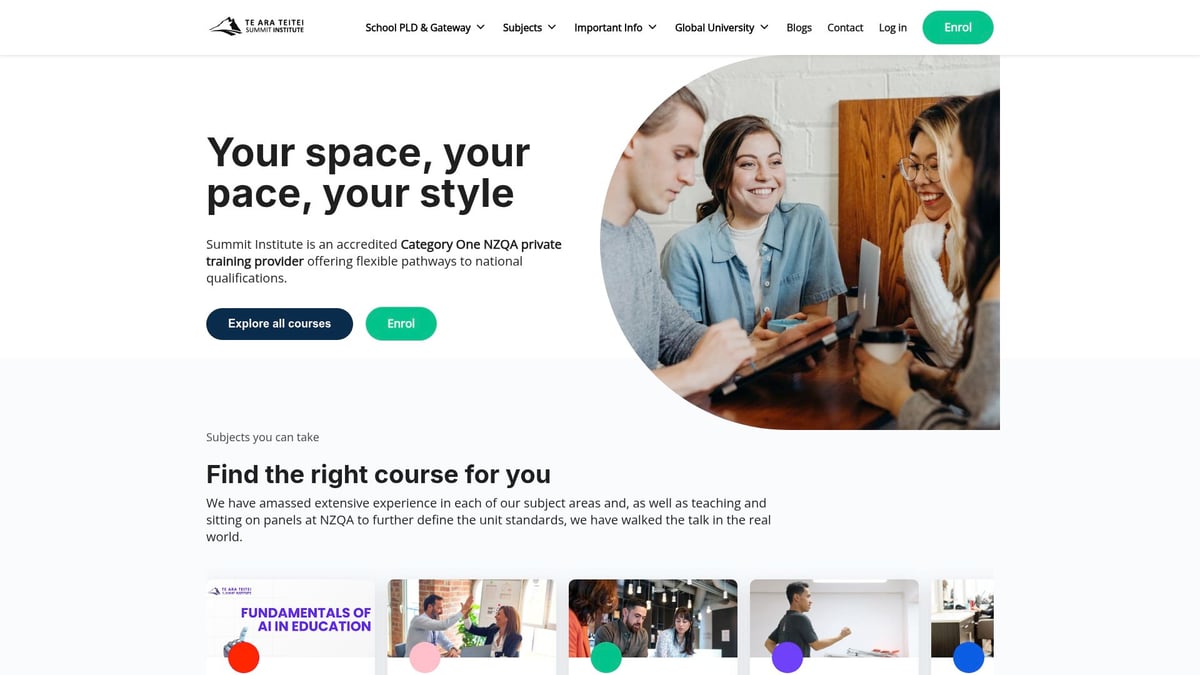
Summit Institute offers a comprehensive suite of nationally recognised qualifications tailored to the demands of modern management business management roles. These include business management, financial services, AI in education, and sector-specific leadership skills. For those seeking to advance their expertise, the Diploma in Business Level 5 provides a robust pathway, equipping graduates with the advanced knowledge and practical abilities required to drive organisational success.
Flexible learning is at the heart of Summit Institute’s approach to management business management education. Learners can choose from on-campus classes, workplace-based learning, fully online study, or blended options. This flexibility caters to working professionals, career changers, and those balancing education with other commitments. Each pathway is designed to remove barriers, making upskilling in management business management accessible and achievable for everyone.
Summit Institute’s portfolio extends beyond traditional qualifications, offering micro-credentials and modular short courses in emerging fields such as AI and digital transformation. These targeted learning opportunities enable both new entrants and experienced managers to stay ahead of trends and address specific skill gaps swiftly. Industry engagement is central, ensuring all programmes are aligned with real-world expectations and employer needs.
Personalisation is a defining feature of the Summit Institute experience. Learners benefit from customisable modules, tailored support, and a learning environment that respects diverse backgrounds, ages, and career stages. The focus on management business management extends to practical learning, mentorship, and networking, all underpinned by NZQA accreditation for assured quality and recognition.
For aspiring and current managers looking to future-proof their careers, Summit Institute provides direct support for enrolment, course advice, and ongoing professional development. Explore their range of qualifications to take the next step in your management business management journey and prepare for the challenges and opportunities of 2026 and beyond.
As you look ahead to 2026, it’s clear that the landscape of business management is rapidly changing, with digital transformation, flexible work, and lifelong learning shaping new standards. Whether you’re stepping into management for the first time or planning your next move as a leader, having the right skills and recognised qualifications is key. At Summit Institute, you’ll find industry-focused programmes, flexible learning pathways, and a commitment to quality that empowers you to stay ahead of trends and build a resilient, future-ready career. If you’re ready to take the next step, Get ahead now!