The landscape of professional development and skills training has undergone a remarkable transformation over recent years. Traditional classroom-based learning no longer serves as the only viable option for individuals seeking to advance their careers or acquire new competencies. Flexible courses have emerged as a practical solution for learners who need to balance education with work commitments, family responsibilities, and personal circumstances. These adaptive learning pathways enable students to pursue nationally recognised qualifications whilst maintaining their existing lifestyle, making education accessible to a broader demographic than ever before.
Understanding the Core Features of Flexible Learning
Flexible courses represent a fundamental shift in how educational institutions deliver content and assess learner progress. Rather than requiring students to attend fixed sessions at predetermined times, these programmes accommodate varying schedules and learning preferences.
The defining characteristics of truly adaptive education extend beyond simple scheduling convenience. They encompass multiple delivery methods, personalised pacing options, and varied assessment approaches that recognise different learning styles.
Multiple Delivery Formats
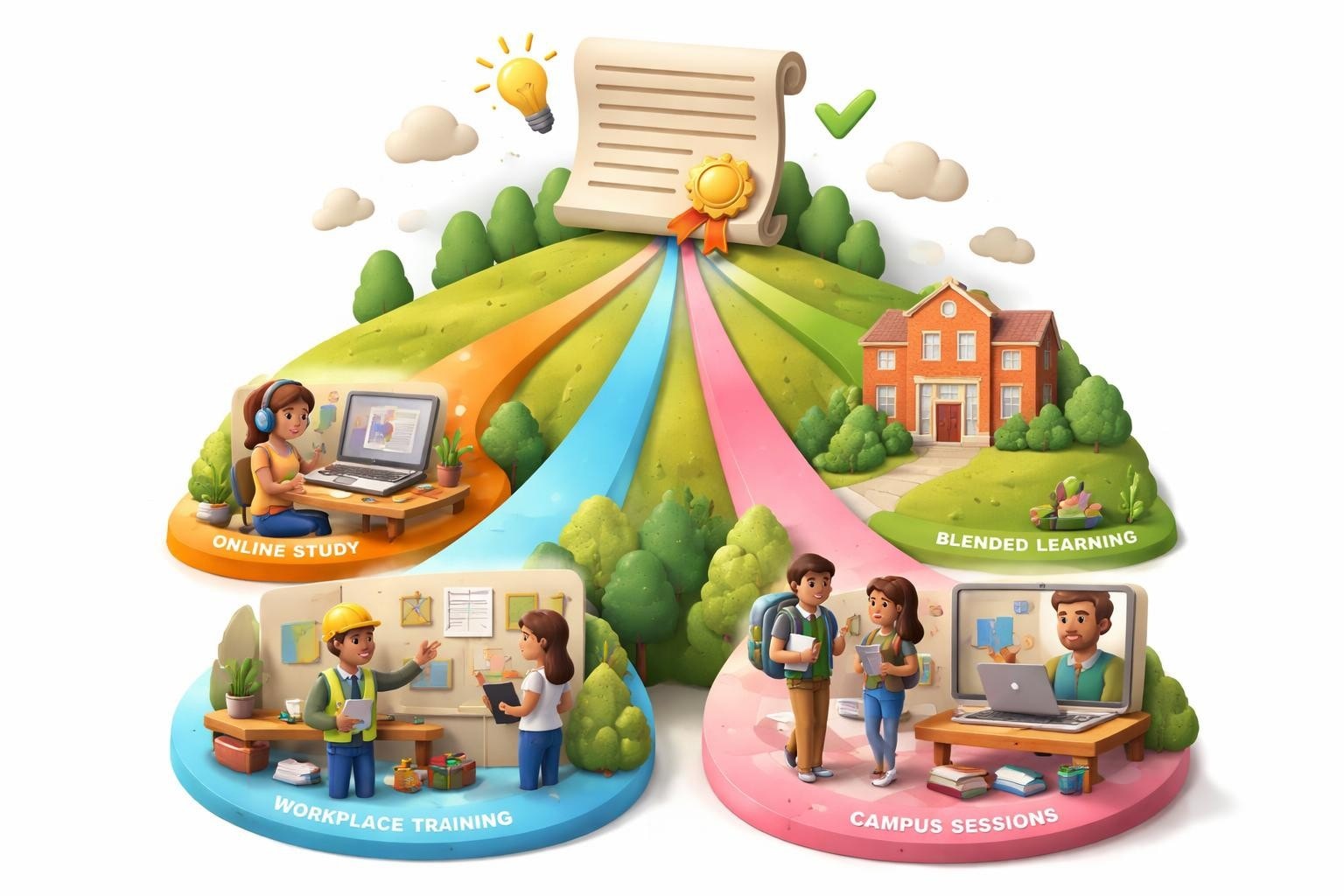
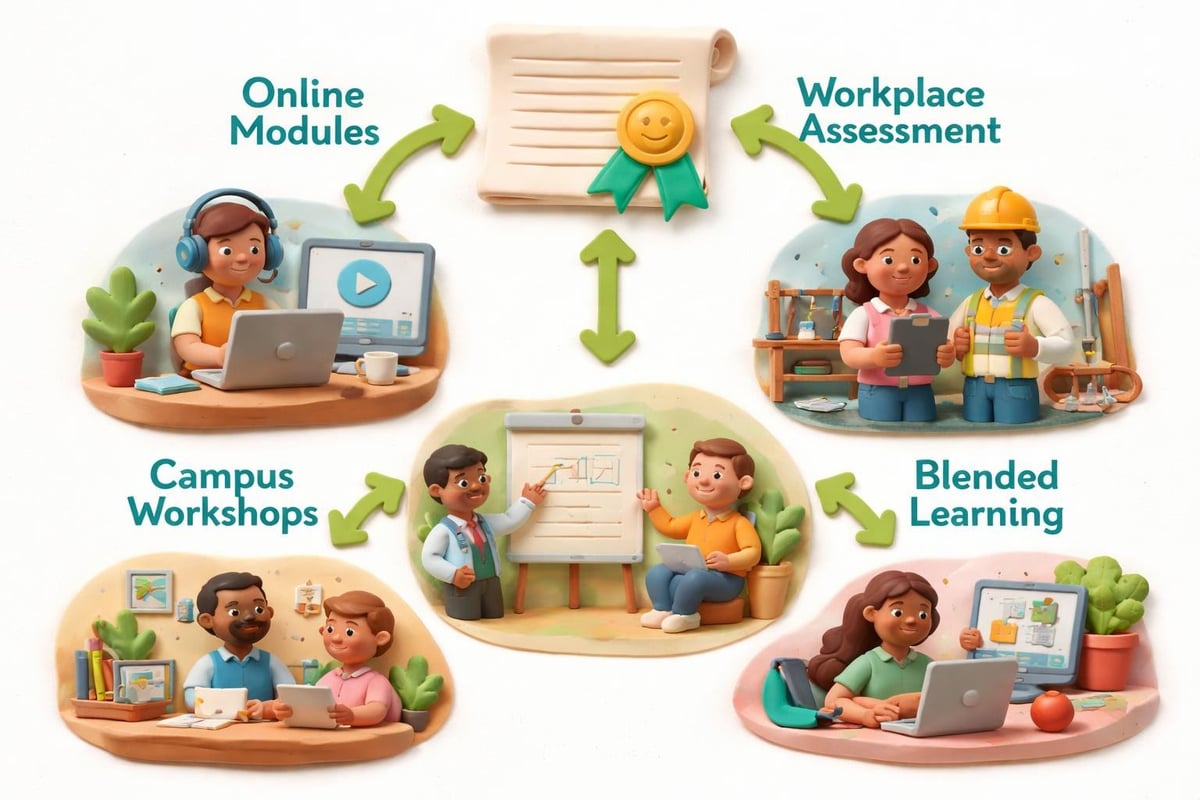
Modern flexible courses employ diverse delivery mechanisms to reach learners wherever they are:
- Online learning platforms that provide 24/7 access to course materials
- Workplace-based training integrated directly into professional environments
- Blended learning combining face-to-face sessions with digital resources
- On-campus intensive blocks for focused periods of study
- Distance learning supported by digital communication tools
This variety ensures that regardless of geographic location or time constraints, learners can access quality education. Northern Illinois University’s guide to course design emphasises how these pedagogical approaches support diverse learning environments whilst maintaining academic rigour.
Personalised Learning Pace
One significant advantage of flexible courses lies in their accommodation of individual learning speeds. Some students grasp concepts quickly and prefer to accelerate through material, whilst others benefit from additional time to consolidate understanding before progressing.
| Learning Pace | Traditional Courses | Flexible Courses |
|---|---|---|
| Acceleration | Limited by term structure | Often permitted within parameters |
| Additional time | Requires course repetition | Built into design |
| Mid-course entry | Rarely available | Sometimes possible |
| Year-round progression | Fixed intake dates | Rolling enrolment options |
This adaptability proves particularly valuable for professionals transitioning between industries or developing specialised skills whilst maintaining employment. The ability to adjust pace based on existing knowledge and available time significantly reduces barriers to completion.
Strategic Benefits for Career Development
Flexible courses offer tangible advantages that extend well beyond scheduling convenience. These benefits directly impact career trajectories, professional competencies, and long-term employability.
Immediate Application of Learning
When education occurs alongside employment, learners can immediately apply new concepts within their workplace context. This creates a powerful feedback loop where theoretical knowledge informs practice, and practical challenges deepen understanding.
For instance, someone undertaking business administration qualifications can implement new administrative systems or technology solutions in their current role, demonstrating value to employers whilst building their capability portfolio.
Reduced Financial Pressure
The financial architecture of flexible courses often differs from traditional full-time study. Maintaining employment whilst learning means:
- Continued income stream during qualification period
- Employer-sponsored training opportunities
- Gradual cost distribution over extended timeframes
- Reduced relocation or accommodation expenses
- Immediate return on investment through workplace application
According to research on online learning benefits, flexible scheduling makes education more accessible to diverse student populations who might otherwise be excluded from traditional programmes.
Industry-Relevant Credentials
Flexible courses frequently maintain strong connections to industry requirements and professional standards. NZQA accreditation ensures that qualifications meet rigorous quality benchmarks and are recognised across sectors.
This recognition proves essential when:
- Seeking promotion within current organisation
- Transitioning between employers or industries
- Demonstrating compliance with regulatory requirements
- Building credibility with clients or stakeholders
- Accessing further educational pathways
Designing Effective Flexible Learning Experiences
Creating flexible courses that maintain academic integrity whilst accommodating diverse needs requires careful instructional design. Yale’s Poorvu Center explores how balancing flexibility with structure creates inclusive and effective learning experiences.
Essential Design Elements
Well-constructed flexible courses incorporate several key components:
Clear learning outcomes that define expectations regardless of delivery mode. Students should understand exactly what competencies they will develop and how these align with industry standards or nationally recognised qualifications.
Modular content organisation that breaks complex topics into manageable units. This structure allows learners to progress systematically whilst accommodating interruptions or varying time commitments.
Multiple assessment approaches recognising that knowledge demonstration takes various forms. Portfolio development, workplace projects, written examinations, and practical demonstrations all serve legitimate purposes within different contexts.
Robust support systems including tutor access, peer communities, and technical assistance. Flexibility in timing should not equate to isolation or reduced support quality.
Technology Integration
Digital tools enable the delivery mechanisms that make flexible courses viable. Learning management systems, video conferencing, collaborative platforms, and assessment technologies create virtual learning environments that rival physical classrooms in effectiveness.
However, technology serves as an enabler rather than the primary focus. The best practices in online course design emphasise integrating synchronous and asynchronous elements to create dynamic learning environments that prioritise educational outcomes.
Specific Applications Across Disciplines
The versatility of flexible courses extends across numerous fields, each with unique requirements and delivery considerations.
Business and Management Education
Business qualifications particularly benefit from flexible delivery because they serve working professionals seeking advancement. First-line management programmes, administration certifications, and diploma pathways combine theoretical frameworks with immediate workplace application.
Learners can analyse their organisation's structures whilst studying organisational behaviour, or implement new systems whilst completing technology modules. This integration strengthens both academic understanding and professional capability.
Financial Services Training
The financial services sector demands ongoing professional development to maintain regulatory compliance and industry knowledge. Financial services qualifications delivered through flexible courses enable practitioners to update credentials without career interruption.
Given the regulatory environment within which financial professionals operate, maintaining current qualifications whilst serving clients proves essential. Flexible learning pathways make this achievable.
Emerging Technology and Innovation
Rapid technological advancement creates demand for current skills in areas like artificial intelligence and digital transformation. Micro-credentials in AI in education or advanced AI applications provide focused, practical knowledge that professionals can immediately implement.
These shorter programmes exemplify how flexible courses can address skill gaps quickly, offering alternatives to lengthy traditional qualifications when specific competencies are required.
Industry-Specific Technical Training
Specialised industries require unique competencies that may not suit conventional academic calendars. Industrial rope access qualifications, workplace safety training, and technical certifications often combine theoretical components with intensive practical blocks.
| Qualification Type | Flexible Elements | Structured Requirements |
|---|---|---|
| Technical certifications | Online theory modules | Mandatory practical assessments |
| Safety training | Self-paced learning | Scheduled competency verification |
| Industry micro-credentials | Workplace application | Assessment to standards |
| Professional development | Varied delivery modes | Industry-recognised outcomes |
This hybrid approach maintains safety standards and competency verification whilst reducing time away from employment.
Addressing Common Implementation Challenges
Whilst flexible courses offer numerous advantages, they also present specific challenges that institutions and learners must navigate effectively.
Maintaining Motivation and Discipline
Self-directed learning requires strong personal organisation and commitment. Without fixed class times and regular peer interaction, some learners struggle to maintain momentum.
Successful flexible course participants typically develop:
- Consistent study routines integrated into weekly schedules
- Clear personal goals connected to career or life objectives
- Active engagement with available support resources
- Realistic timelines accounting for work and personal commitments
Understanding flexible structures in course design helps learners and institutions create frameworks that support sustained engagement.
Ensuring Assessment Integrity
Flexible courses must maintain assessment standards equivalent to traditional programmes whilst accommodating varied learning contexts. This requires careful design of evaluation methods that authentically measure competency regardless of how or where learning occurred.
Workplace-based assessments, portfolio development, and practical demonstrations often prove more effective than examinations for measuring real-world capability. These approaches align with Universal Design for Learning principles that accommodate individual learning differences.
Balancing Flexibility with Structure
Complete flexibility can paradoxically create barriers to success. Learners benefit from some structure, including milestone dates, scheduled interactions, and progressive requirements that prevent procrastination.
The most effective flexible courses establish clear frameworks within which adaptability operates. This might include firm assessment deadlines whilst allowing choice in learning sequence, or scheduled tutorial sessions alongside self-paced content review.
Future Directions in Adaptive Education
The evolution of flexible courses continues as technology advances and workforce needs change. Several emerging trends shape how adaptive learning will develop through 2026 and beyond.
Micro-credentialing and Stackable Qualifications
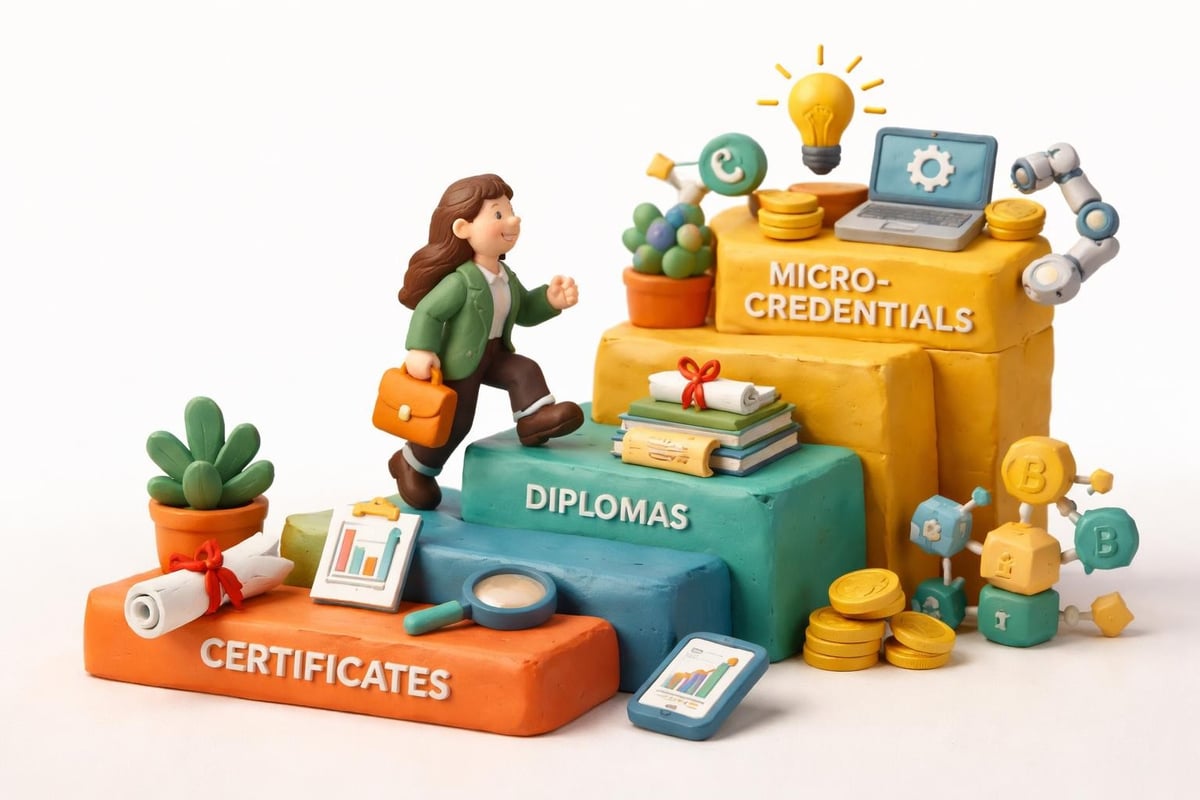
Short, focused credentials that address specific skill gaps are gaining prominence. These micro-credentials can stack toward larger qualifications, creating personalised learning pathways that respond to individual career trajectories.
Learners might begin with a micro-credential in a specialised area, discover broader interest, and subsequently pursue comprehensive diplomas or certificates. This modular approach reduces commitment barriers whilst maintaining progression opportunities.
Increased Workplace Integration
Educational institutions increasingly partner with employers to deliver training directly within workplace contexts. This integration ensures relevance whilst reducing logistical barriers for working learners.
Such partnerships might involve customised programme delivery, workplace assessment, or employer-sponsored cohorts working through qualifications together. The collaborative approach benefits all parties through improved outcomes and stronger industry connections.
Enhanced Digital Capabilities
Virtual reality, artificial intelligence, and advanced simulation technologies expand what flexible courses can achieve remotely. Complex practical skills previously requiring physical presence may become accessible through sophisticated digital environments.
However, technology enhancement should serve pedagogical purposes rather than driving course design. The focus remains on learning outcomes and capability development regardless of delivery mechanism.
Recognition of Prior Learning
Flexible courses increasingly incorporate recognition of prior learning (RPL) processes that acknowledge existing competencies. This reduces duplication and allows learners to focus on genuine skill gaps rather than repeating known material.
For experienced professionals, RPL can significantly shorten qualification timeframes, making further study more attractive and accessible.
Supporting Diverse Learner Populations
Flexible courses play a crucial role in educational equity by reducing barriers that exclude certain populations from traditional programmes. Research on overcoming barriers through flexible learning demonstrates how these models empower underserved communities.
Career Changers and Mature Learners
Individuals transitioning between industries or returning to education after extended absences particularly benefit from flexible delivery. These learners bring valuable experience but may lack recent academic credentials or face financial constraints that preclude full-time study.
Flexible courses enable them to build new competencies progressively whilst leveraging existing knowledge and maintaining income stability during transition periods.
Geographically Isolated Communities
Distance no longer determines educational access when quality programmes are available online or through blended delivery. Rural communities, remote regions, and areas lacking local training providers gain access to equivalent opportunities through flexible course models.
This geographic flexibility proves especially relevant across New Zealand's dispersed population centres, where travel to campus-based programmes may be impractical or impossible.
Individuals with Caring Responsibilities
Parents, caregivers, and those supporting family members often struggle to commit to fixed schedules. Flexible courses accommodate these responsibilities by allowing study during available hours rather than requiring presence at predetermined times.
The ability to pause, adjust pace, or temporarily reduce intensity without abandoning qualifications entirely makes education achievable for populations who might otherwise be excluded entirely.
Flexible courses have fundamentally transformed how New Zealanders access quality education and professional development, breaking down traditional barriers whilst maintaining rigorous academic standards. Whether you're seeking to advance your current career, transition into new industries, or develop emerging skills, adaptive learning pathways provide practical routes to nationally recognised credentials. Summit Institute offers NZQA-accredited qualifications across business, financial services, technology, and specialised industry areas, delivered through flexible modes designed around your circumstances. Explore how our programmes can support your professional journey whilst fitting your life commitments.