

In a world where economic change is constant, understanding financial subjects is vital for both personal and professional growth. As we approach 2026, the ability to master these topics becomes the key to navigating uncertainty, building lasting wealth, and achieving true financial security.
This article highlights the nine essential financial subjects everyone should master, from budgeting and investing to digital currencies and financial literacy. Whether you are starting your journey or seeking advanced insights, you will find practical advice to help you thrive in the evolving financial landscape.
Are you ready to take control of your financial future? Dive in and discover the skills that will empower you for years to come.
The Changing Financial Landscape in 2026
The financial world of 2026 is more dynamic and unpredictable than ever before. As economic cycles shorten and global events ripple faster, understanding core financial subjects becomes an essential survival skill.
Emerging trends are reshaping how people interact with money. Technology, automation, and artificial intelligence are revolutionising personal finance and employment. Algorithms now drive investment decisions, while digital assistants manage everyday transactions. This digital transformation has created new opportunities, but it also demands that individuals master a broader range of financial subjects to remain secure.
Remote work and the gig economy have become mainstream, introducing both flexibility and fresh challenges. Freelancers and contract workers must navigate irregular income streams, inconsistent benefits, and shifting regulations. These changes require new approaches to financial subjects such as budgeting, insurance, and tax planning.
Financial products and services are becoming increasingly complex. From cryptocurrency investments to AI-powered lending platforms, consumers face an overwhelming array of choices. Lifelong learning and adaptability are now prerequisites for financial wellbeing. According to the OECD, over 60% of adults still struggle with basic financial concepts, highlighting a widespread need for improved understanding of financial subjects.
Consider the impact of digital banking and fintech apps. Today, money management is often handled through mobile platforms that track spending, offer saving insights, and automate bill payments. While these tools simplify daily life, they also require users to be vigilant and knowledgeable about evolving financial subjects.
A proactive approach to financial education is more important than ever. Individuals of all ages must develop the skills to evaluate choices, avoid financial pitfalls, and build lasting security. Lifelong learning in financial subjects ensures adaptability as circumstances shift and new technologies emerge. For those seeking a structured pathway, the Financial Services Subject Overview provides insight into the key topics everyone should consider mastering.
In summary, the changing landscape of 2026 demands a commitment to continuous learning and mastery of essential financial subjects. Those who invest in their financial education will be best equipped to thrive, no matter what the future brings.

9 Essential Financial Subjects Everyone Should Master
Mastering financial subjects is vital to thrive in the evolving economic landscape of 2026. These topics equip you with the knowledge to make informed decisions, protect your assets, and grow your wealth. Each area below forms a building block for a secure financial future.
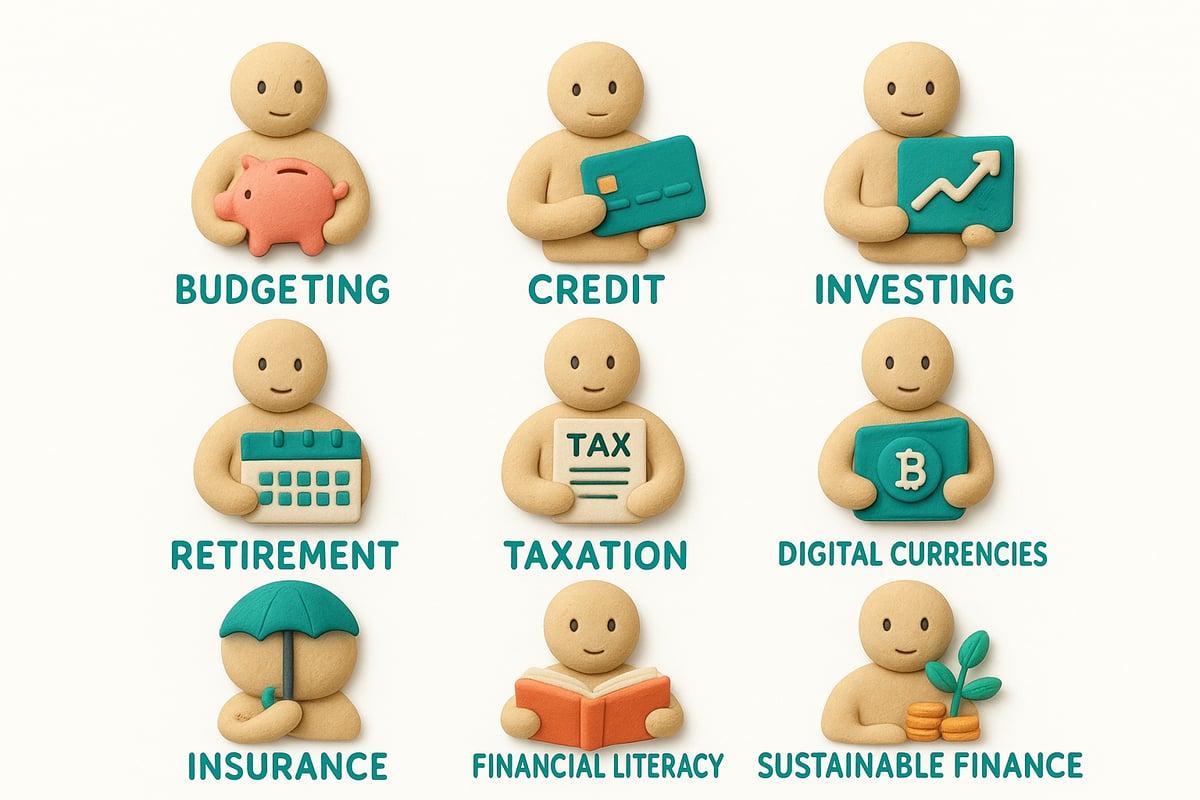
1. Budgeting and Personal Money Management
Budgeting is the cornerstone of all financial subjects. It starts with tracking income, categorising expenses, and setting savings goals. Modern tools, such as budgeting apps, automate this process and offer visual dashboards to keep you on track.
Core principles include distinguishing between needs and wants, planning for irregular expenses, and consistently reviewing your budget. Popular strategies include zero-based budgeting, where every pound is assigned a purpose, and the envelope system, which uses physical or digital envelopes for each spending category.
However, many fall into the trap of lifestyle inflation, where spending increases with income, or unplanned purchases that undermine savings efforts. According to the Money Advice Service (2024), 67% of UK adults now use budgeting apps, reflecting a shift towards digital money management.
Budgeting builds the foundation for mastering other financial subjects by fostering discipline and awareness. Using these principles, you can confidently plan for the future and avoid common pitfalls.
2. Understanding Credit and Debt
A solid grasp of credit and debt is essential among financial subjects. Credit options include credit cards, personal loans, mortgages, and buy-now-pay-later services. Knowing how credit scores work is increasingly important, as lenders rely on them for decisions in 2026.
Key strategies involve responsible borrowing, paying more than the minimum on debts, and prioritising high-interest balances. Interest rates and compounding can quickly escalate debt if not managed well. For instance, student loans and credit card debt can become overwhelming without a clear repayment plan.
UK household debt reached £1.8 trillion in 2025, highlighting the scale of this issue (ONS). For additional insights, see the UK household debt statistics 2025.
Understanding these financial subjects empowers you to maintain a healthy credit profile, access better loan terms, and avoid financial stress.
3. Investing Fundamentals
Investing is one of the most rewarding financial subjects, offering the potential for long-term wealth growth. Key vehicles include stocks, bonds, ETFs, and mutual funds. Each offers unique risk and return profiles, suited to different goals.
The power of compound interest magnifies gains over time, making early and consistent investing crucial. Diversification, or spreading investments across asset types, reduces risk. Modern micro-investing platforms allow you to start with small amounts, lowering barriers to entry.
Comparing passive (index funds) and active (stock picking) strategies can help you choose the best fit. Data from Barclays reveals that 48% of millennials began investing between 2023 and 2025, showing a growing interest in these financial subjects.
By mastering investing fundamentals, you can build a portfolio tailored to your needs and achieve greater financial security.
4. Retirement Planning and Superannuation
Retirement planning is a priority among financial subjects, especially in a volatile economy. Early planning leverages time and compound growth, reducing stress later in life. Understanding workplace pensions, KiwiSaver, and private superannuation is key.
Demographic changes, such as an ageing population, put pressure on pension systems. Calculating retirement needs involves estimating future expenses, income sources, and adjusting for inflation. Online calculators simplify this process and highlight savings gaps.
An example is reviewing your pension statement annually and increasing contributions when possible. The Pensions Policy Institute (2025) reports that 35% of UK adults are not saving enough for retirement, underscoring the importance of this area.
Mastering retirement planning within financial subjects ensures long-term stability and peace of mind.
5. Taxation and Tax Efficiency
Taxation is one of the most dynamic financial subjects in 2026. Understanding your obligations and opportunities for efficiency is vital. This includes personal and business taxes, as well as digital tax filing and AI-powered advice.
Key strategies involve using ISAs, pension contributions, and allowable deductions to minimise liabilities. Recognising tax brackets, credits, and how side hustle income is taxed prevents costly mistakes. For freelancers and entrepreneurs, digital tools simplify compliance.
For example, understanding the tax implications of freelance work can save time and money. HMRC data shows that 42% of self-employed workers made tax errors in 2024, emphasising the need for education in these financial subjects.
Staying informed and proactive about tax planning supports financial wellbeing and compliance.
6. Digital Currencies and Financial Technology
Digital currencies and fintech are rapidly transforming financial subjects. Cryptocurrencies, stablecoins, and central bank digital currencies (CBDCs) are becoming mainstream. Blockchain technology is revolutionising payments, record-keeping, and transparency.
Risks include volatility, security breaches, and a rapidly evolving regulatory environment. However, the rewards can be significant for those who stay informed. Decentralised finance (DeFi) platforms offer new ways to earn, lend, and invest.
Using digital wallets for daily transactions is increasingly common, with 30% of UK adults owning digital assets in 2025 (FCA). Understanding these financial subjects helps you navigate new opportunities and avoid pitfalls.
Being tech-savvy ensures you are prepared for the digital future of money management.
7. Insurance and Risk Management
Insurance is a critical component of financial subjects, offering protection against unforeseen events. Types include health, life, property, income protection, and cyber insurance, each covering different risks.
Assessing your coverage needs is essential, especially as digital threats and climate change introduce new risks. Understanding policy terms, premiums, and exclusions prevents unpleasant surprises during claims.
For example, recent climate events have led to higher premiums and more exclusions in home and travel insurance. The Association of British Insurers (ABI) notes that 58% of households lack adequate insurance in 2025.
Mastering insurance and risk management ensures your financial plan is resilient against life's uncertainties.
8. Financial Literacy and Critical Thinking
Financial literacy stands at the heart of all financial subjects. It means understanding basic concepts, evaluating information, and making sound decisions. In today's information-rich era, critical thinking is vital to sift through advice, news, and online resources.
Spotting scams, misinformation, and high-risk schemes protects your assets. Lifelong learning, including analysing real-world fraud cases, sharpens your skills and confidence.
According to the OECD, only 38% of UK adults can answer basic financial questions correctly, highlighting a pressing need for improvement. Resources like the Subjects Offered at Summit Institute can help you deepen your knowledge across a wide range of financial subjects.
Investing in financial literacy and critical thinking pays lifelong dividends.
9. Sustainable and Ethical Finance
Sustainable and ethical finance is a rapidly growing area among financial subjects. ESG (Environmental, Social, Governance) investing integrates your values with your investment strategy. This approach considers not just profit but also the impact on society and the environment.
Green bonds, ethical funds, and impact investing are gaining popularity, allowing you to align your portfolio with personal beliefs. Balancing profit with purpose is increasingly important for modern investors.
For example, choosing ethical banks or pension providers supports sustainability goals. The UK ethical investment market grew by 28% in 2025 (UKSIF), signalling strong demand for these financial subjects.
Mastering sustainable and ethical finance enables you to make a positive difference while achieving your own financial goals.
Building a Personal Financial Education Plan
Building a personal financial education plan is the most effective way to master key financial subjects and stay prepared for the future. The right approach can transform complex concepts into actionable steps, boosting your confidence and helping you adapt as economic trends evolve.

Assessing Your Financial Knowledge
Start by honestly evaluating your strengths and weaknesses across the nine financial subjects. Use self-assessment tools, quizzes, or even a simple checklist to pinpoint areas where you feel confident and those needing improvement.
- List each subject and rate your understanding from 1 to 5.
- Identify which financial subjects you have never formally studied.
- Note any recent changes in your personal or professional circumstances.
Regularly reviewing your progress ensures you remain on track and aware of new developments. This step lays the foundation for a focused and effective plan.
Setting SMART Goals for Financial Learning
Setting SMART goals—Specific, Measurable, Achievable, Relevant, and Time-bound—gives structure to your journey. For each financial subject, define what you want to achieve and by when.
- Choose one or two areas to prioritise each quarter.
- Create measurable milestones, such as completing an online module or reading a book.
- Ensure each goal aligns with your overall financial aspirations.
According to the National Numeracy survey in 2024, learners who set clear financial education goals are 70% more likely to gain financial confidence. Begin with realistic targets and adjust as you progress.
Leveraging Learning Resources
A wealth of resources, both online and offline, are available to support your mastery of financial subjects. Accredited courses, webinars, and workshops can provide structured learning and recognised qualifications.
Consider enrolling in programmes such as the New Zealand Certificate in Financial Services Level 5, which covers essential topics including investment, budgeting, and financial literacy. Supplement formal study with podcasts, financial news, and interactive apps.
Mixing different types of resources helps reinforce knowledge and keeps learning engaging.
Community, Mentorship, and Peer Learning
Learning about financial subjects is more effective when you engage with others. Join online forums, attend local workshops, or participate in peer study groups to discuss concepts and share experiences.
- Find a mentor with expertise in personal finance or investing.
- Attend community seminars or virtual meetups.
- Collaborate on case studies or mock investment portfolios.
Peer learning fosters accountability and exposes you to diverse viewpoints. It also helps you stay motivated and adapt to changing trends.
Creating Your Year-Long Roadmap & Taking Action
Design a roadmap that covers all nine financial subjects over the next year. Break your plan into monthly themes, dedicating time to one or two topics at a time.
- Use a calendar or planner to schedule study sessions and review points.
- Mark key milestones, such as completing a course or passing a quiz.
- Adjust your plan to reflect changes in your goals or the financial landscape.
Taking the first step is crucial. Even small, consistent actions build momentum and lead to long-term mastery of financial subjects. Remember, adaptability is key as new financial trends and tools emerge each year.
If you’re ready to take control of your financial future and truly master the skills that matter in 2026, now is the perfect time to start. Whether you’re looking to strengthen your budgeting, understand investing, or navigate the fast-changing world of digital currencies, building a strong foundation in financial education will set you up for lasting success. Summit Institute offers flexible, accredited pathways with real-world relevance—so you can learn at your pace, wherever you are. Let’s take the next step together and future-proof your financial know how. Get ahead now!