
The landscape of education and teaching in New Zealand has evolved significantly, with quality assurance and industry relevance now sitting at the heart of effective learning programmes. As the workforce demands increasingly specialised skills alongside foundational knowledge, the role of accredited training providers has become critical in bridging the gap between educational aspiration and professional achievement. Modern learners require flexible pathways that accommodate diverse learning styles, career stages, and industry requirements whilst maintaining rigorous standards that employers trust and value.
The Foundation of Quality-Assured Learning
Quality assurance in education and teaching extends far beyond simple compliance. It represents a commitment to evidence-based pedagogy, verifiable outcomes, and continuous improvement that benefits learners, employers, and the broader community. The New Zealand Qualifications Authority (NZQA) framework establishes clear benchmarks for educational providers, ensuring that programmes meet nationally recognised standards across all disciplines.
NZQA accreditation represents a strong level of confidence in a training provider's ability to deliver quality education. This classification means an institution has demonstrated exceptional performance across all measures, including educational outcomes, learner satisfaction, and regulatory compliance. For prospective students, this accreditation serves as a reliable indicator that their investment in education will yield qualifications that carry genuine weight in the employment market.
Navigating Qualification Pathways
Understanding qualification levels helps learners make informed decisions about their educational journey. The NZQA framework structures qualifications from Level 1 through Level 10, with each level representing increased complexity, autonomy, and specialisation.
Key qualification levels include:
- Level 3: Foundation certificates building essential skills
- Level 4: Intermediate qualifications for first-line supervisory roles
- Level 5: Advanced certificates and diplomas for specialist positions
- Level 6 and above: Graduate diplomas and degree-level programmes
These structured pathways enable learners to progress incrementally, building competence whilst gaining credentials that open doors at each stage. For instance, business administration programmes allow students to enter at Level 3 and advance through Level 4 and beyond, with each qualification providing both standalone value and a foundation for further study.

Emerging Technologies in Education and Teaching
Artificial intelligence has emerged as a transformative force in modern education and teaching practices. The integration of AI tools requires careful consideration of pedagogical soundness, ethical implications, and practical applications that genuinely enhance learning outcomes rather than simply introducing technology for its own sake.
The Trusted Educational AI Standard (TEAS) framework provides guidance for responsible AI integration, emphasising verifiability, stability, and auditability. Educational institutions must ensure that AI applications support rather than replace critical thinking, maintaining the human elements that make teaching effective whilst leveraging technology to personalise learning experiences and improve accessibility.
Practical Applications of Educational Technology
Modern education and teaching programmes increasingly incorporate technology in meaningful ways. Micro-credentials in AI in education equip educators with practical skills to:
- Assess AI tools for pedagogical effectiveness
- Design learning experiences that incorporate technology thoughtfully
- Evaluate ethical considerations in automated assessment
- Support diverse learners through adaptive technologies
- Maintain academic integrity in AI-assisted environments
These competencies ensure that educators remain at the forefront of technological change, capable of making informed decisions about which tools enhance learning and which may introduce unnecessary complexity or risk.
Industry-Focused Learning Delivery
The relationship between education and teaching excellence and industry relevance has never been more critical. Employers seek graduates who possess not only theoretical knowledge but also practical competencies that translate directly into workplace performance. This reality has driven the development of programmes designed in consultation with industry partners, ensuring curriculum content reflects current practices and emerging trends.
| Delivery Mode | Key Benefits | Best Suited For |
|---|---|---|
| On-campus | Face-to-face interaction, hands-on practice, networking | Practical skills, laboratory work, collaborative projects |
| Workplace-based | Real-world application, immediate relevance, mentor support | Apprenticeships, in-service training, contextualised learning |
| Online | Flexibility, self-paced progression, accessibility | Working professionals, remote learners, theoretical components |
| Blended | Combined benefits, varied learning activities, balanced approach | Comprehensive programmes, diverse learner needs, hybrid roles |
The flexible learning options available through modern training providers recognise that learners have diverse circumstances, commitments, and learning preferences. A working parent may require evening or online study options, whilst a school leaver might benefit from structured on-campus delivery with peer interaction and direct instructor access.
Specialist Industry Qualifications
Certain industries require highly specialised training that combines safety awareness, technical proficiency, and regulatory compliance. Education and teaching in these contexts demands instructors with current industry experience and access to appropriate facilities and equipment.
Industrial rope access training, for example, represents a unique intersection of physical skill, safety knowledge, and technical understanding. The New Zealand Certificate in Industrial Rope Access prepares learners for work in construction, maintenance, and inspection roles where conventional access methods prove impractical or unsafe. Such programmes demonstrate how quality education and teaching adapts to serve niche but essential industry sectors.

Evaluating Educational Resources and Authority
Quality education and teaching relies upon authoritative, current resources that inform both curriculum development and learning activities. The ability to evaluate source credibility has become increasingly important as information abundance creates challenges in distinguishing reliable content from misinformation or outdated material.
Educational providers must maintain rigorous standards for resource selection, ensuring that:
- Peer-reviewed research informs pedagogical approaches
- Industry publications reflect current practices
- Regulatory guidance shapes compliance-related content
- Professional standards guide competency development
Learners themselves benefit from developing critical evaluation skills, particularly in fields where rapid change demands continuous professional learning beyond formal qualification completion.
Supporting Research-Informed Practice
The relationship between education and teaching quality and evidence-based practice strengthens programme effectiveness. Accessing peer-reviewed educational resources through databases like ERIC and JSTOR enables both educators and advanced learners to engage with current research, understand emerging best practices, and contribute to professional discourse.
For educators pursuing qualifications such as the New Zealand Certificate in Adult and Tertiary Teaching, this research engagement forms a core component of professional development, ensuring teaching practice remains current, effective, and responsive to learner needs.
Financial Services and Professional Development
The financial services sector exemplifies how education and teaching programmes must balance regulatory requirements, technical knowledge, and ethical considerations. Professionals in this field require qualifications that satisfy licensing requirements whilst developing practical competencies in client service, risk assessment, and product knowledge.
Programmes like the New Zealand Certificate in Financial Services address these multifaceted requirements through curriculum that integrates:
- Regulatory frameworks and compliance obligations
- Financial product knowledge and application
- Client needs assessment and service delivery
- Ethical decision-making and professional conduct
- Risk management and due diligence
This holistic approach ensures graduates enter the workforce equipped for the complex realities of professional practice, not merely theoretical understanding divorced from practical application.
Management and Leadership Development
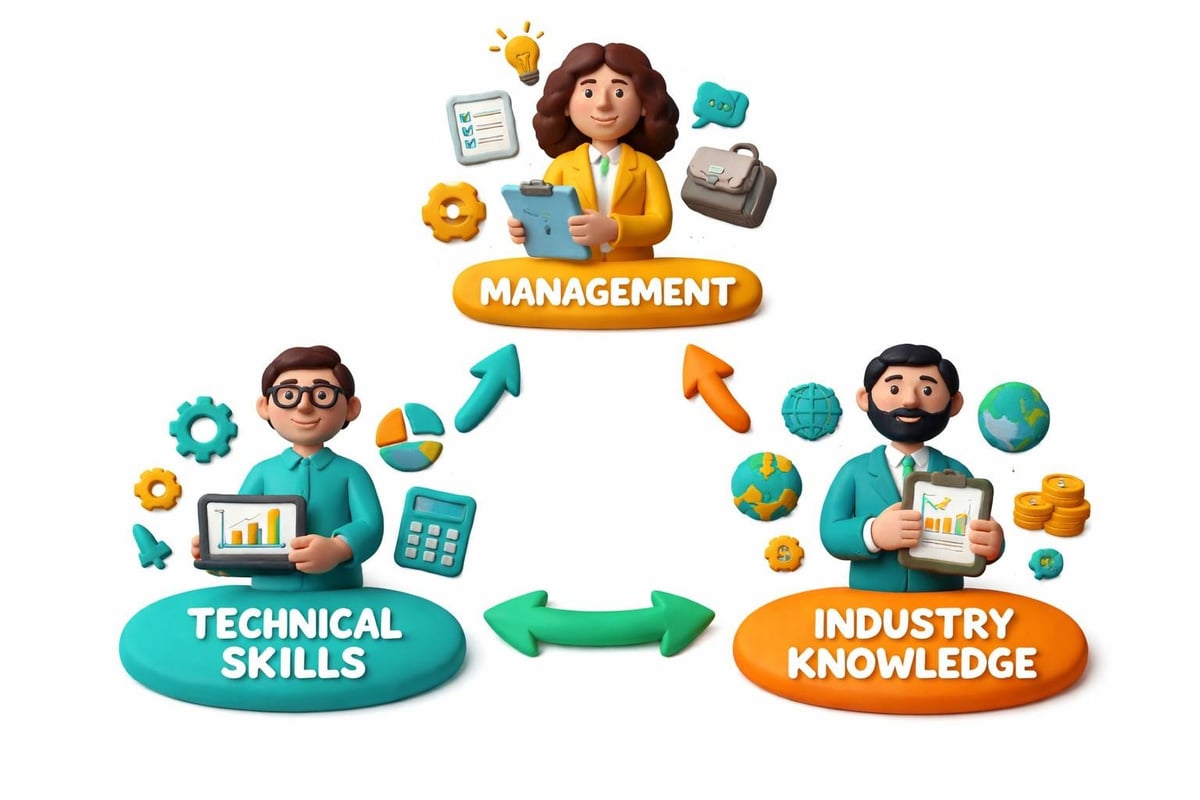
Education and teaching in management contexts focuses on developing capabilities that extend beyond technical competence into people leadership, strategic thinking, and organisational effectiveness. The New Zealand Certificate in Business (First Line Management) prepares individuals for supervisory responsibilities, addressing:
- Team coordination and performance management
- Resource allocation and operational planning
- Communication strategies for diverse stakeholders
- Problem-solving in complex organisational contexts
- Continuous improvement and change management
These competencies prove valuable across industries, from manufacturing and retail through to professional services and healthcare, demonstrating how quality business education serves broad professional applications.
Micro-Credentials and Targeted Skill Development
The emergence of micro-credentials represents a significant shift in how education and teaching addresses rapidly evolving skill requirements. Rather than requiring extensive time commitments for full qualifications, micro-credentials enable professionals to acquire specific competencies through focused, intensive learning experiences.
Advantages of micro-credentials include:
- Targeted skill acquisition without lengthy programme commitments
- Current content reflecting emerging technologies and practices
- Stackable credentials that build toward larger qualifications
- Accessible entry points for career changers and upskilling professionals
- Immediate workplace application of newly acquired competencies
These shorter-form qualifications complement traditional diploma and certificate programmes, creating flexible learning ecosystems that accommodate diverse professional development needs. Exploring available subjects and programmes helps prospective learners identify pathways aligned with their specific goals and circumstances.
Supporting Diverse Learner Populations
Effective education and teaching recognises that learners arrive with varied backgrounds, experiences, capabilities, and aspirations. Inclusive programme design ensures accessibility for learners with different:
| Learner Characteristic | Educational Considerations |
|---|---|
| Prior qualifications | Recognition of prior learning, appropriate entry points, bridging support |
| Work experience | Credit for experiential learning, workplace-based assessment, flexible scheduling |
| Learning preferences | Multiple delivery modes, varied assessment methods, support services |
| Career stage | Foundation programmes for new entrants, advanced qualifications for experienced professionals |
| Cultural background | Culturally responsive pedagogy, diverse resources and examples, inclusive practices |
This learner-centred approach underpins quality-assured education, ensuring programmes serve rather than exclude potential students who could benefit from skill development and formal qualifications.
Assessment for Learning
Modern education and teaching emphasises assessment as a learning tool rather than merely a measurement instrument. Formative assessment provides ongoing feedback that guides learner development, whilst summative assessment verifies competency achievement against qualification standards.
Quality assessment practices demonstrate:
- Clear criteria aligned with learning outcomes
- Multiple methods accommodating different competency types
- Constructive feedback supporting improvement
- Authentic contexts reflecting real-world application
- Fair processes ensuring equitable opportunity
These principles apply across all qualification levels and subject areas, from foundational certificates through to advanced diplomas, ensuring that assessment genuinely serves learning rather than creating arbitrary barriers to progression.
Professional Pathways and Career Progression
Strategic education and teaching programmes provide clear pathways for career advancement, enabling learners to build qualifications incrementally whilst gaining work experience and professional recognition. Understanding these pathways helps individuals make informed decisions about their educational investments and career development.
For business professionals, progression might follow this pattern:
- Level 3 foundation certificate establishing core administrative competencies
- Level 4 intermediate qualification developing supervisory capabilities
- Level 5 diploma specialising in areas like business administration or specific industry sectors
- Advanced certifications or transition to degree-level study
Each stage provides both standalone value in the employment market and a foundation for continued learning, recognising that professional development extends throughout careers rather than concluding with initial qualification completion.
Quality Assurance and Continuous Improvement
The commitment to excellence in education and teaching requires ongoing evaluation, refinement, and innovation. Quality-assured providers engage in regular self-assessment, respond to external review findings, and incorporate stakeholder feedback into programme enhancement.
Key quality indicators include:
- Qualification completion rates and timeframes
- Graduate employment outcomes and career progression
- Employer satisfaction with graduate capabilities
- Learner experience feedback and satisfaction measures
- External moderation and assessment verification results
Understanding how to find authoritative educational sources and evaluate institutional quality empowers prospective learners to make informed choices about training providers and programmes. NZQA accreditation provides strong assurance of quality, though learners should also consider factors like programme relevance, delivery flexibility, and support services.
Supporting Your Educational Journey
Navigating the education and teaching landscape requires clear information about enrolment processes, entry requirements, programme costs, and available support services. Quality providers offer transparent information and responsive guidance to help prospective learners understand their options and make confident decisions.
Questions to consider when evaluating programmes include:
- Does this qualification align with my career goals and industry requirements?
- What delivery mode best suits my current commitments and learning preferences?
- Are there pathways for further study following qualification completion?
- What support services assist learners during their studies?
- How does this provider's accreditation status compare to alternatives?
Taking time to research options thoroughly, consulting with programme advisors, and reviewing detailed programme information ensures educational investments deliver the intended outcomes. The guidance available from educational libraries on assessing resources can prove valuable when evaluating training providers and programme quality.
Quality education and teaching creates pathways to professional success through nationally recognised qualifications that meet rigorous standards whilst remaining responsive to industry needs and learner circumstances. Whether you're seeking to enter a new field, advance in your current role, or develop specialist capabilities in emerging areas like AI in education, choosing an accredited provider ensures your investment translates into genuine career opportunities. Explore how Summit Institute can support your professional development through flexible, industry-focused programmes backed by NZQA accreditation and delivered by experienced educators committed to your success.