In today’s fast-changing world, having an education accredited by recognised bodies is more important than ever. Accredited qualifications can make the difference between landing your dream job or missing out.
This guide will walk you through the essential steps to ensure your learning is valued and respected by employers and institutions in 2026. You will discover what education accreditation means, why it matters, how to choose the right provider, and the trends shaping the future of recognised learning.
Explore how you can unlock new opportunities with trusted, accredited pathways and take confident steps towards a secure and rewarding future.
Understanding Education Accreditation
Education accredited pathways are the foundation for meaningful, recognised qualifications in today's global landscape. Accreditation ensures that courses, institutions, and programmes meet strict standards set by independent bodies. This process is vital for maintaining quality, consistency, and trust in qualifications worldwide. Let’s break down what accreditation really means, why it matters in 2026, the risks of non-accredited options, who oversees quality, and what trends are shaping the future of education accredited learning.
What is Accreditation?
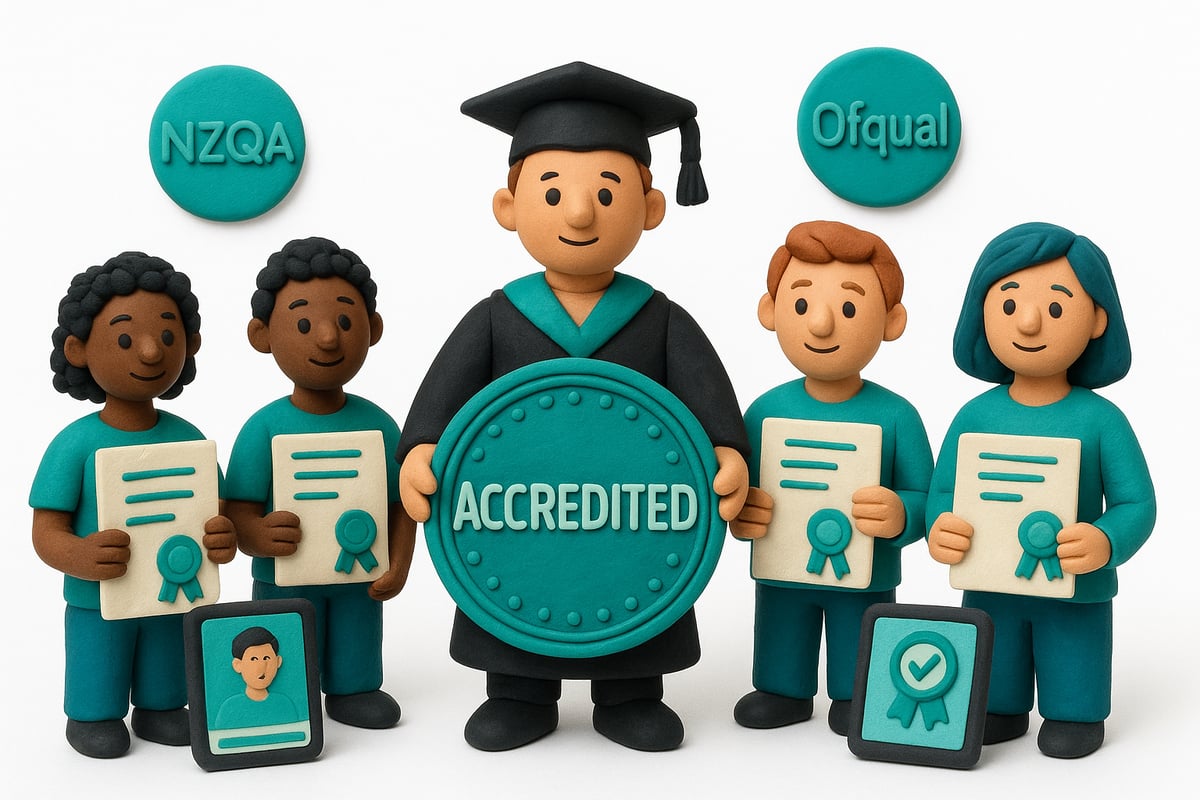
Accreditation is a formal recognition that a course, programme, or institution meets established quality standards set by an external authority. There are two main types: institutional accreditation, which assesses an entire organisation, and programme-specific accreditation, which focuses on individual courses. Global standards are maintained by respected bodies such as NZQA in New Zealand and Ofqual in the UK. The education accredited process involves thorough evaluation, regular monitoring, and public accountability. Unlike general certification, which only confirms participation or completion, accreditation assures that learning outcomes meet industry and academic expectations. For example, NZQA reviews and approves providers to ensure their qualifications have national credibility.
Why Accreditation Matters in 2026
In 2026, education accredited qualifications are more essential than ever for career advancement and mobility. Employers and professional bodies increasingly demand proof of recognised learning. Accredited qualifications enhance employability, open doors to progression, and enable smooth credit transfer between institutions. They also unlock access to further education, such as advanced diplomas or degrees. According to UKCES data, 80% of employers prefer candidates with accredited credentials. This preference highlights the critical role of education accredited pathways in supporting professional growth and lifelong learning.
The Risks of Non-Accredited Education
Choosing non-accredited courses can limit your future options and credibility. Without education accredited status, qualifications may not be recognised by employers or other institutions, making it difficult to transfer credits or pursue further study. Unaccredited providers are not subject to the same quality checks, increasing the risk of low-quality, unregulated courses. For instance, some graduates from unaccredited programmes have faced challenges securing jobs or progressing to advanced study, as their qualifications did not meet required standards. Carefully checking accreditation protects your investment in education and your long-term prospects.
Key Accreditation Bodies and Their Roles
The education accredited landscape is overseen by a network of national and international agencies. These bodies, such as NZQA, Ofqual, CHEA in the US, and TEQSA in Australia, are responsible for setting benchmarks, conducting audits, and ensuring ongoing quality assurance. Their rigorous evaluation processes help maintain public trust in qualifications and ensure consistent standards across providers. For example, NZQA accredited over 500 providers in 2023, demonstrating its commitment to quality and transparency. These agencies also publish regular performance reports to inform students and employers about provider reliability.
Accreditation Trends and Changes for 2026
Looking ahead, education accredited pathways are rapidly evolving to meet new demands. There is a growing emphasis on micro-credentials and digital badges, making learning more flexible and responsive to industry needs. Global standardisation efforts are underway, helping qualifications become more transferable across borders. Emerging fields such as AI and sustainability are driving the creation of new standards. The rise of accredited online learning platforms is a key trend, offering more accessible options for diverse learners. For a deeper analysis of these trends and their global impact, refer to the 2026 Global Education Monitoring Report.
The Pathway to Recognition: Step-by-Step Guide
Embarking on your journey towards an education accredited qualification requires careful planning and informed decision-making. By following a clear, step-by-step process, you can ensure that your learning is not only recognised but also valued by employers and institutions.

Step 1: Identifying Your Goals and Needs
Begin by clarifying your personal and professional objectives. Ask yourself what you hope to achieve through an education accredited pathway. Are you seeking a career change, aiming for a promotion, or looking to meet industry requirements?
For many professions, such as healthcare and teaching, only education accredited qualifications are accepted for registration and advancement. Make a list of your priorities, then match them to the required qualifications in your chosen field.
Research industry standards and speak with mentors or employers to understand which credentials are essential. This groundwork ensures your efforts align with your ambitions and the expectations of your sector.
Step 2: Researching Accredited Programmes and Providers
Once your goals are defined, the next step is to identify reputable education accredited providers. Always verify a provider's accreditation status through official registers or the relevant agency’s website.
Distinguish between universities, colleges, and private institutes, as each may offer different pathways and specialisations. For instance, you can consult the NZQA’s public list or explore NZQA-Accredited Flexible Learning to see examples of officially recognised institutions.
Prioritise providers with a strong track record and clear evidence of accreditation. This ensures your qualification will be widely recognised, both in New Zealand and internationally.
Step 3: Evaluating Course Content and Delivery
Carefully assess whether the programme’s curriculum aligns with current industry standards. An education accredited course should offer outcomes that match employer expectations and professional requirements.
Consider the flexibility of delivery, such as online, on-campus, or blended learning. In 2024, 65% of students preferred blended learning, highlighting the demand for adaptable study modes.
Evaluate the inclusion of practical components, internships, or work placements, as these elements bridge the gap between theory and real-world application. Quality content and delivery are fundamental to a valuable educational experience.
Step 4: Application and Admission Process
Understand the specific requirements for admission to your chosen education accredited programme. Most providers will ask for evidence of previous qualifications, references, and language proficiency.
Explore Recognition of Prior Learning (RPL) or credit transfer options if you have relevant experience or prior study. Some institutions offer fast-track admissions for professionals with significant industry backgrounds.
Prepare your documentation carefully and seek guidance from admissions teams if needed. A thorough application process increases your chances of securing a place in your desired programme.
Step 5: Completing Accredited Studies and Assessment
During your studies, expect a mix of assessment methods, including exams, coursework, and practical evaluations. Education accredited providers uphold strict quality assurance processes, often involving external moderation.
Feedback and support are integral to your success. Engage with tutors, participate in peer discussions, and make use of available resources to enhance your learning journey.
For example, NZQA conducts external moderation to ensure consistency and reliability in assessment, reinforcing the value of your accredited qualification.
Step 6: Obtaining and Using Your Accredited Qualification
After successful completion, you will receive certified documentation from your education accredited provider. Present these credentials confidently on your CV, LinkedIn profile, and in job applications.
Accredited qualifications are recognised by employers and institutions, often facilitating international mobility. For example, NZQA-accredited certificates can support employment or further study abroad.
Keep records of your achievements and be prepared to explain the accreditation status of your qualification when applying for roles or further education. This final step secures your place in a competitive global landscape.
Choosing the Right Accredited Provider
Selecting the right provider is crucial on your education accredited journey. The right choice ensures your learning is respected, recognised, and delivers real career value. Start by examining the provider's accreditation status. Confirm they are recognised by reputable bodies, such as NZQA or Ofqual. Look at the provider’s reputation in the sector, the breadth of programmes, and the depth of specialisations.
Support services are also essential. Seek institutions that offer personalised academic, career, and wellbeing support. Consider whether the provider is known for innovation or for meeting the needs of diverse learners. Comparing universities with private institutes can reveal differences in flexibility, student services, and course focus.
Criteria for Selecting a Provider
When assessing options for an education accredited provider, focus on these core criteria:
- Confirm their accreditation with national or global agencies.
- Review their reputation through independent audits or student feedback.
- Evaluate the range and relevance of their programmes.
- Check the strength of support services for academic, career, and personal growth.
For instance, universities typically offer a wider range of academic disciplines, while private institutes may provide specialised, industry-aligned pathways. Both can be education accredited, but their approach and student support can differ significantly.
Evaluating Flexibility and Delivery Modes
Flexibility is a defining feature for many pursuing an education accredited path. Providers may offer online, on-campus, or hybrid delivery. Each mode suits different lifestyles and commitments. For working professionals or remote learners, online or blended options can be invaluable.
Recent data shows that 72% of adult learners rate flexibility as their top priority when choosing a provider. This trend highlights the need for education accredited programmes that adapt to the demands of modern life and career progression.
Assessing Quality Assurance and Student Outcomes
Quality assurance is at the heart of any education accredited provider. Look for information on graduation rates, employment statistics, and student satisfaction. External reviews and annual audits, such as those conducted by NZQA, provide transparency.
Many providers publish annual performance reports, comparing student outcomes and highlighting areas of strength. These insights help you gauge if the provider’s education accredited pathways will deliver on your goals.
Industry Connections and Work-Integrated Learning
Strong industry connections are a hallmark of leading education accredited providers. Partnerships with employers and industry bodies enrich the learning experience. Opportunities for internships, placements, and networking events are vital for translating knowledge into real-world skills.
For example, many accredited business programmes include work placements as part of their curriculum. These experiences can set you apart in the job market and ensure your education accredited qualification is deeply valued by employers.
Summit Institute: NZQA-Accredited Flexible Learning in New Zealand
Summit Institute stands out as an NZQA-accredited provider, offering education accredited qualifications in business, financial services, AI in education, and industry skills. Their flexible pathways include online, on-campus, and blended learning, catering to a wide range of students.
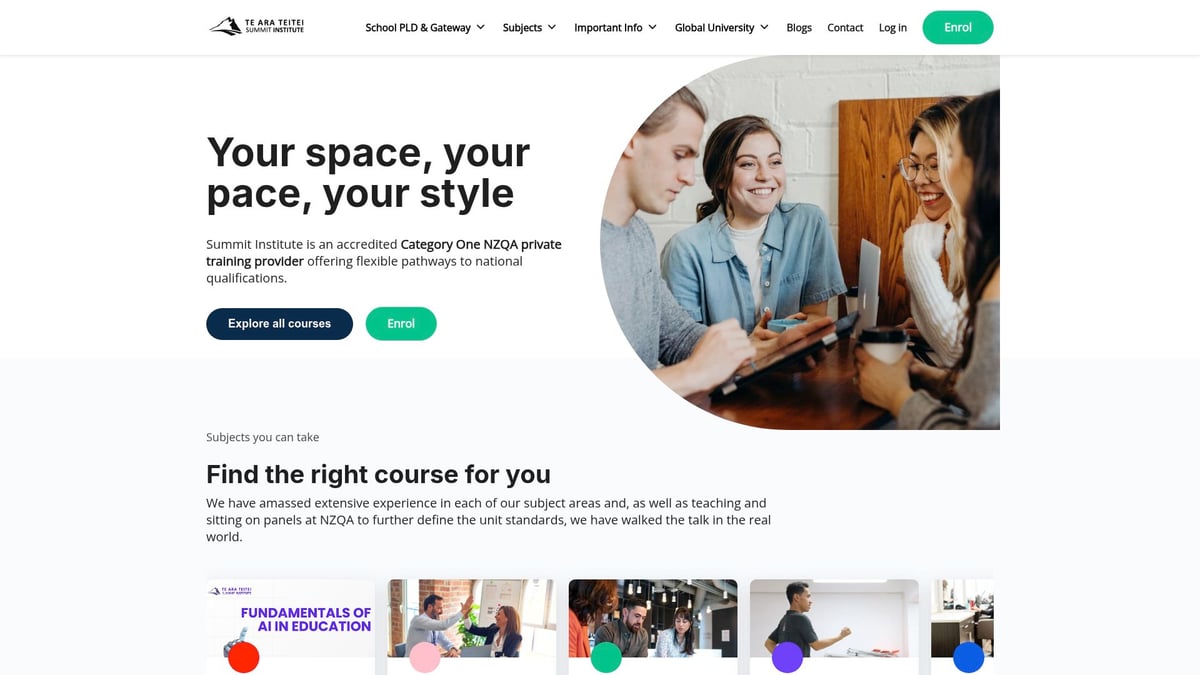
Programmes are designed for both newcomers and professionals seeking upskilling, with a strong focus on industry-relevant skills and micro-credentials. To see a practical example, explore their Accredited Business Programmes, which demonstrate how education accredited courses align with employer expectations.
Summit Institute’s commitment to high standards, personalised support, and inclusivity ensures that your education accredited qualification is recognised both in New Zealand and internationally.
Maximising the Value of Your Accredited Qualification
Unlocking the full potential of your education accredited qualification is about more than just holding a certificate. It is about actively using that recognition to advance your career, continue learning, and open doors on a global scale. Below, we explore practical strategies to help you maximise the benefits of your education accredited achievements in today’s competitive landscape.
Leveraging Your Qualification for Career Progression
Presenting your education accredited qualification effectively can set you apart in the job market. Employers and professional bodies increasingly require proof of accredited credentials for registration or advancement. For instance, in teaching, holding an NZQA Certificate in Adult and Tertiary Teaching is essential for meeting registration standards.
Highlight your accredited qualification on your CV and LinkedIn profile. Use clear titles and note the awarding body to demonstrate credibility. When applying for roles, reference your education accredited achievements in cover letters and interviews to show your commitment to recognised standards.
Lifelong Learning and Stackable Credentials
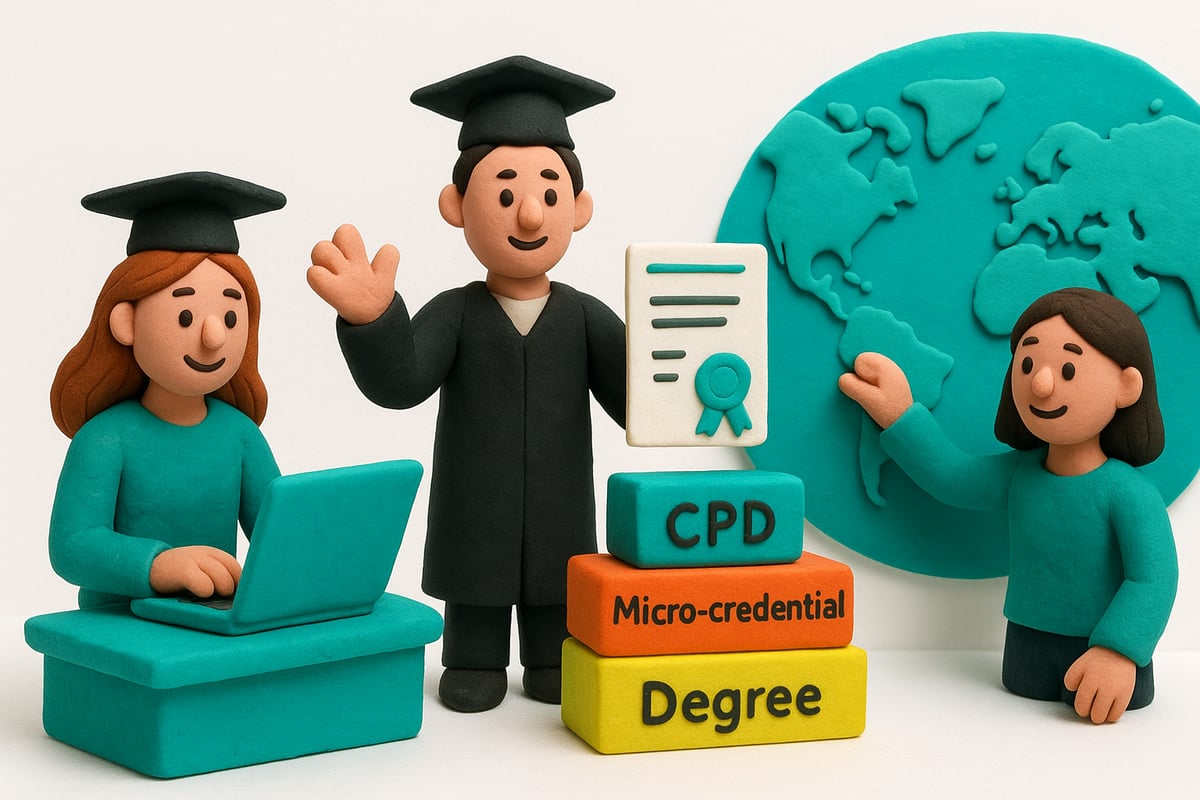
The landscape of education accredited learning is evolving, with micro-credentials and stackable qualifications becoming increasingly popular. These flexible pathways allow you to build expertise over time, moving from certificates to diplomas and even degrees.
Consider this progression table:
| Pathway | Duration | Outcome |
|---|---|---|
| Micro-credential | Weeks/months | Targeted skills, quick boost |
| Certificate | 6–12 months | Foundational knowledge |
| Diploma | 1–2 years | Advanced workplace capability |
| Degree | 3+ years | Comprehensive expertise |
By stacking education accredited achievements, you can tailor your learning journey to match career goals and industry needs, keeping your skills current and relevant.
International Recognition and Mobility
Education accredited qualifications are designed for portability, supporting both study and career moves abroad. Understanding global frameworks such as the New Zealand Qualifications Framework (NZQF) or the European Qualifications Framework (EQF) ensures your achievements are recognised internationally.
Many institutions and employers rely on these systems to verify the validity of foreign qualifications. Referencing global data, such as the World Education Statistics 2024, can help you understand trends in qualification recognition and plan your next steps with confidence. Always confirm equivalency processes with prospective employers or institutions before making a move.
Staying Up-to-Date with Industry Developments
Ongoing professional development is vital for maintaining the value of your education accredited qualification. Many sectors, including healthcare and engineering, require annual CPD to uphold registration.
Choose accredited providers that offer CPD opportunities tailored to your industry. Stay informed about emerging trends, such as digital badges or sector-specific standards, to ensure your education accredited credentials remain relevant. Regularly updating your skills demonstrates commitment to excellence and positions you for long-term success in a changing world.
Future-Proofing Your Education: Trends and Innovations
The pace of change in accredited education is accelerating, making it crucial for learners, educators, and institutions to stay ahead. By understanding the latest innovations and anticipating future developments, you can ensure your education accredited pathway remains relevant and valuable for years to come.
Discover more research & credentials: AI in education expert for NZ schools
The Rise of Micro-Credentials and Digital Badges
Micro-credentials and digital badges are now transforming how skills are recognised in the education accredited landscape. These short, focused courses allow learners to quickly upskill in areas such as AI, sustainability, or digital marketing.
Employers increasingly value micro-credentials, as they demonstrate up-to-date expertise and a commitment to lifelong learning. Many accredited providers offer stackable badges, letting you build towards larger qualifications over time.
- Quick completion and immediate recognition
- Industry-aligned content
- Digital verification for easy sharing
Micro-credentials are not just a trend, but a strategic tool for boosting employability and showcasing your achievements in a rapidly changing world.
Technology-Driven Learning and Assessment
Technology is reshaping the education accredited experience, offering more personalised and accessible pathways for all learners. Providers are integrating AI, virtual reality, and adaptive learning platforms to cater to different learning styles and needs.
AI-driven assessments can identify strengths and areas for improvement, while VR immerses students in real-world scenarios, enhancing practical skills. In 2025, over half of accredited providers are expected to use AI tools to support teaching and assessment.
- Personalised feedback and support
- Greater accessibility for remote learners
- Enhanced engagement through interactive tools
These innovations ensure that your qualifications remain current and relevant in a digital-first world.
Globalisation and Standardisation of Accreditation
Education accredited programmes are increasingly recognised across borders, thanks to global efforts to harmonise standards. International frameworks and conventions are making it easier for learners to transfer credits and for employers to trust overseas qualifications.
The upcoming 2025 Accreditation Framework Launch is set to introduce updated criteria, further aligning quality assurance worldwide. This shift benefits students and professionals seeking mobility and recognition in multiple countries.
- Cross-border qualification recognition
- Consistent quality standards
- Easier pathways for international study and work
By understanding these trends, you can choose providers and courses that will stand the test of time.
Shaping Your Pathway to Recognition in 2026
Adapting to change is essential for anyone pursuing an education accredited journey. As industries evolve, so do the requirements for recognised qualifications. Staying informed about new standards, technologies, and learning models will help you make strategic decisions.
- Research future-focused programmes
- Seek out providers committed to innovation
- Embrace lifelong learning through stackable credentials
By taking a proactive approach, you ensure your skills remain relevant, making you resilient and adaptable in a dynamic global workforce.
As you’ve seen, navigating the world of accredited education is all about making informed choices that set you up for lasting success. Whether you’re just starting out or aiming to advance your career, having a qualification that’s recognised both in New Zealand and internationally makes a real difference. At Summit Institute, you’ll find flexible, NZQA-accredited pathways designed to support your growth and meet today’s industry needs—no matter where you’re starting from. Ready to take the next step towards a qualification that truly counts for your future?
Get ahead now!