
The financial sector is experiencing rapid expansion, with industry experts projecting a significant increase in demand for qualified professionals by 2026. Earning a certificate in financial services is one of the most effective ways to unlock these opportunities and boost your career prospects in this evolving field. This guide provides a step-by-step approach to achieving certification, helping you navigate programme options, understand eligibility, master the curriculum, and maximize your learning. Whether you are entering the industry or seeking to advance, discover how a certificate in financial services can open doors to higher earning potential and a rewarding future.
Understanding Financial Services Certificates
Earning a certificate in financial services is a strategic way to gain industry-specific knowledge and credentials that open doors in finance. These certificates are designed to validate your competency in core financial skills and set you apart in a competitive job market. Understanding what these certificates are, why they matter in 2026, the various types available, and the skills you gain will help you make informed choices about your career path.
What is a Certificate in Financial Services?
A certificate in financial services is a formal qualification focused on practical and theoretical skills required in the finance industry. Unlike diplomas or degrees, certificates are shorter and more targeted, often completed in under a year. These programmes cover essential topics such as banking, investment, and compliance.
Accreditation is key. In New Zealand, the NZQA Level 5 Certificate in Financial Services is widely recognized, while global standards include programmes accredited by bodies like AACSB or FINRA. Many certificates, including those from Summit Institute's NZQA-Accredited Financial Services Training, offer stackable credentials and micro-credentials, allowing you to build qualifications over time. This structure provides flexibility for both entry-level learners and experienced professionals seeking upskilling.
Why Pursue a Certificate in Financial Services in 2026?
The financial sector is evolving rapidly, and demand for skilled professionals is rising. According to the Bureau of Labor Statistics, financial occupations are projected to grow by 7 percent from 2021 to 2031. A certificate in financial services can give you an edge in this competitive landscape by demonstrating your expertise in current industry practices.
With technology, compliance, and customer service roles expanding, employers increasingly seek certified candidates. For example, securities sales agents in Arizona earn an average annual salary of $63,870, with entry-level roles starting at $37,790 and expert positions reaching $101,750. A certificate in financial services also offers flexibility, making it suitable for career changers and those looking to upskill quickly.
Types of Financial Services Certificates
There is a wide range of certificate in financial services specializations to suit various career interests. Common options include banking, investment, insurance, compliance, and financial planning. Programmes may be delivered on-campus, online, or in blended formats to accommodate diverse learning styles.
Certificates can be entry-level, designed for those new to the field, or advanced for professionals with prior experience. For example, EKU’s Banking and Financial Services Certificate requires 24 credits and is available both on campus and online. Micro-credentials are also becoming popular, especially for emerging skills like artificial intelligence in finance. Regional and international recognition further enhances the value of your certificate in financial services.
Key Skills and Competencies Gained
Completing a certificate in financial services equips you with essential industry skills. Core competencies include risk analysis, investment evaluation, customer service, and regulatory compliance. Soft skills such as communication, ethics, and service orientation are also emphasized.
Technical skills are central, covering market mechanics, trading, and up-to-date regulatory frameworks. Many programmes incorporate real-world application through case studies and simulations like ProBanker Bank Management Software. In addition, digital literacy and technology integration are woven throughout the curriculum, ensuring that graduates are prepared for the modern financial landscape.
Eligibility, Entry Requirements, and Choosing the Right Programme
General Admission Criteria
Admission to a certificate in financial services typically requires a secondary school qualification or equivalent. Some programmes may request transcripts, while others allow recognition of prior learning for those with industry experience.
Non-native English speakers are often required to demonstrate language proficiency, such as IELTS or TOEFL results. Occasionally, certain foundational courses must be taken before or alongside core modules. For instance, SIE Exam Prep may require concurrent enrollment in a gateway business course.
Applicants should also check if credit transfers are accepted, especially if they have relevant study or certifications. Most programmes offer multiple annual intakes, giving added flexibility to prospective students.
How to Choose the Best Certificate Programme
Selecting the right certificate in financial services involves several critical factors. First, verify the programme's accreditation, such as NZQA or AACSB, to ensure your qualification is recognized. Next, align the curriculum with your career ambitions, whether in banking, investments, or compliance.
Consider the delivery mode: full-time, part-time, or flexible online study. Faculty expertise and strong industry connections can enhance your learning experience. Evaluate career support services, including resume reviews and networking events. For those seeking flexible study options, explore Study Options for Certificates to compare online, blended, and workplace delivery modes.
Cost, Funding, and Return on Investment
Understanding the financial commitment of a certificate in financial services is vital. Tuition varies by provider, with online courses often priced per credit and on-campus programmes by semester. Textbook initiatives, like BookSmart, can reduce materials costs.
| Cost Element | Example Amount | Notes |
|---|---|---|
| Tuition (Online) | $443 per credit hour | EKU online |
| Tuition (Campus) | $5,010 per semester | EKU on-campus |
| Textbooks | Included/Low-cost | BookSmart initiative |
| Scholarships | Available | Merit or need-based |
| Employer Funding | Possible | Check with HR |
Financial aid, scholarships, and payment plans are widely available. Calculate ROI by comparing average post-certificate salary increases with total study costs, factoring in time and any lost earnings.
Summit Institute: NZQA-Accredited Flexible Financial Services Training
Summit Institute offers an NZQA-accredited certificate in financial services, catering to diverse learners. Study options are highly flexible, with online, on-campus, and workplace delivery to suit different schedules and learning preferences.

The curriculum is designed for both newcomers and experienced professionals seeking to upskill. As an NZQA-accredited provider, Summit Institute ensures that qualifications are widely recognized and valued by employers. Personalized learning plans, specialist support, and cultural competency modules are available.
Whether you are a school leaver, working professional, or an organization seeking staff certification, Summit Institute provides comprehensive support and guidance throughout the journey.
Step-by-Step Guide to Earning Your Certificate in Financial Services
Earning a certificate in financial services is a structured journey. Each step is designed to build your expertise and prepare you for a dynamic industry. Whether you are new to finance or seeking to upskill, following a clear path increases your chances of success.
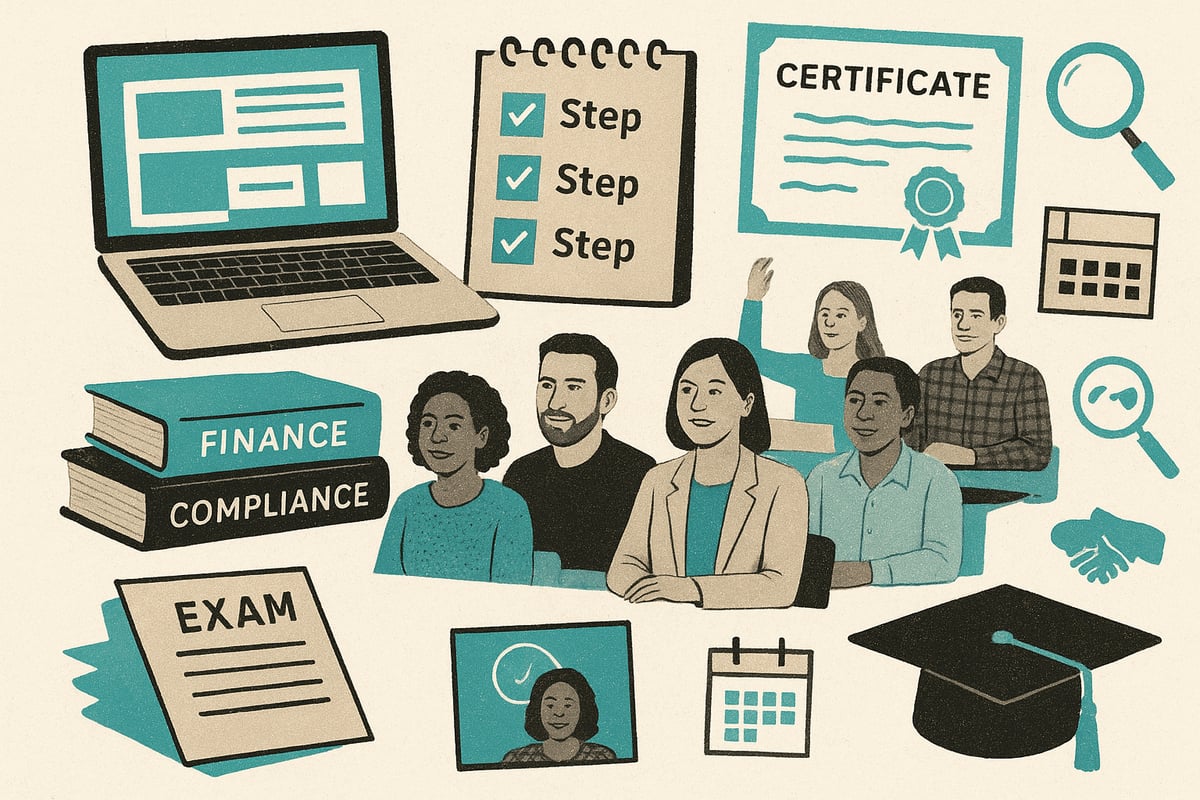
Step 1: Research and Select Your Programme
Begin by defining your career objectives. Are you interested in banking, investments, compliance, or another niche within financial services? Clarifying your goals will help you choose the right certificate in financial services.
Next, compare programme offerings across institutions. Review accreditation status, such as NZQA or AACSB, to ensure your qualification will be recognized by employers. Investigate whether the curriculum aligns with your interests and if elective modules allow for specialization.
Consider the delivery format that fits your lifestyle. Options include online, blended, and on-campus learning. Look for programmes with practical training, industry partnerships, and experiential learning opportunities.
To explore specific courses and modules relevant to your goals, visit the Financial Services Subjects and Courses page. This resource provides insight into subjects ranging from investment analysis to customer service.
Finally, review programme reputation, faculty expertise, and graduate outcomes. A well-chosen certificate in financial services can open doors to a variety of career paths.
Step 2: Prepare and Meet Admission Requirements
Once you have selected a programme, carefully review the entry criteria. Most certificate in financial services programmes require secondary school completion or an equivalent qualification. Some may ask for prior coursework or standardized assessments.
If English is not your first language, be prepared to submit language proficiency scores such as IELTS or TOEFL. Gather your academic transcripts, identification documents, and any professional references if required.
Certain programmes may also require you to complete prerequisite courses or provide a personal statement outlining your motivation. Reach out to academic advisors for guidance on meeting these requirements.
For international applicants or those with prior industry experience, inquire about credit transfers or recognition of prior learning. Meeting all prerequisites efficiently streamlines your path toward earning your certificate in financial services.
Step 3: Apply and Enroll
With your documents in order, proceed to the application phase. Most institutions offer online application options for their certificate in financial services programmes. Complete all required fields accurately and upload supporting materials.
Pay any applicable application fees and review submission deadlines. Some programmes offer multiple intakes each year, allowing flexibility in your start date.
You may be invited to attend an interview or orientation session. These events provide valuable insights into programme expectations and resources.
Once accepted, confirm your enrollment and review your course schedule. This marks your official entry into the certificate in financial services journey, positioning you for academic and professional growth.
Step 4: Complete the Curriculum
Follow the recommended course sequence, choosing full-time or part-time study based on your availability. Core subjects often include workplace communication, business fundamentals, investments, and customer service. Specialized modules such as Securities Industry Essentials (SIE) Exam Prep or credit analysis deepen your industry knowledge.
Engage in simulations, case studies, and group projects to apply theoretical concepts. Many programmes incorporate networking events and guest lectures from industry professionals, enhancing your learning experience.
Maintain satisfactory grades, typically a C or better in all courses. Leverage available support services such as tutoring, study groups, and online resources to stay on track.
A sample table of curriculum components might look like this:
| Core Subject | Specialized Module | Practical Component |
|---|---|---|
| Workplace Communication | SIE Exam Prep | Case Study Simulations |
| Introduction to Business | Credit Analysis | Networking Events |
| Investments | Compliance Fundamentals | Group Projects |
Completing the curriculum is a critical step toward obtaining your certificate in financial services and preparing for industry certification exams.
Step 5: Prepare for Certification Exams (if applicable)
If your certificate in financial services programme includes industry exams, begin preparation early. Register for exams such as the FINRA SIE or Certified Credit Analysis, following all registration guidelines.
Utilize exam preparation courses, practice tests, and mock exams to assess your readiness. Many institutions provide study resources and workshops designed to boost your confidence.
Stay organized with a study schedule and seek support from peers and instructors as needed. Success in these exams enhances the value of your certificate in financial services.
Step 6: Graduate and Receive Your Certificate
After completing all course requirements and assessments, apply for graduation or certificate issuance. Some institutions host graduation ceremonies, offering the chance to celebrate your accomplishment.
Upon approval, you will receive official documentation confirming your certificate in financial services. This credential can be shared with employers, professional bodies, and added to your resume or LinkedIn profile.
Keep your records updated to facilitate future education or employment opportunities. Graduation is not just the end, but the beginning of your professional journey in the financial services sector.
Maximizing Your Learning Experience and Success
Mastering your studies and building career momentum are crucial for anyone pursuing a certificate in financial services. Success comes from more than academic achievement—it’s about using every available resource, maintaining a healthy balance, connecting with the industry, and staying ahead of trends.

Effective Study Strategies for Financial Services Certificates
To excel in your certificate in financial services, start by creating a clear study schedule that matches your course deadlines. Use active learning techniques, such as case studies, group projects, and financial simulations, to deepen your understanding of complex topics.
Take advantage of online resources, discussion forums, and tutoring services provided by your institution. Attend workshops and webinars to reinforce your knowledge and connect with peers. Many programmes, like EKU’s, offer free academic support designed to boost your confidence and skills.
Breaking tasks into manageable steps and reviewing material regularly can help you retain critical concepts. By adopting these habits, you will set a strong foundation for success in your certificate in financial services journey.
Balancing Study, Work, and Life
Juggling coursework, employment, and personal commitments is a common challenge for students in a certificate in financial services programme. Effective time management is key. Consider whether part-time or full-time study best fits your lifestyle.
Flexible learning formats, such as online and blended courses, allow you to tailor your study around work shifts or family needs. Use digital planners or calendar tools to schedule study blocks and avoid last-minute stress.
Seek support from academic advisors, mentors, and classmates when you need guidance. Many programmes offer accelerated terms and multiple annual intakes, making it easier to start or pause your studies as life evolves. With the right strategies, you can maintain balance while progressing toward your certificate in financial services.
Leveraging Industry Connections and Career Services
Building a professional network is essential when pursuing a certificate in financial services. Participate in industry meetups, networking events, and workshops hosted by your institution. Career services can assist with resume writing, interview prep, and job search strategies.
Engage with alumni and employer partners to gain insights into real-world opportunities. Utilize platforms like LinkedIn and professional associations to showcase your credentials and connect with recruiters. According to financial services employment trends, holding a recognized certificate in financial services can significantly enhance your career prospects and open doors to new roles.
By actively seeking out connections and support, you will increase your visibility and confidence in the job market.
Staying Current with Industry Trends and Continuing Education
The financial sector evolves rapidly, with new regulations, technology, and best practices emerging each year. Stay informed by subscribing to industry publications, attending conferences, and participating in webinars focused on the latest developments.
Pursue micro-credentials or advanced certifications in areas like fintech or artificial intelligence to future-proof your skills. Plan for lifelong learning to remain competitive after earning your certificate in financial services. If you need personalized advice on upskilling or selecting further education, you can contact Summit Institute for advice and explore tailored learning pathways.
Remaining proactive and adaptable ensures your expertise stays relevant and valued throughout your career.
Career Outcomes and Advancement with a Financial Services Certificate
A certificate in financial services can open doors to dynamic and rewarding careers in the financial sector. Whether you are starting out, looking to upskill, or aiming to advance, understanding the range of outcomes this credential offers is key to planning your next steps.
Job Opportunities and Career Paths
Completing a certificate in financial services prepares graduates for a variety of roles, including financial advisor, securities sales agent, loan officer, credit analyst, and compliance officer. According to official job growth projections, the financial sector is expected to see a 7 percent increase in employment from 2021 to 2031, reflecting strong demand for skilled professionals.
Typical employers include major banks, investment firms, insurance companies, and fintech startups. Entry-level roles often serve as stepping stones to advanced positions such as portfolio manager or compliance director. Opportunities also extend to brokerage clerks, with median pay around $29 per hour.
A certificate in financial services gives you the flexibility to move between sectors, adapt to market trends, and specialize as your career progresses.
Salary Expectations and Earning Potential
Earning a certificate in financial services can significantly improve your salary outlook and long-term earning potential. Entry-level professionals, such as securities sales agents, start at about $37,790, while experienced individuals can earn up to $101,750 per year. The national average for these roles sits at $63,870, with variation based on region and specialization.
Certification can also help narrow the pay gap, supporting diversity and gender equity in financial services. Many who complete programmes like the Financial Services Certified Professional® programme report faster promotions and access to higher-paying roles.
Employers often reward certified candidates with bonuses or advancement, making a certificate in financial services a smart investment for those seeking financial stability.
Professional Development and Further Education
A certificate in financial services does not have to be the end of your educational journey. Many graduates use it as a springboard to higher qualifications such as diplomas, associate degrees, or bachelor’s programmes. Stackable credentials allow you to build on your skills, specializing in areas like fintech, risk management, or financial planning.
The flexibility of these pathways supports ongoing learning and adaptation to industry changes. Micro-credentials and short courses can further enhance your expertise, keeping you current with emerging trends.
With a certificate in financial services, you are well-positioned to pursue advanced study or gain specialized knowledge that aligns with your career ambitions.
Real-World Success Stories and Alumni Outcomes
Graduates with a certificate in financial services often achieve impressive outcomes. Many move quickly into roles at leading banks, investment firms, and regulatory agencies, leveraging their credentials to stand out in competitive job markets. Alumni have participated in national finance competitions, joined top companies like US Bank and Northwestern Mutual, and received positive employer feedback for their practical skills and professionalism.
Employers value the real-world training and technical knowledge gained through certification. These success stories highlight how a certificate in financial services can be a catalyst for long-term career growth, recognition, and leadership opportunities.
As you explore your next steps in financial services, remember that earning a recognized certificate isn’t just about adding credentials—it’s about equipping yourself with practical skills, industry knowledge, and the flexibility to grow in a changing marketplace. Summit Institute’s NZQA-accredited programmes are tailored for busy professionals and newcomers alike, offering blended and online learning options to fit your life. If you’re ready to turn your ambition into action and open new career doors, now is the perfect time to take that first step.
Get ahead now!