
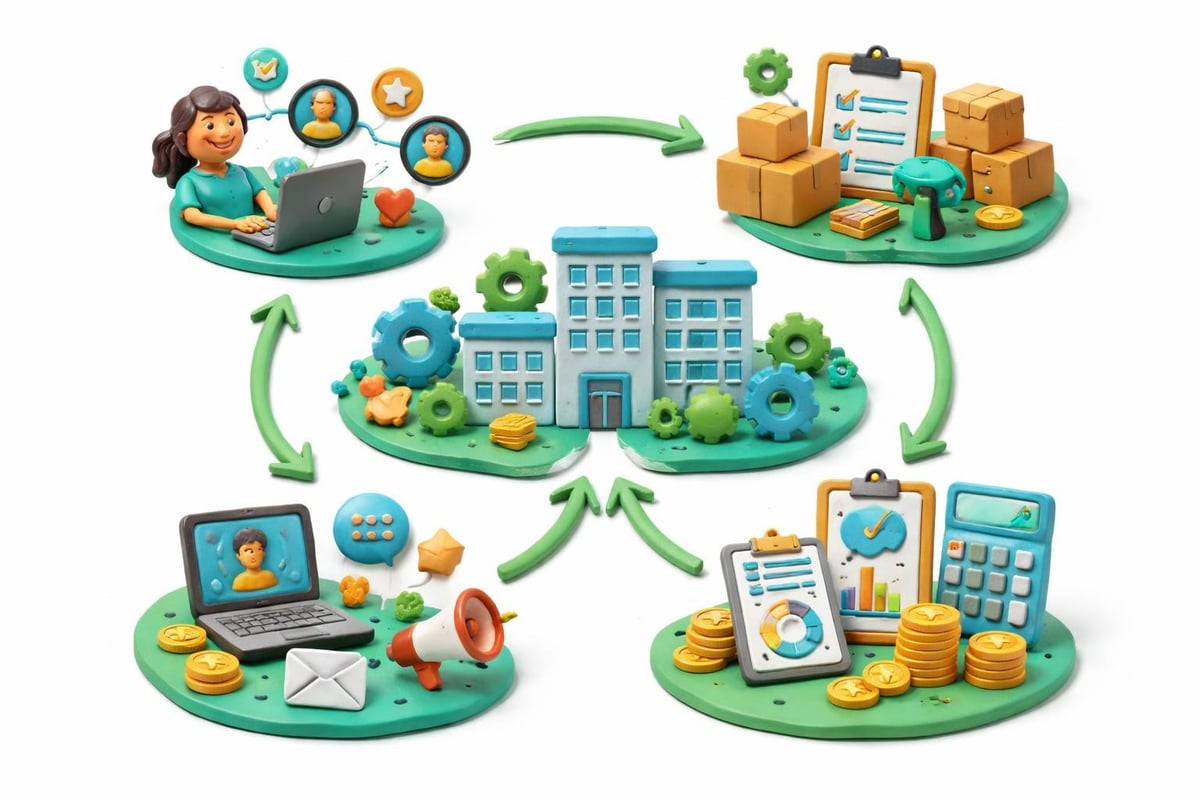
The modern workplace demands professionals who understand both business fundamentals and technological applications. A business with IT course bridges these two critical domains, preparing learners to navigate digital transformation whilst maintaining strong commercial acumen. Whether you're entering the workforce for the first time, pivoting careers, or seeking to enhance your current skill set, these qualifications offer practical pathways to nationally recognised credentials that employers actively seek. With organisations across New Zealand increasingly reliant on digital systems for operations, finance, customer management, and strategic planning, the fusion of business knowledge and IT competency has become essential rather than optional.
What Makes Business with IT Training Unique
Traditional business education focuses on management principles, financial literacy, and operational strategy. Conversely, pure IT training emphasises technical skills like programming, network administration, or cybersecurity. A business with IT course deliberately combines these disciplines, creating graduates who can translate technical possibilities into commercial outcomes.
This hybrid approach addresses a specific market need. Employers require team members who understand database management and can interpret what the data means for revenue projections. They need staff who comprehend cloud computing infrastructure and how it reduces operational costs whilst improving customer service delivery.
Core Components of Integrated Programmes
Most comprehensive programmes include several foundational elements:
- Business administration fundamentals: organisational structures, workflow management, resource allocation
- Financial literacy: budgeting, financial reporting, basic accounting principles
- Information systems: database concepts, business software applications, data management
- Digital communication: professional correspondence, collaborative platforms, virtual meeting facilitation
- Problem-solving methodologies: analytical thinking applied to both technical and commercial challenges
The New Zealand Certificate in Business Administration and Technology Level 3 exemplifies this integrated approach, providing entry-level learners with practical skills across both domains. Such qualifications ensure graduates can contribute immediately to workplace productivity rather than requiring extensive on-the-job training.
Career Pathways and Professional Opportunities
Completing a business with IT course opens diverse career trajectories. The versatility of combined qualifications means graduates can pursue roles in multiple sectors, each valuing slightly different aspects of their skill set.
| Career Path | Primary Focus | Typical Responsibilities |
|---|---|---|
| Business Analyst | Systems improvement | Identifying process inefficiencies, recommending technical solutions, liaising between IT and management |
| Office Manager | Operations coordination | Supervising administrative systems, implementing software solutions, managing digital workflows |
| Data Coordinator | Information management | Maintaining databases, generating reports, ensuring data accuracy and compliance |
| Customer Service Specialist | Client engagement | Using CRM systems, resolving technical queries, managing digital communication channels |
| Project Assistant | Support coordination | Tracking project milestones, managing documentation, coordinating across departments using collaborative tools |
Industry Demand Across Sectors
Financial services, retail, healthcare, education, and government organisations all require staff with dual competencies. Small to medium enterprises particularly value employees who can manage both administrative responsibilities and technical troubleshooting, eliminating the need for separate specialist hires.
The business programmes available through accredited providers demonstrate the breadth of pathways available. From entry-level certificates through to diploma qualifications, learners can progress systematically whilst remaining employed.
According to insights from institutions like Virginia Tech’s Business Information Technology programme, graduates with combined skills command competitive salaries and experience strong employment outcomes. The ability to develop computer systems for solving business problems whilst making informed managerial decisions creates significant professional value.
Qualification Levels and Learning Progressions
New Zealand's qualifications framework provides structured pathways for learners at different stages. Understanding these levels helps prospective students select appropriate starting points and plan long-term educational goals.
Level 3: Foundation Skills
Entry-level qualifications establish fundamental competencies. Learners develop basic business literacy alongside introductory IT skills. This level suits school leavers, career changers, or those returning to formal education after extended absences.
Key learning outcomes typically include:
- Professional workplace communication
- Basic spreadsheet and word processing proficiency
- Understanding organisational structures
- Introductory financial record-keeping
- Digital collaboration tools
The New Zealand Certificate in Information Technology offered by various providers demonstrates how foundational programmes establish core capabilities that support further learning.
Level 4: Applied Competencies
Intermediate qualifications develop applied skills for specific workplace contexts. The business with IT course at this level prepares learners for supervisory or specialist roles requiring greater autonomy and decision-making responsibility.
Programmes like the New Zealand Certificate in Business Administration and Technology Level 4 expand on foundational knowledge, introducing:
- Advanced database management and reporting
- Business process analysis and improvement
- Project coordination methodologies
- Technical troubleshooting for common business systems
- Regulatory compliance and documentation standards

Level 5: Strategic Application
Diploma-level qualifications emphasise strategic thinking and complex problem-solving. Learners at this stage can analyse organisational challenges, propose technology-enabled solutions, and lead implementation projects. The New Zealand Diploma in Business Level 5 represents this advanced tier, preparing graduates for management pathways.
Delivery Methods and Learning Flexibility
Modern education providers recognise that learners have diverse circumstances affecting their study preferences. A business with IT course can be delivered through multiple formats, each offering distinct advantages.
On-campus learning provides structured environments with direct tutor access, peer interaction, and hands-on laboratory sessions for technical components. This traditional approach suits learners who thrive on routine and benefit from physical learning spaces.
Workplace-based training integrates qualification requirements with employment responsibilities. Learners apply concepts immediately within their current roles, with assessments based on actual workplace projects. This method particularly benefits employed individuals seeking formal recognition of existing competencies whilst developing new skills.
Online delivery offers maximum flexibility for those balancing study with work, family, or geographical constraints. Quality online programmes include interactive elements, video tutorials, discussion forums, and virtual support services ensuring learners remain engaged and supported.
Blended learning combines elements of each approach, such as online theory modules with periodic on-campus practical workshops. This hybrid model captures benefits of flexibility whilst maintaining some face-to-face interaction for complex concepts or skill development.
The study options provided by accredited institutions demonstrate how flexible delivery supports diverse learner needs without compromising educational quality.
Skills Development Beyond the Curriculum
Whilst formal curriculum content establishes core competencies, a business with IT course also develops broader professional capabilities that enhance career prospects and workplace effectiveness.
Technical Literacy and Adaptability
Technology evolves rapidly. Rather than teaching specific software versions that may become obsolete, quality programmes emphasise underlying principles and adaptable thinking. Graduates learn how to assess new tools, understand their business applications, and acquire necessary skills independently.
Communication Across Technical and Non-Technical Contexts
Perhaps the most valuable skill developed through integrated programmes is the ability to communicate effectively with both technical specialists and business stakeholders. Graduates can explain technical concepts in accessible language whilst also understanding detailed specifications when liaising with IT departments.
This translation capability proves invaluable in roles like:
- Coordinating software implementations where user requirements must inform technical specifications
- Training staff on new systems, requiring both technical knowledge and instructional capability
- Participating in procurement decisions, evaluating vendor proposals against business needs
- Managing customer service interactions involving technical products or services
Critical Thinking and Problem Analysis
The intersection of business and technology demands analytical thinking. Learners develop systematic approaches to identifying problems, gathering relevant information, evaluating alternative solutions, and implementing decisions. These problem-solving frameworks transfer across contexts, making graduates adaptable to changing workplace demands.
Programmes informed by methodologies outlined in offerings like Coursera’s Business Technology specialisation demonstrate how theoretical insights combine with practical applications to develop robust analytical capabilities.
Industry Recognition and Career Advancement
Completing a business with IT course through NZQA-accredited providers ensures qualifications carry recognised value with employers and professional bodies. This accreditation signals that programmes meet established quality standards and prepare graduates for workplace requirements.
Credential Portability and Further Study
Nationally recognised qualifications enable credit transfer between institutions, allowing learners to progress from certificates through diplomas and potentially into degree programmes. This articulation means initial qualifications represent starting points rather than endpoints in educational journeys.
For professionals seeking specialisation, foundational business with IT qualifications can lead into focused areas like financial services, where technology increasingly drives service delivery, risk management, and regulatory compliance.
Professional Development and Micro-Credentials
Beyond traditional qualifications, micro-credentials offer targeted skill development in emerging areas. Professionals with business and IT backgrounds can enhance their capabilities through focused study in artificial intelligence applications, data analytics, cybersecurity awareness, or digital marketing platforms.
The subjects available through modern training providers reflect evolving industry needs, ensuring learners can maintain current skills throughout their careers.
Choosing the Right Programme for Your Goals
Selecting an appropriate business with IT course requires considering several factors beyond basic interest in the subject matter.
Assessing Your Current Skill Level
Honest evaluation of existing knowledge helps identify suitable entry points. Learners with prior business experience but limited technical skills may find Level 3 IT components challenging initially, whilst those comfortable with technology but new to commerce may struggle with business concepts.
Most providers offer initial assessments or advisory services to help prospective students select appropriate levels. Taking advantage of these services prevents frustration from courses that are too advanced or boredom from programmes below current capabilities.
Aligning Qualifications with Career Objectives
Different roles emphasise different aspects of business and IT integration. Someone aiming for office management might prioritise administrative systems and workflow coordination, whilst a prospective business analyst would focus more heavily on data analysis and process improvement.
Research target job descriptions to identify commonly required skills and qualifications. This information guides programme selection, ensuring learning investments support specific career goals.
Considering Learning Style and Circumstances
Your available time, preferred learning environment, and external commitments significantly impact programme success. A demanding full-time role may require fully online study, whilst those transitioning careers might benefit from intensive on-campus programmes providing immersive learning experiences.
The enrolment information provided by training organisations typically outlines time commitments, attendance expectations, and support services, helping prospective learners make informed decisions.

Practical Applications in Contemporary Workplaces
Understanding how business with IT course content translates into workplace practice helps learners appreciate the relevance of seemingly theoretical concepts.
Digital Transformation Projects
Organisations across sectors are digitising paper-based processes, implementing cloud-based collaboration systems, and adopting customer relationship management platforms. Staff with combined business and IT knowledge drive these initiatives, understanding both the technical requirements and the operational implications.
A graduate might lead a project to implement digital invoice processing, requiring knowledge of accounting principles, process mapping, software configuration, change management, and user training. The business with IT course foundation enables confident navigation of all these dimensions.
Data-Driven Decision Making
Modern businesses generate enormous data volumes through daily operations. Transforming this data into actionable insights requires both technical skills to extract and manipulate information and business knowledge to interpret what the data reveals about performance, opportunities, and risks.
Staff trained in business with IT approaches can create meaningful reports from customer databases, identify sales trends through data visualisation, monitor operational metrics through dashboards, and communicate findings to management in strategically relevant terms.
Customer Experience Enhancement
Technology increasingly mediates customer interactions, from initial enquiry through purchase and ongoing support. Designing and managing these digital touchpoints requires understanding customer needs and expectations whilst also configuring and maintaining the underlying systems.
Roles in customer service, sales support, or client relationship management benefit significantly from business with IT qualifications. Graduates can troubleshoot technical issues whilst maintaining service quality, personalise automated communication systems, and identify system improvements that enhance customer satisfaction.
Insights from programmes like Tennessee Tech’s Business and Information Technology offering emphasise how application development and database management solve real business problems, preparing graduates for these practical challenges.
Complementary Skills and Continuing Development
A business with IT course establishes a foundation, but professional success often requires ongoing skill development in complementary areas.
Leadership and Management Capabilities
Technical and administrative competence naturally leads to supervisory opportunities. Developing leadership skills through qualifications like the New Zealand Certificate in Business First Line Management Level 4 prepares graduates for team coordination responsibilities.
Industry-Specific Knowledge
Whilst business with IT skills transfer across sectors, deep industry knowledge enhances professional value. Someone working in healthcare benefits from understanding patient information systems and privacy regulations, whilst those in retail need familiarity with inventory management and point-of-sale technologies specific to that sector.
Emerging Technology Awareness
Artificial intelligence, automation, blockchain, and other emerging technologies will reshape business operations. Maintaining awareness of these developments and understanding their potential applications ensures professionals remain relevant as workplace technology evolves.
Qualifications addressing emerging areas, such as those focused on AI in education, demonstrate how ongoing learning keeps skills current with technological advancement.
Financial Considerations and Investment Return
Education represents a significant investment of time and financial resources. Understanding the costs and potential returns helps prospective students make informed decisions about pursuing a business with IT course.
Programme Costs and Funding Options
Qualification fees vary based on level, duration, and delivery method. Entry-level certificates generally cost less than diplomas, whilst online delivery may reduce indirect costs like travel and accommodation compared to on-campus study.
Many learners qualify for government funding support through schemes designed to increase workforce capability. Employers may also contribute to training costs for staff developing skills relevant to their roles. Investigating available funding options before enrolment can significantly reduce personal financial burden.
Career Earnings and Advancement Potential
Graduates with business and IT qualifications typically command higher salaries than those with single-domain skills. The ability to contribute across multiple functional areas makes these professionals valuable in competitive employment markets.
Career advancement often accelerates for individuals who can bridge organisational silos between business units and technology departments. Promotion to supervisory, management, or specialist analyst roles brings corresponding salary increases that recover initial education investments over time.
Non-Financial Returns on Investment
Beyond earnings potential, education delivers personal development, professional confidence, expanded networks, and intellectual satisfaction. Many learners report increased job satisfaction following qualification completion, as they can contribute more meaningfully to workplace success and pursue more engaging responsibilities.
The comprehensive nature of business with IT programmes, as exemplified by offerings like Illinois Tech’s Bachelor of Science in Business and Information Technology, demonstrates how these qualifications prepare graduates for substantial professional contributions across their careers.
Assessment Methods and Learning Verification
Understanding how learning is assessed helps prospective students prepare for programme expectations and demonstrates how qualifications verify competency rather than just attendance.
Quality business with IT courses employ diverse assessment methods:
- Practical projects simulating workplace scenarios
- Written assignments demonstrating theoretical understanding
- Case study analysis applying concepts to real business situations
- Skills demonstrations showing technical proficiency
- Workplace evidence for employed learners completing on-job assessments
This variety ensures learners can demonstrate competency through multiple channels, accommodating different strengths whilst maintaining rigorous standards. Assessment criteria clearly outline required performance levels, providing transparency about expectations and supporting self-directed learning.
For those interested in exploring available qualifications and their specific assessment approaches, reviewing detailed programme information through resources like the subjects section of accredited providers offers valuable insights into learning expectations and outcomes.
Combining business acumen with technological capability positions professionals for success across today's digitally-enabled workplaces. Whether starting your career journey, seeking advancement, or transitioning into new roles, a business with IT course provides practical, recognised skills that employers value. As a NZQA-accredited provider, Summit Institute delivers quality programmes across multiple levels and formats, supporting your educational goals through flexible, industry-relevant training designed for real-world application.