

Understanding business management subjects is essential for anyone seeking to advance their career in commerce, administration, or entrepreneurship. These subjects form the foundation of professional qualifications and provide the practical skills needed to lead teams, manage resources, and drive organisational success. In 2026, the landscape of business education continues to evolve, incorporating emerging technologies, sustainability practices, and contemporary management theories that reflect the realities of modern workplaces. Whether you're entering the field for the first time or developing specialised expertise, selecting the right subjects can significantly impact your career trajectory.
Core Business Management Subjects for Professional Development
Business management subjects encompass a diverse range of topics designed to equip learners with comprehensive organisational skills. The foundation typically begins with fundamental areas that establish essential knowledge before progressing to more specialised domains.
Foundational subjects include principles of management, which cover planning, organising, leading, and controlling organisational resources. This area introduces learners to management theories, decision-making processes, and the basic functions that all managers must understand. Organisational behaviour examines how individuals and groups interact within workplace settings, addressing motivation, communication, team dynamics, and leadership styles.
Financial management represents another critical component within business management subjects. This area teaches learners to interpret financial statements, manage budgets, understand cash flow, and make informed financial decisions. For those pursuing NZQA-approved business qualifications, financial literacy forms a cornerstone of practical competency.
Strategic Planning and Operations
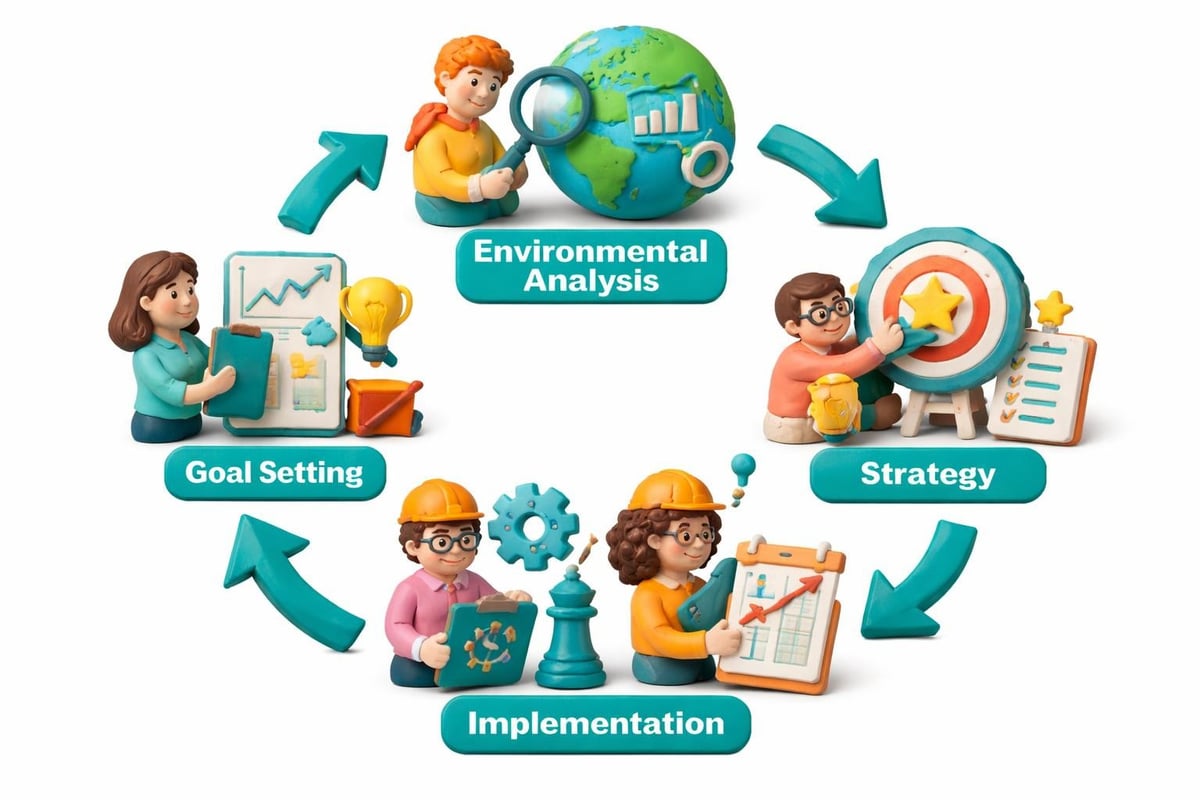
Strategic management subjects focus on long-term organisational planning and competitive positioning. Learners explore how businesses analyse their environment, set objectives, formulate strategies, and implement plans to achieve sustainable success. This subject area draws heavily from contemporary business management research, incorporating case studies and real-world applications.
Operations management addresses the efficient production and delivery of goods and services. Topics include:
- Supply chain management and logistics
- Quality control and continuous improvement
- Project management methodologies
- Resource allocation and capacity planning
- Process optimisation techniques
Human resource management constitutes a vital category within business management subjects, covering recruitment, training, performance management, employee relations, and workforce planning. As organisations recognise that people represent their most valuable asset, HR subjects have expanded to include diversity management, employee wellbeing, and contemporary workplace practices.
Specialised Business Management Subjects
Beyond foundational topics, business management subjects branch into specialised areas that address specific organisational functions or industry requirements. Marketing management teaches learners to identify customer needs, develop product strategies, create promotional campaigns, and build brand value. This subject has evolved significantly with digital transformation, now incorporating social media marketing, analytics, and customer relationship management systems.
Information systems and technology management have become increasingly prominent within business management subjects. These areas cover how organisations use technology to improve efficiency, make data-driven decisions, and create competitive advantages. Topics include Business Process Management Systems, enterprise resource planning, and digital transformation strategies.
| Subject Area | Key Topics | Career Application |
|---|---|---|
| Financial Services | Investment analysis, risk management, compliance | Banking, insurance, financial planning |
| Change Management | Organisational development, transition planning | Consultancy, executive roles |
| Entrepreneurship | Business planning, innovation, venture creation | Start-ups, business ownership |
| International Business | Global markets, cross-cultural management | Multinational corporations |
Risk management and business continuity planning represent essential subjects for contemporary organisations. Learners study how to identify potential threats, assess vulnerabilities, develop mitigation strategies, and ensure operational resilience. This has become particularly relevant following global disruptions in recent years.
Industry-Specific Management Subjects
Certain business management subjects cater to particular industries or professional contexts. Those pursuing first-line management qualifications often study supervisory skills, team leadership, and operational compliance specific to their sector.
Business ethics and corporate social responsibility have gained prominence as organisations face increasing scrutiny regarding their societal impact. These subjects examine ethical decision-making frameworks, sustainable business models, and stakeholder management practices.
Practical Application of Business Management Subjects
The true value of business management subjects lies in their practical application within workplace settings. Contemporary education providers structure their programmes to ensure learners can immediately apply theoretical knowledge to real organisational challenges.
Work-integrated learning approaches connect classroom concepts with practical experience through:
- Case study analysis examining real business scenarios
- Simulation exercises replicating management decisions
- Industry projects addressing actual organisational problems
- Workplace assessments demonstrating competency
- Professional networking opportunities
Business administration subjects specifically focus on operational efficiency and administrative systems. These include office management, business communication, document control, and technology applications that support daily business functions. Level 3 and Level 4 business administration qualifications provide structured pathways for developing these practical skills.

Research and Evidence-Based Management
Modern business management subjects increasingly emphasise evidence-based practice, teaching learners to access and evaluate academic research resources and apply scholarly findings to management decisions. This approach ensures practices are grounded in proven methodologies rather than intuition alone.
Critical thinking and analytical skills permeate business management subjects, enabling learners to:
- Evaluate information from multiple sources
- Identify assumptions and biases
- Analyse complex problems systematically
- Develop evidence-supported recommendations
- Assess outcomes and adjust approaches
Qualifications and Pathway Progression
Business management subjects are typically organised within structured qualification frameworks that enable progressive skill development. In New Zealand, NZQA-approved programmes ensure consistency and quality across training providers.
Certificate-level qualifications introduce foundational business management subjects and prepare learners for entry-level positions or further study. These programmes typically span several months and focus on essential concepts and practical skills applicable across various industries.
Diploma-level studies, such as the New Zealand Diploma in Business Level 5, incorporate more advanced business management subjects including strategic analysis, financial planning, and leadership development. These qualifications suit those seeking supervisory or middle management roles.
| Qualification Level | Duration | Typical Subjects | Career Outcomes |
|---|---|---|---|
| Certificate Level 3 | 6-12 months | Business basics, communication, digital tools | Administrative assistant, office coordinator |
| Certificate Level 4 | 6-12 months | Team supervision, operational management | Team leader, supervisor |
| Diploma Level 5 | 12-18 months | Strategic planning, financial management | Manager, business analyst |
| Diploma Level 6 | 12-24 months | Advanced strategy, organisational development | Senior manager, specialist consultant |
Micro-credentials offer focused learning in specific business management subjects without requiring full qualification completion. These shorter programmes enable professionals to upskill in targeted areas such as AI applications in education or emerging technology management.
Emerging Trends in Business Management Subjects
The content and delivery of business management subjects continue to evolve in response to technological advancement and changing workplace expectations. Digital transformation has become integrated throughout curricula rather than existing as a separate topic, reflecting how technology now underpins virtually all business functions.
Sustainability and environmental management have transitioned from optional subjects to core components within business programmes. Learners study circular economy principles, environmental impact assessment, and how organisations can balance profitability with environmental responsibility.
Data analytics and business intelligence represent rapidly growing areas within business management subjects. Even non-specialist managers now require basic understanding of:
- Data collection and quality assurance
- Statistical analysis and interpretation
- Visualisation tools and dashboards
- Predictive modelling applications
- Privacy and ethical data use
Agile methodologies and adaptive management approaches have influenced how business management subjects are taught and practised. Traditional hierarchical management models are supplemented with collaborative, iterative approaches that suit contemporary project environments.
Cross-Cultural and Global Perspectives
As businesses operate increasingly across borders, business management subjects incorporate international dimensions and cross-cultural competencies. Learners explore how management practices vary across cultures, communication styles differ, and global economic factors influence local business decisions.
Remote work and distributed team management have become standard topics within business management subjects following widespread adoption of flexible working arrangements. This includes virtual collaboration tools, asynchronous communication strategies, and maintaining team cohesion across distances.
Selecting Appropriate Business Management Subjects
Choosing which business management subjects to study depends on career goals, existing experience, and industry context. Those entering business roles for the first time benefit from broad foundational programmes that cover multiple subject areas, providing versatility and comprehensive understanding.
Professionals seeking advancement within specific industries should prioritise specialised subjects relevant to their sector. For example, those in financial services require different emphasis than those managing industrial operations or adult education programmes.
Assessment of learning preferences influences subject selection and delivery mode. Business management subjects are now available through various formats:
- On-campus intensive workshops
- Workplace-based assessment
- Online self-paced learning
- Blended hybrid approaches
- Block release arrangements

Consulting authoritative business research guides helps learners identify current best practices and emerging topics within business management subjects. Academic resources provide deeper understanding beyond textbook fundamentals, particularly valuable for those pursuing higher-level qualifications.
Assessment and Competency Demonstration
Business management subjects employ diverse assessment methods to ensure learners can apply knowledge practically. Traditional examinations test theoretical understanding, whilst workplace assessments verify real-world competency. Many programmes combine multiple assessment types to provide comprehensive evaluation.
Portfolio development allows learners to compile evidence of achievement across various business management subjects. This might include project reports, financial analyses, strategic plans, and supervisor testimonials demonstrating workplace application.
Competency-based assessment focuses on demonstrable skills rather than time-based completion. Learners progress when they can prove mastery of specific capabilities, regardless of how long this takes. This approach suits experienced professionals who may already possess some competencies and can accelerate through familiar content.
Recognition of prior learning (RPL) enables individuals to gain credit for existing knowledge and experience within business management subjects. This pathway acknowledges that learning occurs through various channels beyond formal education, including workplace experience, professional development, and self-directed study.
Industry certifications complement academic qualifications in certain business management subjects. Professional bodies offer credentials in specialised areas like project management, quality assurance, or specific software applications that enhance employability alongside formal qualifications.
Continuing Professional Development
Learning business management subjects doesn't conclude with qualification completion. Successful managers engage in ongoing professional development to maintain currency with evolving practices, technologies, and regulatory requirements. Many industries mandate continuing education to retain professional memberships or licenses.
Professional associations provide access to business management resources including conferences, publications, and networking opportunities that support lifelong learning. These organisations often develop specialised training programmes addressing emerging challenges within specific sectors.
Mentoring and coaching relationships enable practical application of business management subjects within real organisational contexts. Experienced managers guide developing professionals through complex situations, providing insights that complement formal education.
Action learning sets bring together managers facing similar challenges to collectively analyse problems and develop solutions. This collaborative approach to professional development reinforces business management subjects through peer discussion and shared experience.
Self-directed learning remains essential as business environments change rapidly. Managers who cultivate curiosity and regularly explore academic business journals and industry publications maintain competitive advantage through knowledge currency.
Integration Across Disciplines
Contemporary business management subjects increasingly integrate concepts from other disciplines, reflecting the multidisciplinary nature of organisational challenges. Psychological principles inform leadership and motivation subjects, whilst sociological concepts underpin organisational culture and change management topics.
Economic theory provides context for strategic decision-making within business management subjects, helping managers understand market forces, competitive dynamics, and macroeconomic influences. Legal and regulatory knowledge ensures compliance awareness across various business functions.
Technology subjects intersect with virtually all business management areas, from digital marketing to automated financial systems. Understanding technological capabilities and limitations enables managers to make informed decisions about system selection, implementation, and change management.
Communication skills permeate business management subjects as effective information exchange underpins every organisational activity. Written communication, presentations, negotiation, and active listening receive attention throughout management education programmes.
Mastering business management subjects provides the foundation for successful careers across diverse industries and organisational contexts, equipping professionals with the analytical, strategic, and interpersonal skills that modern workplaces demand. Whether you're beginning your management journey or seeking to advance your existing capabilities, Summit Institute offers NZQA-approved qualifications in business, financial services, and related fields through flexible delivery options designed for working professionals. Explore the range of programmes available and take the next step in your professional development with nationally recognised credentials that employers value.