
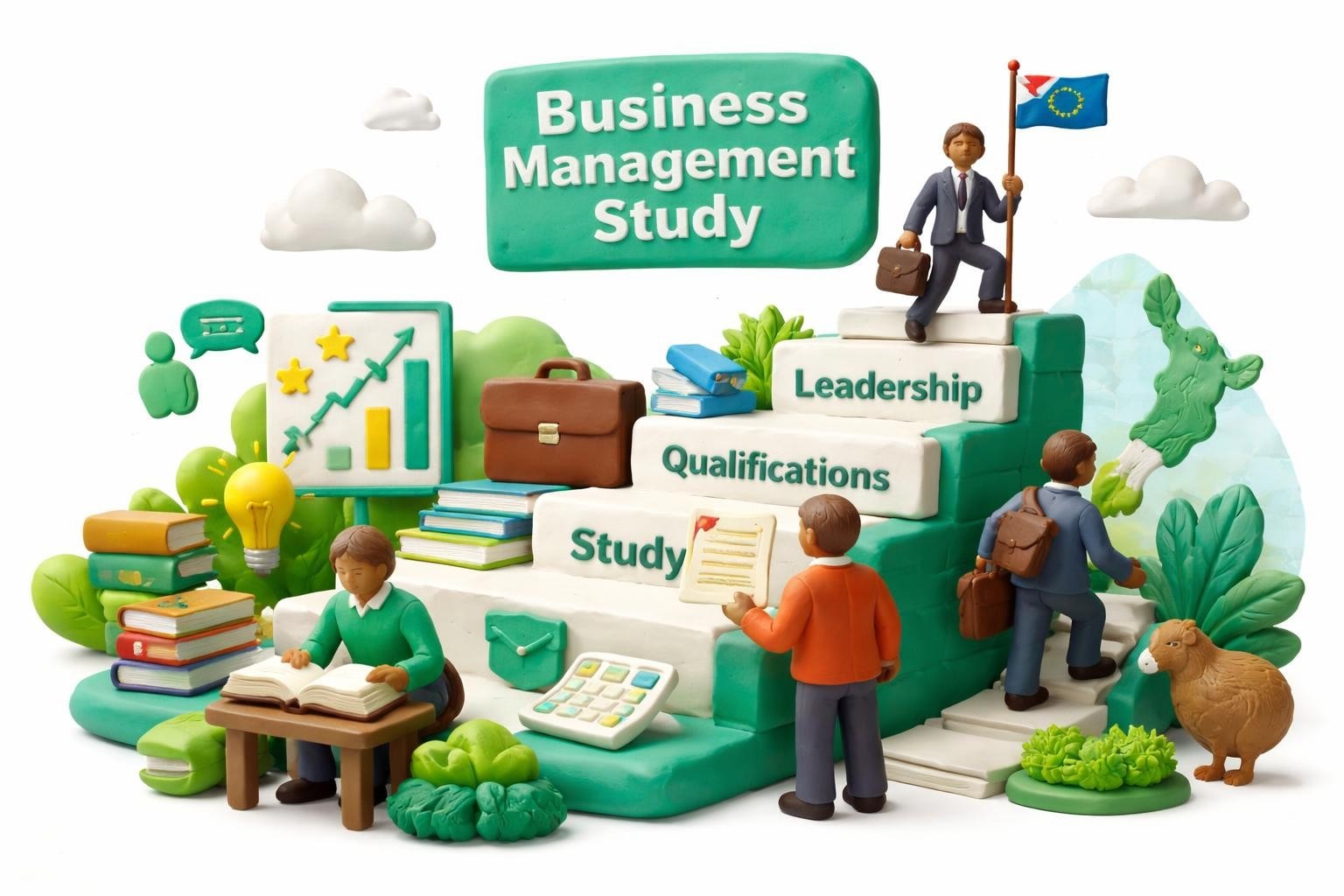
A business management study provides the foundation for professionals seeking to lead teams, drive organisational success, and navigate the complexities of modern commerce. Whether you're entering the workforce for the first time or advancing your career, structured education in business management equips you with essential skills in planning, communication, financial oversight, and strategic thinking. In 2026, the demand for qualified business managers continues to grow across New Zealand, making formal qualifications increasingly valuable for career progression and professional credibility.
Understanding Business Management Study Fundamentals
Business management study encompasses a broad range of disciplines designed to prepare individuals for supervisory and leadership positions across various industries. This field of education covers core competencies including organisational behaviour, resource allocation, team leadership, and operational planning.
Core Components of Business Management Education
A comprehensive business management study programme integrates theoretical knowledge with practical application. Students develop proficiency in multiple areas that directly translate to workplace responsibilities.
Essential skill areas include:
- Financial management and budgeting principles
- Human resource management and team development
- Strategic planning and decision-making frameworks
- Marketing fundamentals and customer relations
- Project management methodologies
- Compliance and regulatory understanding
The curriculum typically progresses from foundational business concepts at lower qualification levels to more complex strategic management at advanced levels. This scaffolded approach ensures learners build confidence and competence systematically.

NZQA-Accredited Qualifications and Quality Standards
In New Zealand, business management study programmes that meet NZQA standards provide nationally recognised credentials that employers trust and value. These qualifications undergo rigorous quality assurance processes to ensure they meet industry requirements and educational benchmarks.
NZQA-accredited providers demonstrate consistent excellence in educational delivery and learner outcomes. When selecting a business management study pathway, accreditation status should be a primary consideration, as it directly affects the recognition and portability of your qualification.
Choosing the Right Level for Your Business Management Study
Business management qualifications in New Zealand are structured across different NZQA levels, each designed for specific career stages and objectives. Understanding these levels helps you select the most appropriate pathway for your circumstances.
| NZQA Level | Typical Programme | Target Audience | Career Outcomes |
|---|---|---|---|
| Level 3 | Certificate in Business Administration and Technology | School leavers, career changers | Administrative roles, entry-level positions |
| Level 4 | Certificate in First Line Management | Supervisors, team leaders | Supervisory positions, junior management |
| Level 5 | Diploma in Business | Aspiring managers, professionals | Middle management, specialist roles |
Level 3: Building Foundation Skills
New Zealand Certificate in Business Administration and Technology Level 3 programmes provide essential knowledge for those beginning their business management study journey. This level focuses on fundamental administrative capabilities, digital literacy, and workplace communication.
Learners at this level typically gain competencies in office systems, basic financial processes, and customer service principles. These skills create a solid platform for employment in administrative support roles whilst preparing students for progression to higher qualifications.
Level 4: Developing Management Capabilities
The New Zealand Certificate in Business First Line Management Level 4 represents a critical step for those moving into supervisory positions. This business management study focuses on leading small teams, managing day-to-day operations, and implementing organisational policies.
At this level, learners develop practical leadership skills including performance management, resource coordination, and problem-solving in workplace contexts. The qualification addresses the specific challenges faced by first-line managers who bridge the gap between frontline staff and senior leadership.
Level 5: Advancing to Professional Management
The New Zealand Diploma in Business Level 5 provides comprehensive preparation for middle management and specialist business roles. This advanced business management study covers strategic planning, financial analysis, and organisational development at a professional level.
Students engage with complex business scenarios, develop analytical capabilities, and learn to make decisions that affect entire departments or business units. This qualification often serves as a pathway to further study or senior management positions.
Research Skills and Resource Evaluation
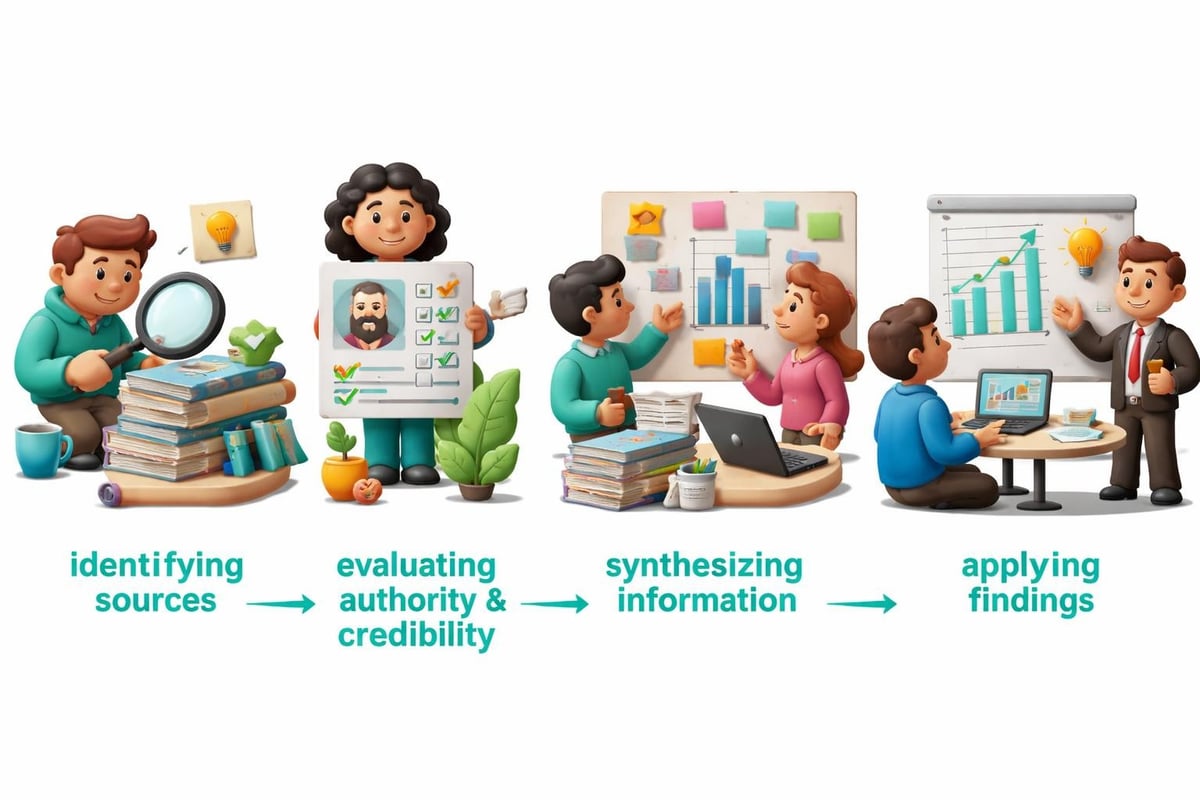
Effective business management study requires the ability to locate, evaluate, and apply credible information from diverse sources. In an era of information abundance, discriminating between reliable and questionable resources has become an essential skill for business professionals.
Identifying Authoritative Business Sources
Academic and professional success in business management study depends significantly on using high-quality, peer-reviewed resources. Scholarly management sources provide research-backed insights that inform evidence-based decision-making.
When evaluating potential sources, consider these critical factors:
- Author credentials and expertise in the specific business domain
- Publication date to ensure information currency
- Peer review status for academic credibility
- Publisher reputation and editorial standards
- Citation quality and reference transparency
Evaluating source credibility becomes particularly important when researching contemporary business challenges where misinformation can lead to flawed strategies and poor outcomes.
Building Your Research Foundation
Reference sources in business management such as encyclopaedias, handbooks, and dictionaries provide essential background knowledge and terminology clarification. These resources serve as excellent starting points when exploring unfamiliar business concepts during your business management study.
Professional databases and industry publications offer current insights into market trends, regulatory changes, and emerging practices. Developing familiarity with these resources enhances both academic performance and workplace competence.
Flexible Learning Approaches for Working Professionals
Modern business management study accommodates diverse learner needs through flexible delivery modes. In 2026, education providers recognise that many students balance work, family, and study commitments simultaneously.
On-Campus, Online, and Blended Options
Traditional on-campus delivery provides structured learning environments with face-to-face interaction, immediate feedback, and peer networking opportunities. This approach suits learners who thrive in classroom settings and can commit to fixed schedules.
Online delivery offers maximum flexibility, allowing students to engage with course materials at times and locations that suit their circumstances. This mode has become increasingly sophisticated, incorporating interactive elements, virtual collaboration tools, and digital assessment methods.
Blended learning combines the benefits of both approaches, typically featuring online content delivery with periodic face-to-face sessions for practical activities, assessments, or intensive workshops. This hybrid model provides flexibility whilst maintaining personal connection and hands-on learning opportunities.
Workplace-Based Learning
Many business management study programmes incorporate workplace assessment, recognising that authentic work environments provide invaluable learning contexts. This approach allows students to demonstrate competencies in real business situations whilst contributing value to their employers.
Workplace-based learning strengthens the connection between theoretical knowledge and practical application, helping learners understand how management principles operate in diverse organisational contexts. Employers often support this educational approach as it develops their workforce capabilities whilst addressing immediate business needs.
Specialisation Pathways Within Business Management Study
Beyond general business management qualifications, specialised pathways allow professionals to develop expertise in particular industry sectors or functional areas. This targeted business management study enhances career prospects in competitive or regulated fields.
Financial Services Specialisation
The New Zealand Certificate in Financial Services Level 5 exemplifies sector-specific business management study that addresses the unique regulatory and technical requirements of finance professionals. This qualification covers compliance frameworks, financial product knowledge, and client relationship management specific to the financial sector.
Financial services management requires understanding of complex regulatory environments, risk management principles, and ethical considerations that differ significantly from general business contexts. Specialised qualifications signal to employers that candidates possess both general management capabilities and industry-specific expertise.
Emerging Technology and Business Innovation
Micro-credentials in areas such as fundamentals of AI in education and advanced applications of AI in education represent the evolution of business management study to address rapidly changing technological landscapes.
Business managers in 2026 increasingly require understanding of how emerging technologies affect operations, customer expectations, and competitive dynamics. Short, focused learning programmes enable professionals to update their knowledge efficiently without committing to lengthy qualifications.
Practical Applications in New Zealand Business Contexts
Business management study becomes most valuable when learners can apply concepts directly to New Zealand's unique business environment, regulatory framework, and cultural context.
Understanding Local Regulatory Requirements
New Zealand businesses operate within specific legal and compliance frameworks that differ from other jurisdictions. Effective business management study includes comprehension of:
- Employment law and workplace relations
- Health and safety obligations
- Privacy and data protection requirements
- Consumer protection legislation
- Environmental and sustainability regulations
Managers must navigate these frameworks whilst pursuing business objectives, making regulatory literacy an essential component of professional competence.
Cultural Competency and Te Ao Māori
Contemporary business management study in New Zealand increasingly incorporates te ao Māori perspectives and tikanga principles. Understanding Treaty of Waitangi implications, engaging respectfully with Māori stakeholders, and recognising bicultural dimensions of business environments represent important capabilities for modern managers.
This cultural competency extends beyond compliance to genuine appreciation of how diverse perspectives strengthen decision-making and organisational culture.

Skills Development Beyond Technical Knowledge
Whilst technical business knowledge forms the foundation of business management study, soft skills and personal attributes significantly influence management effectiveness and career success.
Leadership and Interpersonal Capabilities
Successful managers demonstrate emotional intelligence, active listening, conflict resolution, and motivational skills that cannot be fully developed through theoretical study alone. Effective business management study programmes incorporate opportunities to practise these capabilities through group projects, role plays, and reflective exercises.
Critical soft skills include:
- Clear and persuasive communication across multiple channels
- Adaptability and resilience in changing circumstances
- Ethical decision-making and professional integrity
- Cross-cultural sensitivity and inclusive leadership
- Creative problem-solving and innovation facilitation
These capabilities develop through experience and deliberate practice, supported by frameworks and feedback from qualified educators and workplace mentors.
Digital Literacy and Technology Adoption
Modern business management study must address the digital transformation affecting virtually every industry. Managers require comfort with cloud-based systems, data analytics tools, project management software, and digital communication platforms.
Understanding technology's potential whilst recognising its limitations allows managers to make informed decisions about digital investments and change management processes. This digital fluency has become non-negotiable for business professionals in 2026.
Assessment Methods in Business Management Study
NZQA-accredited business management study employs diverse assessment approaches to verify learner competency across knowledge, skills, and application dimensions.
Portfolio-Based Assessment
Many programmes utilise portfolio assessment where learners compile evidence of their capabilities through workplace documents, case studies, reflective journals, and project outputs. This approach recognises that management competency demonstrates through accumulated evidence rather than single examination events.
Portfolio assessment particularly suits workplace-based learning, allowing students to document real achievements and demonstrate sustained performance over time.
Scenario-Based and Simulation Activities
Complex business scenarios and simulations test learners' ability to apply knowledge in realistic contexts. These assessments might involve analysing case studies, developing business plans, creating budgets, or proposing solutions to organisational challenges.
Such approaches evaluate higher-order thinking skills including analysis, synthesis, and evaluation whilst preparing learners for the multifaceted problems they will encounter in management roles.
Written Examinations and Knowledge Tests
Traditional assessment methods remain relevant for verifying foundational knowledge of business concepts, terminology, regulatory requirements, and theoretical frameworks. Short-answer and multiple-choice questions efficiently assess breadth of understanding across curriculum content.
Balanced assessment strategies combine various methods to provide comprehensive evaluation of learner achievement across different competency dimensions.
Career Progression and Professional Development
Business management study represents an investment in long-term career development rather than a single credential. Qualified business managers typically engage in continuous professional learning throughout their careers.
Entry Points and Advancement Pathways
Early-career professionals often begin with administrative or coordinator roles, progressing to supervisory positions as they gain experience and complete qualifications like the Level 4 certificate. Movement into middle management typically requires Level 5 qualifications combined with demonstrated performance in leadership roles.
Senior management positions generally demand extensive experience, higher qualifications, and proven strategic capabilities. Some professionals pursue postgraduate study in specialised areas such as marketing, finance, or human resource management.
Continuing Education and Micro-Credentials
The business environment evolves continuously, with new technologies, methodologies, and regulatory requirements emerging regularly. Successful managers maintain currency through ongoing professional development including:
- Short courses in emerging business tools and techniques
- Industry conferences and networking events
- Professional association memberships and certifications
- Micro-credentials addressing specific skill gaps
- Informal learning through business literature and podcasts
This commitment to lifelong learning distinguishes exceptional managers from those who rely solely on historical knowledge and experience.
Supporting Services and Student Resources
Quality business management study programmes provide comprehensive support services that enhance learner success and engagement throughout their educational journey.
Academic and Pastoral Support
Learners benefit from access to qualified tutors who provide subject expertise, assessment feedback, and academic guidance. Many providers also offer learning advisors who assist with study skills, time management, and assessment preparation.
Pastoral support services address personal circumstances that might affect study progress, connecting learners with appropriate resources and accommodations when needed. This holistic approach recognises that academic success depends partly on addressing non-academic barriers.
Industry Connections and Work Placement
Business programmes with strong industry connections create valuable opportunities for networking, mentorship, and employment pathways. Some qualifications incorporate work placement components that provide supervised experience in real business environments.
These industry relationships ensure programme content remains relevant to current employer needs whilst giving students insight into potential career paths and workplace expectations.
Making Your Business Management Study Decision
Selecting the appropriate business management study programme requires careful consideration of your current situation, career goals, learning preferences, and practical constraints.
Assessing Your Starting Point
Honestly evaluate your existing qualifications, work experience, and skill level. If you lack formal business education or recent study experience, starting at Level 3 or 4 provides a manageable entry point that builds confidence and foundational knowledge.
Professionals with substantial management experience might find recognition of prior learning (RPL) processes allow them to enter programmes at higher levels or receive credit for existing competencies.
Considering Time and Financial Investment
Business management study represents significant commitment of both time and resources. Research programme duration, fee structures, potential funding options, and opportunity costs before enrolling.
Factor in hidden costs such as textbooks, technology requirements, travel (for on-campus components), and potentially reduced work hours. Understanding the full investment helps you make informed decisions and prepare adequately.
Evaluating Provider Quality and Reputation
Research potential education providers thoroughly, considering factors beyond marketing materials. Explore available subjects and programme structures, read graduate testimonials, and investigate NZQA ratings and accreditation status.
NZQA-accredited providers with comprehensive business management study offerings typically demonstrate sustained excellence and robust quality assurance systems. This designation provides confidence in educational standards and qualification recognition.
Pursuing business management study through nationally recognised qualifications creates pathways to meaningful career advancement whilst developing capabilities that benefit organisations and communities. Whether you're beginning your professional journey or strengthening existing management skills, structured education provides frameworks and credentials that open doors to new opportunities. Summit Institute offers NZQA-accredited business qualifications from Level 3 through Level 5, with flexible delivery options designed to support working professionals across Auckland and Christchurch. Explore your options and take the first step towards achieving your business management goals with quality education that meets New Zealand's highest standards.