
New Zealand’s business sector is evolving rapidly, creating strong demand for people with business skills and up-to-date knowledge. If you are considering business courses nz, this guide is designed as your clear pathway to success in 2026.
You will discover the wide range of business courses, top education providers, essential qualifications, career pathways, funding options, and step-by-step enrolment advice. Explore how the right choice can unlock new opportunities and help you thrive in New Zealand’s dynamic economy. Take the first step towards your future with confidence and informed decision-making.
The Business Education Landscape in New Zealand
New Zealand’s business education sector is recognised worldwide for its quality and innovation. The country’s tertiary education system equips learners with practical skills and global perspectives, making business courses nz highly sought after by both domestic and international students.
New Zealand boasts a strong reputation in higher education. According to recent statistics, the nation ranks fourth among OECD countries for bachelor’s degree attainment. Each year, thousands of students graduate from business courses nz, contributing to a highly skilled workforce. The employment rate for business graduates remains robust, with many securing roles in management, finance, and technology sectors.
Business education plays a pivotal role in New Zealand’s economy. The sector not only produces future leaders but also attracts international students, who contribute significantly to the country’s economic growth. In fact, international education injects billions into the economy annually, with business studies among the top choices for overseas learners.
A variety of institutions offer business courses nz, catering to different learning preferences and career goals. The three main types are:
| Institution Type | Key Features | Examples |
|---|---|---|
| Universities | Research-led, offer degrees and postgraduates | University of Auckland, Victoria University Wellington |
| Institutes of Technology & Polytechnics (ITPs) | Applied focus, diplomas, degrees, industry links | Wintec, Southern Institute of Technology (SIT) |
| Private Training Establishments (PTEs) | Specialised, flexible, smaller class sizes | Summit Institute, NZIBS |
The popularity of business courses nz continues to rise. Domestic students are drawn to the diversity of specialisations and clear career pathways. International students, meanwhile, value the international recognition of qualifications and the supportive learning environment.
The government supports business education through initiatives such as the Fees Free scheme for first-year tertiary students and SIT’s Zero Fees programme, which removes tuition costs for eligible learners. These measures make business courses nz accessible to a broader range of students.
Regional access to business education is another strength. Major centres like Auckland, Wellington, and Christchurch offer comprehensive programmes, while regions such as Invercargill and Queenstown provide unique opportunities through local campuses and remote learning hubs. This ensures that business courses nz are within reach for learners across the country.
Looking ahead to 2026, several trends are shaping the business education landscape. Digital transformation is at the forefront, with more providers embracing online and blended delivery modes. Micro-credentials, which focus on specific skills, are gaining traction, allowing students to upskill rapidly in areas like digital business and project management. Industry alignment is also becoming essential, as courses are developed in partnership with employers to ensure graduates are work-ready.
For example, SIT’s Zero Fees scheme has enabled many students to complete business courses nz without incurring student debt. Wintec is leading the way in blended learning, offering both in-person and online components to suit different lifestyles.
If you are considering your options, explore the Business Courses and Qualifications available across New Zealand to find the right fit for your goals. The sector’s adaptability and forward-thinking approach mean that business courses nz will continue to open doors for ambitious learners in 2026 and beyond.

Types of Business Courses in NZ: Qualifications, Levels, and Specialisations
Choosing the right business courses nz requires an understanding of the qualifications, levels, and specialisations available. New Zealand’s education system offers a diverse range of business pathways, tailored to meet the needs of learners at every stage of their career. Below, we break down the main qualification types, explore trending specialisations, and outline the flexible delivery modes shaping business courses nz in 2026.
Certificates, Diplomas, and Degrees
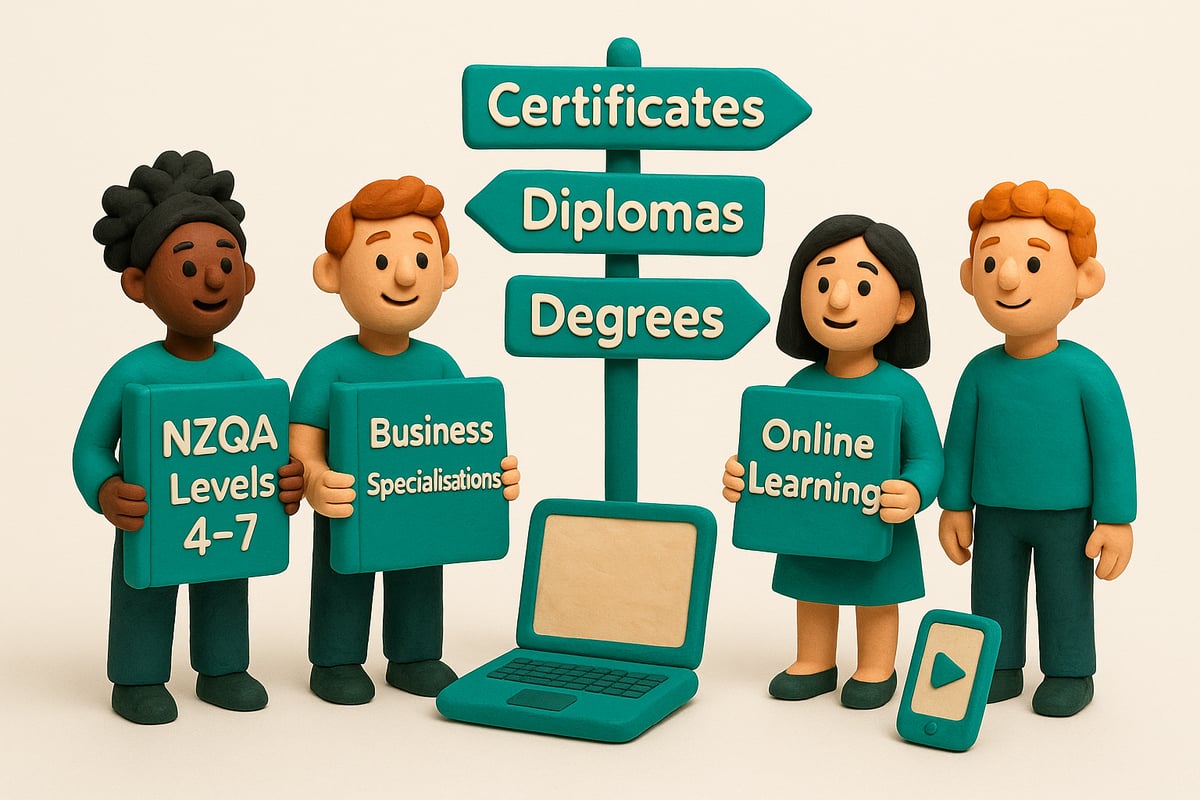
The New Zealand Qualifications Authority (NZQA) sets the framework for business courses nz, starting from Level 4 certificates through to postgraduate degrees. Each qualification serves different learner needs and career goals.
| Qualification Level | Typical Duration | Entry Requirements | Outcomes |
|---|---|---|---|
| Level 4 Certificate | 6 months–1 year | NCEA Level 2 or equivalent | Foundation skills, entry-level roles |
| Level 5–6 Diploma | 1–2 years | NCEA Level 2/3, or relevant certificate | Technical knowledge, supervisory roles |
| Level 7 Bachelor’s | 3 years | University Entrance | Professional practice, management |
| Graduate/Postgrad | 1–2 years | Bachelor’s degree or equivalent | Advanced skills, leadership, research |
For example, the NZ Diploma in Business Level 5 equips students with essential skills for administration, management, and leadership across a range of industries. Entry requirements and programme lengths vary, but all business courses nz are designed to support both school leavers and those already in the workforce.
Business Specialisations and Emerging Fields
Business courses nz span a wide array of specialisations, allowing students to tailor their study to future career demands.
Core specialisations include:
- Management
- Marketing
- Accounting and finance
- Human resources (HR)
- Entrepreneurship
- Commerce
Emerging fields are rapidly gaining traction, reflecting industry needs and innovation:
- Digital business and e-commerce
- Artificial intelligence (AI) in business
- Sustainability and green enterprise
- Māori business and kaupapa Māori frameworks
- Project and operations management
Micro-credentials are increasingly available in areas like AI and digital transformation, offering short, targeted learning for business courses nz. These options help professionals stay current and future-proof their skills in a dynamic market.
Industry alignment is a key feature, with curriculums updated to meet employer expectations. Choosing a specialisation aligned with growth sectors can significantly enhance employability and open doors to leadership opportunities.
Course Delivery Modes: On-campus, Online, and Blended
Business courses nz now offer more flexible delivery options than ever before, with modes designed to fit various lifestyles and commitments.
Delivery options include:
- On-campus: Traditional, in-person study with direct lecturer and peer engagement.
- Online: Fully remote learning, accessible from anywhere in New Zealand.
- Blended/Hyflex: A mix of in-person and online components, offering both structure and flexibility.
Providers such as SIT2LRN and Wintec Online make it possible for learners in regional areas to access high-quality business courses nz without relocating. These modes are ideal for school leavers, working professionals seeking upskilling, and those balancing study with family or career.
Choosing the right delivery mode ensures you can fit study into your life while gaining the recognised skills needed to thrive in business.
Choosing the Right Business Course and Provider
Selecting the right business courses nz can be a pivotal decision for your future. With a diverse range of programmes and providers available, it is essential to consider your personal aspirations, learning style, and career objectives before enrolling.
Factors to Consider When Selecting a Course
When evaluating business courses nz, begin with accreditation. Ensure your chosen programme is NZQA approved, as this guarantees quality standards and recognition by employers. Next, align the course content and outcomes with your career goals, whether you are aiming for management, marketing, or entrepreneurship.
Consider the course duration, entry requirements, and flexibility. Some business courses nz offer part-time or online options, which suit working professionals and those with other commitments. Assess the academic and wellbeing support services provided, including tutoring, mentoring, and career advice.
Finally, review graduate outcomes. Look for providers that publish employability statistics and have strong links with industry. These factors will help you make an informed decision and maximise your investment in business courses nz.
Comparing Top NZ Business Course Providers
New Zealand boasts a robust landscape of business courses nz, offered by universities, Institutes of Technology and Polytechnics (ITPs), and Private Training Establishments (PTEs). Each provider brings unique strengths, from research-driven teaching to hands-on, industry-aligned learning.
Universities like the University of Auckland and Victoria University of Wellington are renowned for comprehensive business degrees and strong academic reputations. ITPs such as Wintec and SIT combine practical experience with close industry connections, often integrating internships or work placements. PTEs, including Summit Institute, focus on smaller class sizes, flexibility, and targeted qualifications.
| Provider Type | Delivery Modes | Industry Links | Fees | Graduate Success |
|---|---|---|---|---|
| Universities | On-campus, some online | Extensive | Higher | High |
| ITPs | Blended, online, campus | Strong | Competitive | High |
| PTEs | Flexible, workplace | Targeted | Varies | High |
For example, SIT’s Zero Fees scheme reduces financial barriers, while Wintec’s work-integrated learning ensures real-world relevance. If you prioritise flexibility, explore Flexible Study Options at Summit Institute, which cover online, blended, and workplace learning, making business courses nz accessible nationwide.
Student satisfaction and graduate success rates are important indicators. Seek out providers with positive reviews, robust support services, and proven pathways to employment.
Summit Institute: Flexible, Accredited Business Qualifications
Summit Institute stands out among providers of business courses nz as an NZQA-accredited PTE. Its business administration and related qualifications are developed in consultation with industry, ensuring practical, future-focused skills.
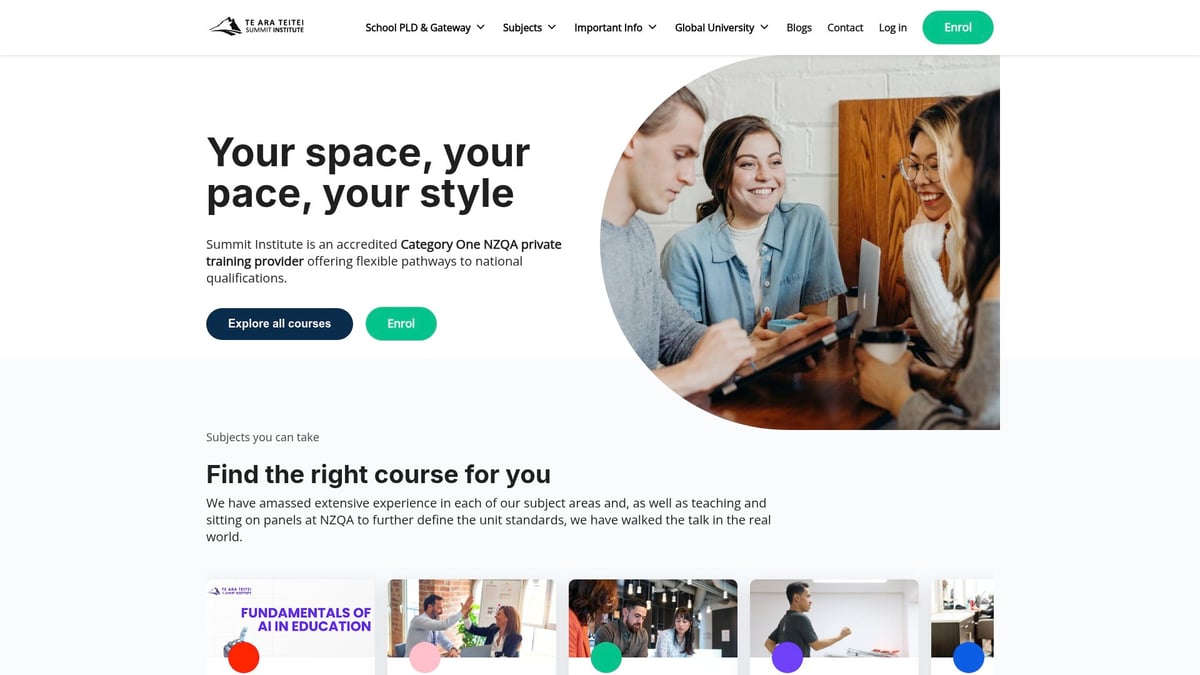
Learners benefit from a range of flexible study modes, including on-campus, workplace, online, and blended delivery. The curriculum is tailored to emerging fields such as artificial intelligence, quality management, and financial services. Summit Institute also offers personalised support for Māori, Pasifika, and diverse learners, fostering an inclusive and secure learning environment.
With national recognition of qualifications and a privacy-first approach, Summit Institute empowers students from all backgrounds to succeed in business courses nz and beyond.
Pathways After Business Study: Careers and Further Education
Completing business courses nz unlocks a wide array of pathways, from immediate employment to advanced study. A qualification in business not only opens doors to diverse industries but also equips graduates with adaptable skills for a changing economy.

Career Outcomes for NZ Business Graduates
Graduates of business courses nz are highly sought after in the job market. According to recent data, business graduates enjoy strong employment rates, with many securing roles within six months of completing their studies. The demand spans both regional and national employers, reflecting the broad applicability of business skills.
Top industries hiring those who complete business courses nz include finance, marketing, management consulting, technology, and government. Roles commonly pursued are:
| Role | Industry Sector | Typical Entry Path |
|---|---|---|
| Business Analyst | Finance, Tech | Bachelor’s/Diploma |
| Marketing Coordinator | Retail, Media | Diploma/Degree |
| HR Advisor | Corporate, Public | Degree/Certificate |
| Manager | All Sectors | Degree/Postgrad |
| Entrepreneur | All Sectors | Any Level |
International education is also a significant driver, contributing NZ$4.52 billion to the New Zealand economy and further boosting opportunities for graduates. For those studying business courses nz, this global demand translates to increased job prospects and access to international networks. Providers such as Wintec and SIT offer graduate employment support, connecting students with employers and internships across New Zealand.
Further Study and Professional Development
After completing business courses nz, many graduates choose to deepen their expertise or broaden their skillset through further study. Options include:
- Graduate diplomas for specialisation in fields such as digital business or project management
- Master's degrees and MBA programmes for leadership roles
- Micro-credentials for targeted skills in areas like AI, sustainability, or Māori business
- Continuing professional development (CPD) courses to maintain industry relevance
Flexible pathways allow working professionals to upskill while employed. Many institutions offer part-time and online options, making it easier for business courses nz graduates to pursue lifelong learning. Industry bodies often require ongoing CPD, ensuring skills remain current in a rapidly evolving business landscape.
Real-World Success Stories
The impact of business courses nz is evident in the achievements of graduates across the country. For example, alumni from SIT and Wintec have leveraged work-integrated learning and internships to secure positions with top employers. Many credit their practical experience and networking opportunities as key factors in their career progression.
Alumni networks and mentoring programmes further enhance career development. Graduates often return to support current students, sharing insights and opening doors to new opportunities. These real-world connections help ensure that the benefits of business courses nz extend well beyond graduation, creating a supportive community for lifelong success.
Funding, Scholarships, and Financial Support for Business Students
Pursuing business courses nz is a significant investment in your future, making it essential to understand all available funding options. Careful planning can open up pathways to top providers and ensure you access the full range of support.
Tuition Fees and Government Support
Tuition fees for business courses nz vary by provider and qualification. Universities often charge between $7,000 and $9,000 per year for undergraduate study, while Institutes of Technology and Polytechnics (ITPs) and Private Training Establishments (PTEs) may offer lower or more flexible fee structures. Government initiatives play a crucial role in reducing costs. The Fees Free scheme allows eligible first-time students to complete their first year of tertiary study without paying fees. Southern Institute of Technology (SIT) offers a Zero Fees Scheme, significantly lowering the financial barrier for regional learners. For the latest on regulated tuition costs, see the Minister confirms tertiary fee regulation settings for 2026.
Scholarships: Domestic and International
A wide range of scholarships support students undertaking business courses nz. Universities, ITPs, and PTEs offer merit-based, need-based, and identity-based scholarships. International students can also apply for specific awards, often based on academic achievement or leadership potential. Application tips include preparing personal statements, securing strong references, and meeting deadlines. Wintec and SIT both offer targeted scholarships for business students, making higher education more accessible.
Student Loans, Allowances, and Financial Planning
Student loans are available to most domestic students for tuition fees and living costs. The New Zealand government also provides student allowances based on financial need, helping to cover essentials like rent and transport. It is important to budget carefully and use official resources to plan your finances throughout your business courses nz journey. Many institutions provide financial planning workshops and one-on-one support.
Support for Māori, Pasifika, and Underrepresented Groups
Many providers prioritise equity and inclusion, offering dedicated scholarships and grants for Māori, Pasifika, and other underrepresented students. Support services include academic mentoring, cultural networks, and targeted financial aid. These initiatives aim to foster a diverse business community and ensure all learners can thrive in business courses nz.
Funding for Micro-credentials and Part-time Study
Short courses and micro-credentials are increasingly popular for upskilling and professional development in business courses nz. Funding opportunities exist for these shorter programmes, especially for those balancing study with work or family commitments. For example, the Business Administration and Technology Level 4 at Summit Institute is often eligible for government funding and flexible payment plans, making it accessible to a wide range of learners.
Summary Table: Key Financial Support Options
| Funding Option | Who Can Apply | Key Features |
|---|---|---|
| Fees Free | NZ citizens/residents | First year tuition free |
| Zero Fees at SIT | All eligible students | No tuition fees (conditions apply) |
| Scholarships | Domestic/International | Merit, equity, and need-based |
| Student Loans | Domestic students | Tuition and living costs |
| Allowances | Based on need | Weekly payments for living expenses |
| Micro-credential Funding | Upskillers/part-time | Short course, flexible support |
Understanding the financial landscape for business courses nz allows you to make informed decisions, reduce financial stress, and focus on your studies and career goals.
Step-by-Step Guide: How to Enrol in a Business Course in NZ (2026 Edition)
Starting your journey into business courses nz is straightforward with the right information. Below is a clear, step-by-step guide to help you navigate the enrolment process and set yourself up for success in 2026.
Step 1: Research and Shortlist Courses
Begin by exploring the wide range of business courses nz available across universities, institutes of technology, and private training establishments. Use official resources like the NZQA website and individual provider platforms to compare course content, qualification levels, and delivery modes.
Consider what aligns best with your career goals, preferred learning style, and location. New Zealand’s strong reputation for higher education is reflected in its global rankings, with the country ranking fourth in the OECD for bachelor’s degree attainment. This underlines the value of pursuing business courses nz here.
Make a shortlist of courses that are NZQA-accredited and offer the flexibility you need. Look for options that provide practical experience, industry connections, and recognised qualifications.
Step 2: Check Entry Requirements and Prepare Documents
Once you have identified your preferred business courses nz, review the specific entry requirements for each provider and qualification. These may include academic prerequisites, such as NCEA Level 3 for bachelor’s degrees or relevant work experience for diplomas and certificates.
English language requirements are essential for both domestic and international students. Some providers may also recognise prior learning or work experience.
Prepare the following documents for your application:
- Academic transcripts and certificates
- English language test results (if applicable)
- Personal statement outlining your motivation and goals
- References from teachers, employers, or mentors
Organise your documents early to ensure a smooth application process for business courses nz.
Step 3: Apply Online and Track Application Status
Most institutions offering business courses nz provide an online application portal. Visit the official provider websites to complete your application. Make sure to meet all deadlines and submit the required supporting materials.
During this step, you will need to:
- Fill in personal and academic details accurately
- Upload all requested documents
- Pay any application fees (if applicable)
After submission, track your application status through the provider’s portal or contact admissions for updates. As New Zealand aims to expand its international education sector, opportunities in business courses nz are set to grow, as highlighted by its strategic plan to double the international education market by 2034.
Step 4: Secure Funding and Scholarships
While applying for business courses nz, it is important to explore funding options. Apply for government initiatives, scholarships, student loans, and allowances at the same time as your course application. Many providers offer dedicated scholarships for both domestic and international students.
Be mindful of application deadlines for financial support and ensure your applications are complete and accurate.
Step 5: Accept Offer and Prepare for Study
Once you receive an offer for your chosen business courses nz, accept your place promptly. Follow the provider’s instructions to enrol in classes and gain access to student support services.
Start planning accommodation, attend orientation sessions, and gather study resources to begin your business education journey well prepared.
As you look to shape your future in New Zealand’s dynamic business environment, remember that the right education is the foundation for long-term success. Whether you’re starting out, changing direction, or aiming to upskill in areas like business management, financial services, or emerging fields such as AI, there’s a flexible pathway for you. Summit Institute’s accredited programmes are designed to fit your lifestyle and career goals, with options for on-campus, online, or blended learning. Now is the perfect time to make your next move. Get ahead now!