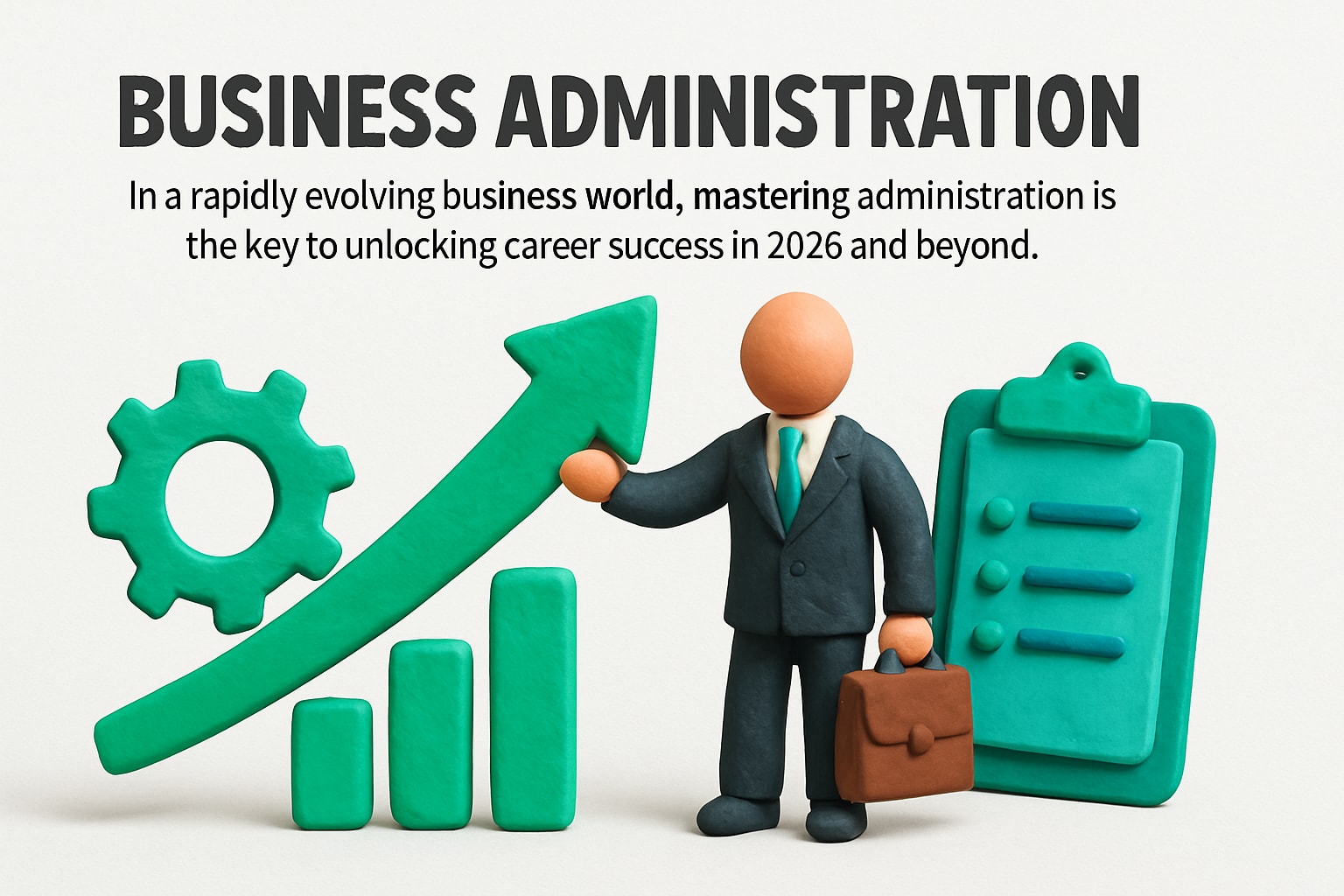
In a rapidly evolving business world, mastering business administration and staying ahead of change is essential for anyone aiming for career success in 2026 and beyond.
This guide offers a clear, step-by-step approach to business administration and how it can help you thrive. You will discover key skills, education pathways, essential qualifications, industry trends, and practical strategies for your career.
Demand for skilled business administration and professionals is rising. Recent data highlights strong employability and diverse opportunities for those with the right expertise. If you are ready to unlock new possibilities, use this guide to plan your journey to professional success.
Understanding Business Administration: Foundations and Scope
Business administration and its wide-reaching influence form the backbone of modern organisations. At its core, business administration and related practices involve overseeing, coordinating, and supporting the daily operations that keep businesses running smoothly. This discipline impacts every sector, from finance and healthcare to education and government, making it an essential field for anyone seeking organisational success.
Business administration and its foundational principles are built upon four key functions: planning, organising, leading, and controlling. Planning involves setting objectives, forecasting outcomes, and mapping out strategies. Organising means structuring resources, processes, and teams to achieve goals efficiently. Leading is about motivating and guiding employees, ensuring everyone works towards shared objectives. Controlling focuses on monitoring progress, evaluating results, and implementing necessary adjustments.
These core functions are executed by a range of professionals. Typical roles in business administration and support include administrators, office managers, executive assistants, receptionists, and operations coordinators. Each role contributes unique skills and expertise, supporting everything from diary management and meeting coordination to project delivery and compliance monitoring.
It is important to distinguish between business administration and business management, as these terms are often used interchangeably yet represent different responsibilities. Business administration and management both involve organisational oversight, but administration usually focuses on operational processes and support functions. In contrast, management is more strategic, concerned with setting direction, making high-level decisions, and leading teams towards long-term goals.
To illustrate these differences, consider the following table:
| Aspect | Business Administration and Support | Business Management |
|---|---|---|
| Primary Focus | Operations, processes, support | Strategy, leadership |
| Typical Roles | Administrator, office manager | Manager, team leader |
| Main Responsibilities | Scheduling, documentation, logistics | Decision-making, strategy |
| Required Skills | Organisation, communication | Leadership, analysis |
Day-to-day, business administration and its practitioners handle a diverse range of tasks. In healthcare, administrators manage patient records and appointment schedules. In legal firms, they coordinate case files and client communications. Retail businesses rely on administrators for inventory management, order processing, and supplier liaison. Across industries, tasks may include data entry, report preparation, payroll processing, and managing correspondence.
The impact of effective business administration and robust support systems on organisational performance cannot be overstated. When administrative processes run smoothly, teams can focus on their core work, productivity increases, and errors are minimised. According to City & Guilds (2025), business administration and related qualifications are required for a wide range of roles, spanning from entry-level positions to senior management. This versatility highlights the field’s importance across public, private, and non-profit sectors.
What makes business administration and its skill set especially valuable is its adaptability. Whether you are working in a small charity or a multinational corporation, the same principles of organisation, efficiency, and clear communication apply. These skills transfer easily across industries, offering career flexibility and resilience in a changing job market.
For those seeking a deeper dive into the field, the Business Administration Subject Overview provides a comprehensive look at the scope, roles, and learning opportunities available.
In summary, business administration and its core functions form the engine room of every successful organisation. By mastering these foundational skills, professionals position themselves at the heart of modern business operations, ready to adapt and thrive in any sector.

Educational Pathways and Qualifications in Business Administration
Exploring the right educational pathways is a crucial first step for anyone pursuing a career in business administration and related fields. The choices you make here will shape your employability, skill set, and ability to respond to future industry trends. Whether you are starting out or aiming to upskill, understanding the options available ensures your journey in business administration and development is both strategic and successful.
Business administration and its qualifications offer remarkable flexibility. You can begin with certificates, progress to diplomas or degrees, and even access apprenticeships for practical, hands-on learning. Each route equips you with a unique blend of theory and real-world skills, opening doors to a variety of roles within organisations.
Common Qualification Routes
There are several academic routes to consider within business administration and career progression:
| Qualification | Typical Level | Entry Requirements | Example Job Roles |
|---|---|---|---|
| Certificate | NVQ Level 2/3 | GCSEs or equivalent | Junior Administrator, Receptionist |
| Diploma | NVQ Level 4, HNC | Level 3 qualification | Office Manager, PA |
| Degree (BA/BSc) | Level 6 | A-levels, HND, or equivalent | Business Analyst, Supervisor |
| Apprenticeship | Levels 2-4 | Varies by provider | Administrator, Team Leader |
Entry-level programmes, such as the NZ Certificate in Business Administration Level 3, are ideal for those new to the field. These foundational courses build essential skills in communication, IT, and organisational tasks, which are universally valued by employers.
Diplomas and higher certificates, like NVQ Level 4 or HNC, are designed for learners with some experience or previous study in business administration and related areas. They focus on advanced topics, including project management, leadership, and business processes. These qualifications can lead directly to supervisory or managerial roles. For those seeking academic depth, business administration and degree programmes provide a comprehensive understanding of business environments, strategy, and critical thinking.
Entry Requirements and Progression
Entry requirements for business administration and study pathways vary. Certificates may require basic secondary education, while diplomas and degrees often request prior qualifications or relevant experience. Many institutions offer flexible entry, recognising both academic achievements and practical work experience. This adaptability ensures that business administration and professional growth is accessible to learners at all stages.
Continuous professional development (CPD) is another essential aspect of business administration and career advancement. CPD includes short courses, workshops, and on-the-job training, enabling professionals to stay updated with emerging technologies and industry standards. Employers value candidates who demonstrate a commitment to lifelong learning, as this reflects adaptability and initiative.
Flexible Learning Options
Modern business administration and education is not limited to traditional, full-time study. Part-time, evening, and online learning options are increasingly popular, particularly for mature students and working professionals. These flexible pathways enable you to balance work, family, and study commitments, ensuring ongoing development without sacrificing your current responsibilities.
Blended learning, which combines online coursework with face-to-face sessions, is now a standard feature in many business administration and programmes. This approach supports diverse learning styles and allows you to gain practical skills while still engaging with peers and tutors.
The Value of Practical Experience
Gaining practical experience is vital for success in business administration and related careers. Internships, placements, and work-based learning opportunities allow you to apply theoretical knowledge in real business settings. These experiences help build confidence, improve employability, and sometimes lead directly to permanent roles.
Employers increasingly seek candidates who can demonstrate both technical skills and hands-on experience. As a result, many business administration and qualifications now include mandatory work placements or project-based assessments.
Conclusion
Choosing the right educational pathway in business administration and is a strategic investment in your future. By understanding the range of qualifications, entry requirements, and flexible learning options, you can tailor your journey to fit your ambitions. Combining academic achievement with practical experience and ongoing professional development will prepare you to thrive in a dynamic business world.

Essential Skills and Competencies for Business Administrators
Succeeding in business administration and navigating the evolving workplace of 2026 requires a broad set of practical skills. These competencies empower professionals to handle diverse tasks, drive organisational effectiveness, and adapt to new challenges. Whether you are just beginning or advancing your career, focusing on both technical and soft skills is crucial for excelling in business administration and related roles.

Communication and Interpersonal Skills
At the core of business administration and success lies excellent communication. Professionals must be able to convey information clearly, both in writing and verbally. This includes drafting reports, managing email correspondence, and leading meetings.
Interpersonal skills are equally important. Building positive relationships with colleagues, clients, and stakeholders helps foster a productive work environment. Administrators often serve as the first point of contact, so active listening and empathy are vital.
Key communication and interpersonal skills include:
- Clear written and verbal expression
- Active listening and feedback
- Professional email and phone etiquette
- Conflict resolution and negotiation
These attributes ensure effective collaboration and support the smooth running of business administration and operations in any sector.
Technical Proficiency and IT Skills
Modern business administration and roles demand strong technical abilities. Mastery of Microsoft Office tools, especially Word, Excel, and Outlook, is fundamental. Database management and familiarity with cloud platforms like Google Workspace or Microsoft 365 are increasingly valued.
Digital skills extend to using collaboration software such as Teams, Zoom, or Slack. Administrators frequently handle data entry, scheduling, and digital document management, making IT proficiency indispensable.
A typical skill set includes:
- Spreadsheet creation, formulas, and data analysis
- Database entry and reporting
- Digital calendar and workflow management
- Secure file sharing and cloud storage
Learning these tools is a focus in many HND and diploma programmes. According to Top 5 Skills Employers Can’t Ignore In 2026, employers are prioritising digital literacy, adaptability, and analytical thinking in business administration and recruitment.
Time Management, Problem Solving, and Adaptability
Excelling in business administration and requires managing multiple tasks with competing deadlines. Effective time management involves prioritising urgent work, delegating where necessary, and using planning tools to stay organised.
Problem solving and critical thinking go hand in hand. Administrators must identify issues quickly, analyse possible solutions, and implement effective actions. Reflective learning—taking time to evaluate what works and what does not—is essential for continuous improvement.
Essential strategies include:
- Developing daily and weekly task lists
- Using digital planners and reminders
- Applying critical thinking to resolve challenges
- Embracing feedback and learning from experience
Adaptability is a must. As business administration and environments evolve, learning new systems and staying open to change will set you apart.
Financial Administration and Leadership
Business administration and positions often involve financial responsibilities. This might include processing invoices, budgeting, or preparing financial reports. Basic accounting knowledge and attention to detail are critical for accuracy.
Leadership and team coordination skills are vital for those aspiring to supervisory roles. Motivating colleagues, allocating tasks, and supporting team development are everyday requirements.
Key financial and leadership skills:
- Accurate data entry and reconciliation
- Budget monitoring and expense tracking
- Team motivation and delegation
- Conflict management and performance feedback
Developing these skills through practical experience or formal study, such as HND programmes, prepares professionals for progression in business administration and supervisory roles.
Career Opportunities and Progression in Business Administration
Business administration and related roles have become essential pillars across every sector, from healthcare to finance and beyond. Whether you are starting as a receptionist or aiming for a leadership position, business administration and its broad skill set pave the way for countless career pathways.
Organisations of all sizes rely on business administration and support staff to keep operations running smoothly. Typical entry-level roles include secretary, receptionist, and office administrator. As you gain experience, you may progress to positions such as personal assistant (PA), office supervisor, or team leader. With further upskilling, management opportunities become accessible in areas like operations, HR, or project coordination.
| Role | Typical Responsibilities | Progression Route |
|---|---|---|
| Receptionist | Front-desk duties, client liaison | Administrator, PA |
| Administrator | Office management, document control | Office Supervisor, Team Leader |
| PA | Executive support, diary management | Manager, Department Head |
| Office Supervisor | Team leadership, workflow coordination | Operations Manager |
What sets business administration and roles apart is the transferability of skills. From communication and organisation to digital literacy, the competencies acquired are highly valued across public, private, and non-profit sectors. According to City & Guilds, NVQs and other qualifications are widely recognised, supporting mobility between industries and enabling professionals to adapt as business needs evolve.
Specialisation is another route to progression. Many professionals in business administration and support functions choose to focus on areas such as human resources, marketing, finance, or project management. This can lead to roles like HR coordinator, marketing assistant, or project officer. Specialising not only increases your employability but also opens up higher earning potential and leadership opportunities.
The path from junior roles to management is often marked by upskilling and gaining advanced qualifications. For example, many individuals begin as office assistants and progress to supervisory or managerial roles by completing higher-level NVQs or diplomas. Real-life journeys from Dundee & Angus College show how targeted learning and practical experience can transform career prospects.
Mentorship and support play a crucial role in career advancement. Experienced colleagues and formal mentorship schemes provide guidance, feedback, and encouragement. These relationships help professionals in business administration and related fields to build confidence, navigate challenges, and identify new opportunities.
Salary expectations and job outlook for business administration and careers remain strong for 2026. Demand for skilled administrators is projected to grow, with competitive wages reflecting the importance of these roles. For a detailed overview of career prospects, typical salaries, and entry requirements, see the Business career options: Outlook, wages, and entry requirements.
Case studies from leading colleges highlight the impact of business administration and education on real-world success. Many students start in entry-level positions and, through continued learning and support, advance to senior or specialist roles. Their stories underline the value of resilience, adaptability, and a strong professional network.
In summary, business administration and its diverse opportunities offer a clear path to career progression. With the right blend of qualifications, skills, and support, you can build a rewarding and adaptable career. Take time to assess your strengths, embrace lifelong learning, and seek out mentors who can help you achieve your professional goals.

Real-World Success Stories and Case Studies
Success in business administration and related fields often starts with real people overcoming real challenges. Learning from the journeys of others can illuminate the diverse paths available and highlight how support, resilience, and education combine to fuel progress.
Discover more research & credentials: AI in education expert for NZ schools
Becky Gallagher: Becky’s return to education was marked by determination and support. Facing barriers after time away from formal learning, she found her confidence in business administration and management programmes. Becky’s story shows how structured support and a positive environment can help adult learners thrive.
Kerry Lowe: Kerry decided to reskill as a mature student, enrolling in an HND programme in business administration and IT. She balanced study with family commitments, leveraging flexible learning and practical coursework. Kerry’s journey demonstrates the value of adaptability, especially as technology and business administration and roles evolve.
Mariam Diallo: Mariam’s path was shaped by her need to balance family, work, and education. Pursuing qualifications in business administration and, she used blended learning to achieve her goals. Her experience highlights how flexible study options empower those with diverse life responsibilities.
Marc Conchar: Marc transitioned from marketing to curriculum leadership within business administration and education. His career illustrates the power of upskilling, mentorship, and embracing new challenges. Marc’s journey is a testament to the versatility of business administration and skills across sectors.
Below is a summary of the key qualities these case studies share:
| Name | Key Qualities | Outcome |
|---|---|---|
| Becky Gallagher | Resilience, confidence | Returned to education, succeeded in management |
| Kerry Lowe | Adaptability, persistence | Advanced through HND, balanced life and study |
| Mariam Diallo | Flexibility, commitment | Achieved qualifications, managed family/work |
| Marc Conchar | Versatility, leadership | Progressed to curriculum leader |
Mentorship and supportive learning environments are recurring themes in each story. Students cite guidance from tutors and peers as crucial to overcoming obstacles and achieving success. Colleges that prioritise these elements report high student satisfaction and completion rates, reinforcing the importance of community in business administration and education.
For those inspired to follow similar paths, advanced qualifications such as the NZ Certificate in Business Administration Level 4 can be a springboard to new opportunities and leadership roles.
These real-world journeys prove that success in business administration and is not defined by background or age, but by resilience, adaptability, and the willingness to engage with continuous learning. If you are considering your next steps, remember that your story can be just as impactful as those shared here.
The Future of Business Administration: Skills for Lifelong Success
Adapting to the future is essential for anyone pursuing business administration and seeking career longevity. As the workplace landscape continues to shift, adaptability and a growth mindset will define those who thrive. The need for business administration and forward-thinking professionals is only set to increase as organisations face rapid technological change.
Continuous learning is now a cornerstone of business administration and career development. Micro-credentials, short courses, and ongoing CPD ensure that skills remain relevant and competitive. Professionals are encouraged to explore popular specialisations, such as those highlighted in the 2026 Most Popular Concentrations in Business Administration Degrees, to stay ahead in their chosen fields.
Embracing technology is non-negotiable for future business administration and success. Digital transformation reshapes every role, from automating routine tasks to using data for informed decision-making. Administrators will increasingly rely on AI tools, cloud systems, and collaboration platforms. Those who invest in data literacy and digital confidence will find themselves at the forefront of industry progress.
Alongside technical expertise, global awareness and cultural competency will become vital. Business administration and leadership roles demand an understanding of international markets and diverse teams. The ability to communicate across cultures and navigate global trends will set top performers apart. Sustainability is also moving to the heart of administrative practice, with green skills integrated into everyday workflows and strategic planning.
Building a personal brand is another future-ready strategy. Professionals should cultivate a reputation for integrity, reliability, and innovation within business administration and related fields. Networking, both online and in person, will open doors to new opportunities and mentorship.
Preparing for leadership requires strategic thinking, resilience, and a commitment to lifelong growth. Aspiring administrators should proactively seek feedback, embrace change, and leverage new trends, such as those outlined in the 2026 Hottest Business Ideas, Trends & Markets. By doing so, they position themselves not just to respond to the future but to help shape it.
In summary, success in business administration and beyond will belong to those who learn, adapt, and lead with purpose. The path forward is dynamic—embrace change, invest in yourself, and you will be ready for whatever the future brings.
Having explored the key skills, emerging trends, and practical steps to build a thriving career in business administration, you now have a clear roadmap for your journey ahead. Whether you're just starting out or looking to advance, the right qualification and flexible learning options can make all the difference. At Summit Institute, you can access nationally recognised programmes designed to help you stay relevant and competitive in a rapidly changing field. If you're ready to take the next step towards real career success in 2026 and beyond, Get ahead now!