

Adult teaching represents a specialized discipline that requires educators to understand the unique characteristics, motivations, and learning preferences of mature learners. Unlike traditional pedagogy focused on younger students, adult teaching demands approaches that respect professional experience, accommodate competing responsibilities, and deliver immediate practical value. For training providers committed to quality outcomes, mastering these principles transforms programme delivery and learner success rates. The strategies employed in adult teaching directly influence engagement, completion rates, and the application of skills in real-world contexts.
Understanding the Foundation of Adult Teaching
The theoretical framework underpinning adult teaching differs fundamentally from conventional educational models. Andragogy, the art and science of helping adults learn, operates on distinct assumptions about learner autonomy, experience, and motivation. Adult learners bring accumulated knowledge to every training session, creating both opportunities and challenges for educators.
Core Principles That Shape Adult Learning
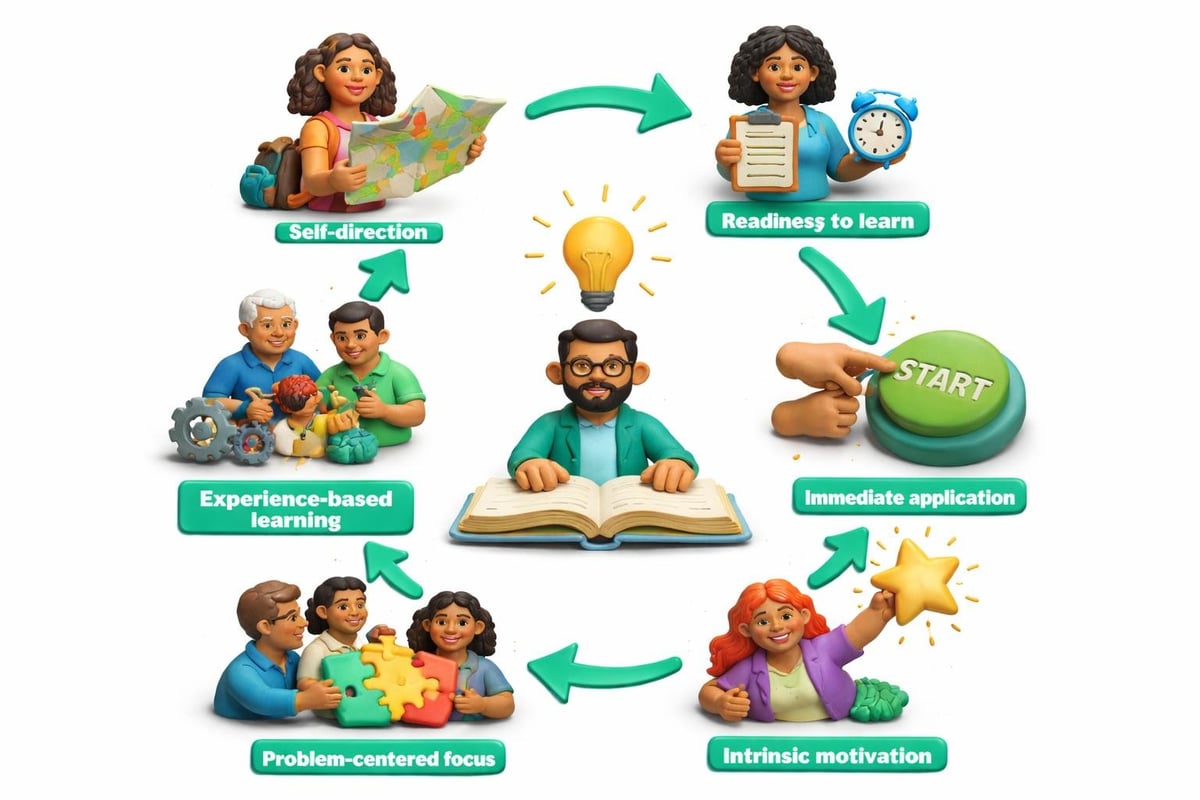
Adult teaching rests on six foundational principles that inform effective practice. These principles acknowledge that adult learners are self-directed, possess rich life experience, enter training with specific goals, seek immediate applicability, are problem-centered rather than content-oriented, and respond better to intrinsic motivators than external rewards.
Self-Direction and Autonomy
Mature learners expect control over their educational journey. They resist being treated as passive recipients and thrive when given opportunities to influence pacing, methodology, and assessment approaches. Effective adult teaching incorporates learner input into programme design and delivery.
Experience as a Learning Resource
Every adult brings a unique background that serves as both foundation and lens for new learning. Skilled educators recognize this experience as the richest resource in any training environment, creating opportunities for peer learning and reflection.
Theoretical Models for Skill Development
Understanding how adults acquire new competencies requires familiarity with established frameworks. The Dreyfus Model of Skill Acquisition outlines five distinct stages through which learners progress: novice, advanced beginner, competent, proficient, and expert. This progression framework helps educators calibrate expectations and support strategies appropriately.
| Skill Stage | Characteristics | Teaching Focus |
|---|---|---|
| Novice | Requires rules and procedures | Clear guidelines, structured practice |
| Advanced Beginner | Recognizes patterns from experience | Guided scenarios, supervised application |
| Competent | Makes conscious choices, handles complexity | Problem-solving opportunities, decision-making practice |
| Proficient | Intuitive grasp, sees whole situations | Complex case studies, mentoring others |
| Expert | Transcends reliance on rules | Innovation projects, thought leadership |
Creating Effective Learning Environments
The physical and psychological space where adult teaching occurs significantly impacts outcomes. Professional training environments must balance accessibility, comfort, and functionality while fostering psychological safety that encourages risk-taking and authentic participation.
Establishing Trust and Respect
Adult learners demand respect for their time, intelligence, and prior accomplishments. Educators who acknowledge learner expertise, share power appropriately, and demonstrate genuine interest in participant success create the trust necessary for deep learning. This foundation proves particularly crucial when delivering workplace-focused qualifications that challenge existing practices or require significant behavioral change.
Building this trust begins during the first interaction and requires consistent reinforcement throughout the programme. Educators should articulate clear expectations, demonstrate subject matter expertise, and respond to learner needs with flexibility and professionalism.
Designing Flexible Delivery Models
Adult teaching in 2026 increasingly demands flexible delivery that accommodates diverse schedules, learning preferences, and geographic constraints. Blended approaches combining face-to-face instruction, online modules, workplace application, and peer collaboration offer the adaptability adult learners require.
- Synchronous sessions for complex concepts requiring real-time discussion
- Asynchronous resources enabling self-paced review and exploration
- Workplace projects applying learning to immediate professional contexts
- Peer networks facilitating ongoing support beyond formal sessions
- Digital platforms providing 24/7 access to materials and assessments
This flexibility proves essential when learners balance training with employment, family responsibilities, and other commitments. According to smart strategies for adult teaching success, integrating technology thoughtfully enhances accessibility without sacrificing learning quality.
Engaging Adult Learners Through Relevant Content
Relevance drives adult engagement more powerfully than any other factor. Adult teaching succeeds when learners immediately perceive connections between course content and their professional or personal goals. This principle demands that educators continuously demonstrate practical application and contextualize theoretical concepts.
Problem-Based Learning Approaches
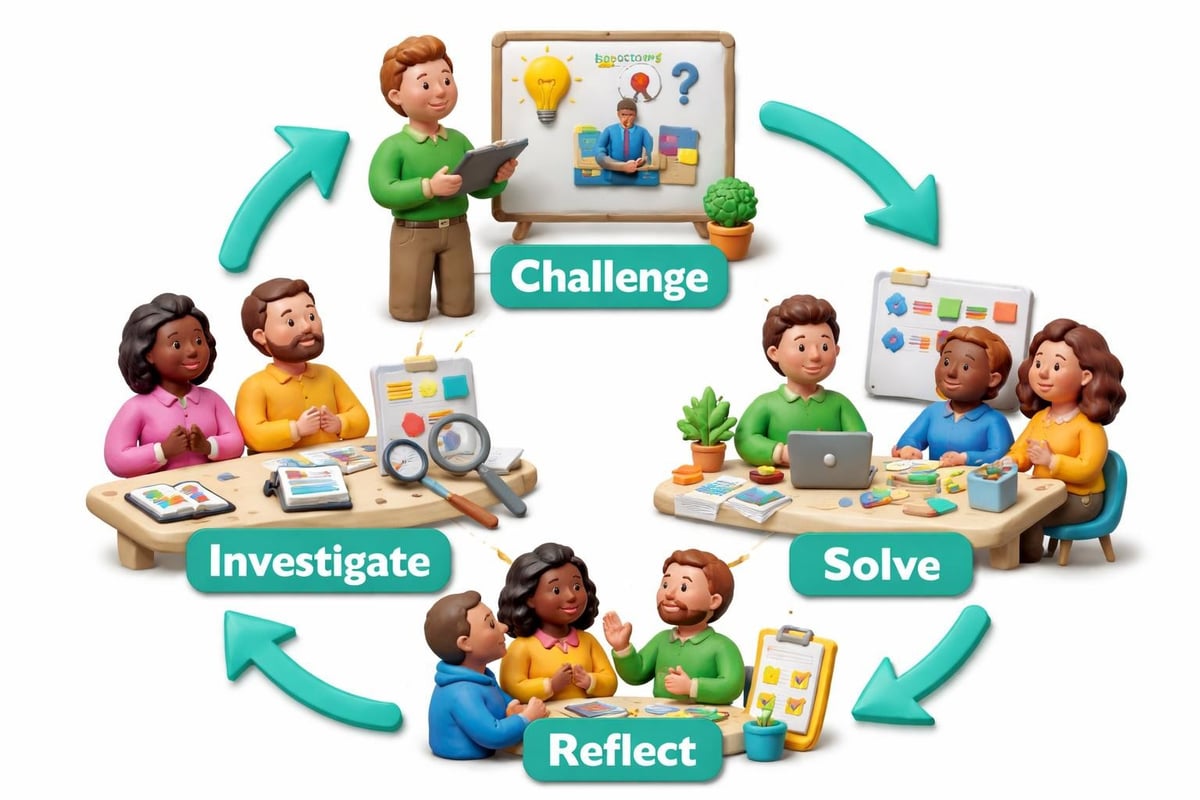
Adults enter training seeking solutions to specific challenges they face in their roles, industries, or lives. Problem-based learning addresses this need by organizing content around authentic scenarios rather than abstract concepts. Learners engage deeply when wrestling with realistic challenges that mirror their work environment.
Effective problem-based adult teaching requires careful scenario design. Problems must possess sufficient complexity to demand critical thinking while remaining achievable within programme constraints. They should reflect actual workplace situations learners encounter, incorporate multiple variables requiring judgment, and allow for diverse solution approaches.
Experiential Learning Techniques
Adult learning theories and principles emphasize the critical role of experience in knowledge construction. Experiential techniques engage learners actively through simulations, role-plays, case analyses, field observations, and practical projects that require hands-on application.
These methods prove particularly valuable when developing competencies for business administration or first-line management roles where interpersonal skills, decision-making abilities, and practical judgment matter more than theoretical knowledge alone.
Assessment Strategies in Adult Teaching
Assessment approaches significantly influence how adults experience and engage with learning. Traditional testing methods often conflict with adult learner preferences and fail to measure genuine competency development. Contemporary adult teaching employs diverse assessment strategies aligned with professional standards and authentic performance requirements.
Competency-Based Assessment
Competency frameworks focus evaluation on demonstrated ability to perform specific tasks or roles rather than knowledge retention alone. This approach resonates with adult learners who value practical capability over theoretical understanding. Assessors observe learners applying skills in realistic contexts, providing feedback that guides ongoing development.
Key Elements of Competency Assessment
- Clear performance criteria derived from industry standards
- Multiple evidence sources demonstrating consistent capability
- Authentic assessment contexts mirroring workplace conditions
- Formative feedback throughout the learning journey
- Recognition of prior learning and experience
These elements align with NZQA qualification frameworks where learners must demonstrate competency across specified performance criteria to achieve certification in areas ranging from financial services to industrial rope access.
Portfolio and Project-Based Evaluation
Portfolios enable learners to curate evidence of their developing expertise over time. This assessment method suits adult teaching particularly well because it accommodates diverse learning pathways, recognizes incremental progress, and produces artifacts with ongoing professional value beyond the immediate qualification.
Project-based evaluation tasks learners with producing significant work products that demonstrate integrated competency. These projects should address genuine needs, require sustained effort, demand application of multiple skills, and result in outputs with real-world utility.
| Assessment Type | Strengths | Best Applications |
|---|---|---|
| Competency observation | Direct performance measurement | Technical skills, workplace procedures |
| Portfolio development | Comprehensive capability evidence | Professional development, creative fields |
| Case analysis | Critical thinking demonstration | Management, decision-making roles |
| Peer assessment | Collaborative learning, diverse perspectives | Team skills, communication competencies |
| Reflective practice | Metacognitive awareness, continuous improvement | Professional practice, leadership development |
Facilitating Rather Than Instructing
The educator's role in adult teaching differs markedly from traditional instruction. Rather than serving as the primary source of knowledge, effective adult educators function as facilitators who design learning experiences, curate resources, guide inquiry, and support skill development. This shift requires different competencies and mindsets.
Questioning and Dialogue Techniques
Powerful questions drive adult learning more effectively than comprehensive lectures. Skilled facilitators employ questioning strategies that stimulate critical thinking, surface assumptions, explore implications, and connect new concepts to existing knowledge. The principles of andragogy emphasize dialogue as central to meaning-making.
Question Types for Deep Learning
- Clarifying questions that ensure mutual understanding
- Probing questions that deepen analysis and examination
- Hypothetical questions exploring alternative scenarios
- Reflective questions connecting learning to personal experience
- Application questions bridging theory to practice
These questioning approaches prove valuable when delivering programmes like the New Zealand Certificate in Adult and Tertiary Teaching, where developing facilitator capabilities forms the core learning outcome.
Supporting Self-Directed Learning
Adult teaching cultivates learner autonomy rather than dependence. Educators scaffold independence by teaching learning strategies, providing resource navigation skills, encouraging goal-setting, and gradually releasing responsibility as learner confidence grows. This approach respects adult capability while acknowledging that effective self-direction requires developed skills.
Supporting self-direction involves helping learners assess their current competency, identify specific development goals, select appropriate learning strategies, monitor progress systematically, and adjust approaches based on feedback. These metacognitive skills transfer across contexts, enabling ongoing professional development beyond formal training.

Addressing Barriers to Adult Learning
Despite motivation and capability, adult learners face numerous obstacles that impact participation and success. Understanding principles, barriers, and best practices in adult education enables educators to design interventions that mitigate these challenges and support completion.
Situational Barriers
Life circumstances create practical obstacles that prevent or interrupt learning. Work schedules, family responsibilities, financial constraints, transportation challenges, and health issues all impact adult learners disproportionately compared to traditional students. Adult teaching addresses these barriers through flexible scheduling, online access, payment plans, and programme designs acknowledging competing demands.
Dispositional Barriers
Internal factors including confidence, previous educational experiences, fear of failure, and beliefs about learning ability significantly influence adult learner success. Many adults carry negative experiences from earlier education that shape their self-perception as learners. Effective adult teaching actively works to rebuild learner confidence through early success experiences, supportive feedback, and explicit acknowledgment of capability.
Institutional Barriers
Organizational policies, rigid structures, unfriendly systems, and unwelcoming cultures create unnecessary hurdles for adult learners. Training providers committed to quality adult teaching examine their processes through the learner lens, removing administrative friction, simplifying enrolment procedures, and creating accessible support systems. Flexible study options demonstrate institutional commitment to removing barriers.
Technology Integration in Adult Teaching
Digital tools fundamentally reshape adult teaching possibilities in 2026, enabling experiences impossible through traditional delivery alone. However, technology serves learning goals rather than replacing sound pedagogical practice. The Medical College of Wisconsin’s guide emphasizes that technology must align with adult learning principles to enhance rather than hinder outcomes.
Learning Management Systems
Platforms organizing content, facilitating communication, tracking progress, and managing assessments form the infrastructure of contemporary adult teaching. Effective LMS implementation prioritizes intuitive navigation, mobile accessibility, clear organization, and features supporting diverse learning activities. These systems enable asynchronous learning that accommodates varied schedules while maintaining programme coherence.
Collaborative Technologies
Digital collaboration tools extend learning beyond scheduled sessions, enabling peer interaction, group projects, resource sharing, and ongoing dialogue. Discussion forums, shared documents, video conferencing, and social learning platforms create communities of practice that support sustained engagement and knowledge construction.
- Video conferencing for synchronous discussions across locations
- Collaborative documents enabling joint project development
- Discussion forums facilitating reflection and peer support
- Social platforms building professional networks
- Mobile applications providing just-in-time learning access
These technologies prove particularly valuable for programmes like AI in education micro-credentials, where emerging skills require ongoing exploration and experimentation.
Culturally Responsive Adult Teaching
Adult learners bring diverse cultural backgrounds, worldviews, communication styles, and learning preferences shaped by their heritage and experiences. Culturally responsive adult teaching acknowledges this diversity as an asset while ensuring equitable access to learning opportunities and recognition of achievement.
Recognizing Cultural Learning Preferences
Different cultural contexts shape how individuals prefer to engage with information, interact with authority, participate in groups, and demonstrate knowledge. Some cultures emphasize individual achievement while others prioritize collective success. Communication styles vary from direct to indirect. Relationships with educators range from formal to collegial based on cultural norms.
Effective adult teaching accommodates these differences without stereotyping individuals based on cultural background. Educators should offer multiple participation modes, vary interaction patterns, provide diverse assessment options, and remain curious about learner preferences rather than making assumptions.
Indigenous Knowledge and Perspectives
In Aotearoa New Zealand, culturally responsive adult teaching integrates Māori perspectives, honors te reo Māori, and recognizes indigenous knowledge systems as equally valid alongside Western academic traditions. This integration extends beyond token acknowledgments to meaningful incorporation of concepts, case studies, examples, and assessment approaches reflecting indigenous worldviews.
Training providers demonstrate cultural responsiveness through staff development, curriculum review, partnership with Māori organizations, and ongoing consultation with iwi and hapū. These efforts ensure that adult teaching serves all learners equitably while contributing to broader societal goals of cultural revitalization and partnership.
Professional Development for Adult Educators
The specialized nature of adult teaching demands that educators themselves engage in continuous professional learning. Teaching adults effectively requires distinct competencies beyond subject matter expertise, including facilitation skills, assessment design capabilities, technology proficiency, and understanding of adult learning theory.
Building Facilitation Expertise
Transitioning from expert practitioner to skilled educator represents a significant professional shift. Many adult educators begin their teaching careers with deep subject knowledge but limited pedagogical training. Formal qualifications in adult teaching methodology provide the foundation for effective practice while supporting career development within the education sector.
Programmes focused on developing teaching capability, such as assessor training or adult and tertiary teaching qualifications, equip educators with evidence-based strategies, assessment techniques, curriculum design approaches, and reflective practice habits essential for quality delivery.
Staying Current in Evolving Fields
Adult teaching in rapidly changing industries requires educators to maintain currency in both subject matter and pedagogical innovation. Professional development should address emerging content knowledge, new teaching technologies, evolving assessment approaches, and emerging learner needs. This dual focus ensures that adult teaching remains relevant and effective.
Ongoing Development Strategies
- Industry engagement maintaining practical expertise
- Professional learning communities exploring teaching practice
- Research engagement with adult education scholarship
- Learner feedback informing continuous improvement
- Technology exploration identifying new possibilities
Measuring Impact and Improving Practice
Quality adult teaching requires systematic evaluation of effectiveness and commitment to ongoing refinement. Measurement extends beyond completion rates to encompass learner satisfaction, competency development, workplace application, and longer-term career impacts. These diverse indicators provide comprehensive understanding of programme quality and areas requiring enhancement.
Formative Evaluation Throughout Delivery
Continuous feedback during programme delivery enables responsive adjustment rather than waiting until completion to identify issues. Regular check-ins, pulse surveys, observation of engagement patterns, and informal conversations provide real-time data informing immediate improvements. This agile approach aligns with adult learner expectations for responsiveness and demonstrates educator commitment to their success.
Summative Assessment of Outcomes
End-of-programme evaluation measures overall achievement against stated objectives. Key metrics include qualification completion rates, competency achievement levels, learner satisfaction scores, and progression to employment or further study. However, meaningful evaluation examines these quantitative measures alongside qualitative insights about learner experience, perceived value, and application of learning.
| Evaluation Focus | Measurement Approaches | Use of Data |
|---|---|---|
| Learner engagement | Attendance, participation, LMS activity | Identify at-risk learners, adjust delivery |
| Competency development | Assessment results, portfolio quality | Verify achievement, refine assessment |
| Satisfaction | Surveys, focus groups, testimonials | Improve learner experience, marketing |
| Workplace application | Employer feedback, learner self-report | Demonstrate value, enhance relevance |
| Career progression | Employment outcomes, further study | Evidence impact, guide development |
Evidence-Based Refinement
Data collection without action produces minimal value. Effective adult teaching organizations establish systematic review processes examining evaluation evidence, identifying improvement opportunities, implementing changes, and monitoring results. This cycle of continuous improvement ensures that adult teaching evolves in response to learner needs, industry requirements, and educational innovation.
Recent developments in analyzing adult learners’ sentiments through social network data and advanced analytics offer new possibilities for understanding learner experiences and challenges. These insights enable more targeted support and responsive programme design.
Designing Programmes for Diverse Learner Needs
Adult learners pursuing qualifications in 2026 represent remarkable diversity in age, background, goals, prior education, digital literacy, and preferred learning modes. Effective adult teaching designs programmes accommodating this diversity while maintaining rigorous standards and coherent learning pathways.
Micro-Credentials and Modular Structures
Breaking larger qualifications into stackable micro-credentials enables adults to engage with learning incrementally, achieving recognized milestones while progressing toward comprehensive qualifications. This modular approach respects the reality that adults often cannot commit to extended programmes upfront but can engage with focused, time-bound learning experiences.
Micro-credentials in emerging areas like advanced applications of AI in education allow professionals to develop specific capabilities relevant to their current roles while maintaining flexibility for future learning. These credentials hold independent value while contributing to larger qualification pathways.
Recognition of Prior Learning
Adult learners frequently possess relevant knowledge and skills developed through work experience, previous study, or informal learning. Recognition of prior learning (RPL) processes assess this existing capability, granting credit toward qualifications without requiring redundant training. This approach respects learner expertise, reduces time to qualification, and acknowledges diverse pathways to competency.
Effective RPL requires robust assessment processes verifying that prior learning genuinely matches qualification requirements. Evidence portfolios, competency demonstrations, workplace verification, and structured interviews enable fair evaluation while maintaining qualification integrity.
Pathway Development and Articulation
Clear pathways from entry-level to advanced qualifications support learner progression and career development. Articulation arrangements enable credits earned in one programme to contribute toward another, facilitating vertical movement through qualification levels and horizontal transfer between related fields. These pathways prove particularly valuable for adults building careers over time through incremental qualification achievement.
Transparent pathway information helps learners make informed decisions about their learning journey, understanding how current study contributes to longer-term goals. Programmes spanning from Level 3 certificates through to Level 5 diplomas in areas like business administration and technology demonstrate institutional commitment to supporting sustained learner development.
Mastering adult teaching principles transforms educational outcomes for mature learners pursuing professional qualifications and career advancement. The strategies explored throughout this article reflect decades of research and practice demonstrating that adults learn differently from younger students and require specialized approaches honoring their experience, autonomy, and practical focus. Whether you're looking to enhance your own teaching capabilities or seeking quality training that applies these principles, Summit Institute delivers NZQA-accredited programmes designed specifically for adult learners across business, technology, industry skills, and education sectors. Our flexible delivery models, competency-based assessment, and experienced educators create learning experiences that respect your time while building genuine capability for career success.